How to Trade Ranging Markets in Forex: Identify, Enter, Exit
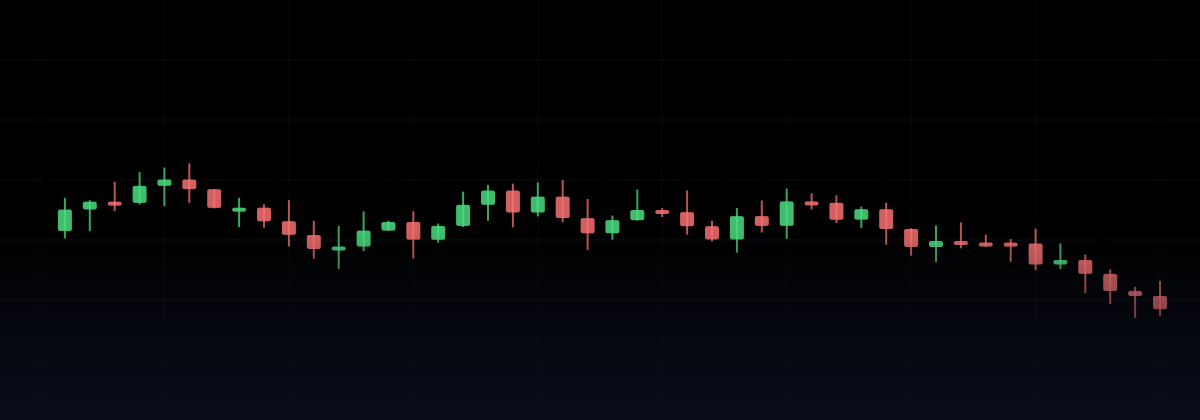
To trade a ranging forex market, you first confirm that price is moving sideways between a clear support and resistance zone, then buy near the bottom and sell near the top, with stops just outside the range and targets short of the opposite edge. Range trading works because most pairs spend much of their time going nowhere, but it fails abruptly when the range breaks, so every range trade needs a stop outside the boundary and a rule for standing aside once the market starts trending.
Key takeaways
- A tradable range has at least two clear touches on each side, a flat or gently sloping midline, and a width large enough to cover your stop and costs.
- Trade from the edges, not the middle; the middle of a range offers poor reward for the risk.
- Oscillators such as RSI and stochastic help time entries in ranges, but they give false signals in trends.
- Place stops beyond the range boundary with a buffer for false breaks, and target the midline or the zone just inside the opposite edge.
- Have a written rule for what counts as a breakout, so you stop fading a range that has turned into a trend.
Why ranges matter
Trend-following systems get most of the attention, but currency pairs often spend long stretches in sideways ranges. The Asian session on EUR/USD is frequently quiet and contained. Crosses such as EUR/GBP, AUD/NZD and EUR/CHF have historically spent long periods in relatively narrow bands because the two economies move closely together. Even strong trends pause in multi-week ranges between legs.
A trader who can only trade trends either sits out these periods or, more often, keeps taking trend signals that fail. Learning to recognise a range and trade it, or at least to stand aside from it, closes that gap. If you mostly trade trends, our trend-following guide explains how ranges break those systems, which is useful context for what follows.
How to identify a real range
Not every sideways wiggle is a tradable range. Look for these features on the timeframe you plan to trade:
- Two or more touches on each side. Price has reversed from roughly the same upper zone at least twice and the same lower zone at least twice.
- Horizontal or near-horizontal boundaries. A slanting channel is a trend with a structure, not a range, and needs different handling.
- A flat midline. A 50-period moving average running through the middle of price and roughly flat is a quick visual check.
- Weak trend readings. ADX(14) below about 20 is a common filter; see the ADX guide for how it is built.
- Width that pays. The range must be wide enough that a trade from one edge toward the other covers your stop, spread and a reasonable reward.
Draw zones, not lines
Ranges rarely reverse at the same exact price. Mark the upper boundary as a zone covering the highest closes to the highest wicks, and do the same at the bottom. On EUR/USD's hourly chart the zone might be 8 to 15 pips thick. The support and resistance guide covers zone drawing in detail. Treating levels as single lines leads to stops placed exactly where price likes to probe.
Entry methods for range trading
Limit orders at the edge
The simplest method: place a buy limit inside the lower zone and a sell limit inside the upper zone, with stops beyond each zone. It gives the best prices but no confirmation, and in a breakout the order fills just before price runs through.
Rejection candle confirmation
Wait for price to enter the zone and print a rejection candle (a pin bar, engulfing or strong close back inside), then enter on the next candle. Entry is slightly worse, but you have evidence that the edge is holding. The shapes themselves matter less than where they print: a rejection candle in the middle of a range means little.
Oscillator timing
RSI(14) below 30 near support or above 70 near resistance, or a stochastic crossover out of an extreme zone, can time entries. In a genuine range, oscillators work well because price keeps reverting. In a trend they stay pinned at extremes for long periods, which is why the range has to be identified first. The mean reversion strategy page goes further into oscillator-based entries.
Failed breakout entries
Price pokes through a boundary, fails to hold, and closes back inside. Entering back toward the range middle after that failure is one of the better range setups, because the stop can go just beyond the false-break extreme and the trapped breakout traders often add fuel. See false breakout trading for the pattern.
Stops and targets
Stops go outside the zone, not inside it. A reasonable starting point is the far edge of the zone plus a buffer of about 0.25 to 0.5 times the ATR of your trading timeframe. Too tight and normal probes stop you out; too wide and the range no longer pays.
Targets should be conservative. The midline is the most reliable first target. A second target can sit just inside the opposite zone, not at its far edge. Many range traders close half at the midline and move the stop to break-even on the rest.
Worked example on EUR/GBP
EUR/GBP on the 4-hour chart has ranged between a support zone of 0.8520 to 0.8530 and a resistance zone of 0.8600 to 0.8610 for five weeks. ADX is 16. Price drops into support and prints a bullish engulfing candle closing at 0.8536.
- Entry: 0.8537 on the next candle.
- 4-hour ATR: 24 pips. Stop: below the zone at 0.8520 minus about 8 pips, so 0.8512. Risk: 25 pips.
- Target 1 (midline): 0.8565, +28 pips. Target 2: 0.8595, just below resistance, +58 pips.
- Account: $10,000, risk 1% = $100. EUR/GBP pip value for a USD account is £10 per standard lot converted to dollars; at a GBP/USD rate of 1.27, about $12.70.
- Size: $100 / (25 x $12.70) = 0.31 lots.
- Half closed at Target 1: 0.155 lots x 28 pips x $12.70 = about $55. Stop moved to entry. If Target 2 hits: another 0.155 x 58 x $12.70 = about $114.
Total if both targets hit: about $169 on $100 risk. If the stop hits first: about −$100. If Target 1 hits and the rest stops at break-even: about +$55. The pip calculator handles cross-pair pip values like this one.
| Range trading checklist | Pass condition |
|---|---|
| Touches | At least two on each boundary |
| Boundaries | Horizontal zones, not a slanting channel |
| Trend strength | ADX(14) below about 20, flat 50-period average |
| Width | At least about 3 times the planned stop distance |
| Location | Price is in the outer quarter of the range, not the middle |
| Trigger | Rejection candle, oscillator signal or failed breakout |
| Calendar | No top-tier release for either currency before the target is likely reached |
| Breakout rule | Written definition of when you stop fading this range |
When the range breaks
Every range ends. The skill is recognising the end early enough to stop fading it. Some practical rules:
- Close-based breakout rule. A candle close beyond the zone on your trading timeframe, followed by a second candle that does not close back inside, ends the range for you.
- Compression warning. When the range narrows over time and touches come faster, a breakout is often near. Bollinger Band width shrinking to its lowest in many weeks is a classic sign; see the Bollinger squeeze guide.
- Fundamental catalyst. A central bank meeting that could shift the rate outlook for one of the two currencies is a common range-ender. Reduce or skip range trades in the run-up.
- Repeated tests. Each test of a boundary absorbs orders sitting there. A fourth or fifth test is more likely to break than the second.
Once a range breaks, you have two choices: stand aside or switch approach and trade the breakout. Do not keep fading. The breakout from a long range is often the start of a sustained move, and fading it is how range traders give back weeks of gains in a day.
Best pairs and sessions for ranges
Ranges are more common in some conditions than others:
- Asian session on European and dollar pairs. Lower participation often keeps EUR/USD and GBP/USD in tight overnight ranges, which some traders fade and others use as a base for London breakouts.
- Closely linked crosses. EUR/GBP, AUD/NZD and EUR/CHF have historically spent long periods range-bound because the paired economies are closely linked. That can change when one central bank diverges sharply.
- Quiet calendar weeks. Holiday periods and weeks with no major releases tend to produce more sideways action, though thin liquidity can also cause erratic spikes.
The Asian session guide covers the overnight range in more detail. Whatever pair you choose, check its recent behaviour rather than assuming it ranges because it did in the past.
Choosing the timeframe for range trades
Ranges exist on every timeframe, but they behave differently. A 15-minute range during the Asian session may be only 15 to 25 pips wide, which leaves little room once spread and a sensible stop are subtracted; costs take a large share of each win. A 4-hour or daily range may be 100 to 300 pips wide, offering better reward to risk but far fewer trades and more overnight swap. Many traders find the 1-hour and 4-hour charts a workable middle ground for majors and liquid crosses.
Whatever you choose, check the next timeframe up. A clean 1-hour range that sits just below a major daily resistance level is more likely to hold than one sitting in the middle of a strong daily trend.
Common range-trading mistakes
- Entering in the middle of the range, where reward and risk are roughly equal and costs tip it negative.
- Targeting the far edge exactly and watching price reverse a few pips short.
- Calling a range after only one touch on each side.
- Ignoring the higher timeframe. A 1-hour range inside a strong daily trend tends to break in the trend direction.
- Fading the breakout because "it has always reversed here before".
Frequently asked questions
How do you know if the forex market is ranging?
Look for at least two clear reversals from roughly the same upper and lower zones, a flat moving average through the middle of price, and a weak trend reading such as ADX(14) below about 20. Horizontal boundaries matter; a slanting channel is a trend. Confirm on the timeframe you trade and check the higher timeframe for a dominant trend.
What is the best indicator for ranging markets?
Oscillators such as RSI and the stochastic tend to work better in ranges than trend tools, because price keeps reverting from extremes. ADX is useful as a filter to confirm the market is not trending. No indicator replaces clearly drawn support and resistance zones, which define where range trades should be taken in the first place.
Where should I put my stop-loss in a range trade?
Beyond the far edge of the support or resistance zone, with a buffer of roughly a quarter to half of the timeframe's ATR. Placing the stop exactly at the visible high or low tends to get it hit by routine probes. If the resulting stop is too wide for the range width to offer reasonable reward, skip the trade.
Which currency pairs range the most?
Historically, crosses between closely linked economies, such as EUR/GBP, AUD/NZD and EUR/CHF, have spent long periods in relatively narrow ranges. Major pairs often range during the Asian session. These tendencies change when central bank policies diverge, so check each pair's recent price action and trend readings rather than relying on past reputation.
Is range trading better than trend trading?
Neither is inherently better. Range trading tends to have a higher win rate with smaller winners and is vulnerable to breakouts. Trend trading tends to have a lower win rate with larger winners and suffers in sideways markets. Many traders use a filter to decide which regime the market is in and apply the matching approach, or stand aside when it is unclear.
What should I do when a range breaks?
Stop fading it. Apply your written breakout rule, such as a close beyond the zone confirmed by the next candle, and either stand aside or switch to a breakout or retest approach. Existing range trades should already have stops outside the boundary. Widening a stop because price has broken out is one of the most common causes of large losses.
This article is general information, not personal financial advice. Figures such as spreads, fees, leverage and rules change; confirm them with the provider and check the provider is authorised for your country of residence.