Fair Value Gap (FVG) Forex Strategy: Spotting, Filtering and Trading Gaps
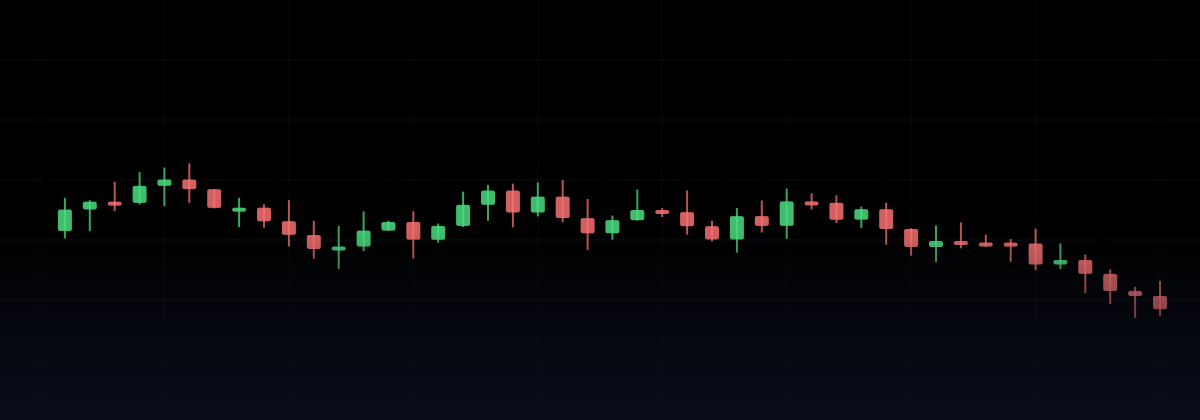
A fair value gap (FVG) is a three-candle pattern in which the wick of the first candle and the wick of the third candle do not overlap, leaving a price area the market moved through too quickly to trade both ways. An FVG forex strategy waits for price to retrace into that gap after a strong move, enters at the gap or its 50% level, and places the stop beyond the move's origin. Gaps appear constantly on every timeframe, so the strategy depends on filtering: only gaps created by real displacement, in the direction of the higher-timeframe trend, and large enough to matter after costs.
Key takeaways
- A bullish FVG exists when candle 3's low is above candle 1's high; a bearish FVG when candle 3's high is below candle 1's low.
- The 50% level of the gap, called consequent encroachment in ICT terms, is a common entry point.
- Filter gaps by size relative to ATR, by whether they broke structure, and by higher-timeframe trend.
- Many gaps are only partly filled or never revisited; others are filled and then broken.
- An FVG that price closes through can flip roles, which traders call an inverse FVG.
- Tight stops make costs significant; check spread and commission as a share of risk before every trade.
What a fair value gap is
Take any three consecutive candles. In a strong up move, the middle candle is large and bullish. If the high of the first candle is below the low of the third, the prices between them were traded only during the middle candle, and only in one direction. That space is the bullish fair value gap. A bearish gap is the mirror image: the low of the first candle is above the high of the third.
The term comes from the ICT and smart money concepts vocabulary, but the underlying observation is old. Equity and futures traders have long watched gaps and thin price areas that markets later revisit. In 24-hour spot forex, true price gaps between sessions are rare outside weekends, so the FVG concept effectively applies the gap idea within continuous trading.
A precise definition you can test
For candles numbered 1, 2 and 3 in time order:
- Bullish FVG:
low[3] > high[1]. The gap runs fromhigh[1](bottom) tolow[3](top). - Bearish FVG:
high[3] < low[1]. The gap runs fromhigh[3](bottom) tolow[1](top). - Consequent encroachment: the midpoint,
(top + bottom) / 2.
Writing it this way matters. It removes any temptation to call a near-miss a gap after you see that price reacted there.
Filtering: which gaps are worth trading
On a 5-minute EUR/USD chart, dozens of FVGs can form in a single session. Most mean nothing. The filters below cut them to a handful.
| Filter | Rule of thumb | Why it helps |
|---|---|---|
| Size | Gap at least 0.25 to 0.5 times the 14-period ATR on that timeframe, and several times the typical spread | Tiny gaps are noise and too small to trade after costs |
| Displacement | Created by a candle whose body is clearly larger than recent candles | Shows urgency rather than a random wide bar |
| Structure break | The move that created the gap broke a recent swing high (bullish) or low (bearish) | Confirms the move changed something |
| Trend alignment | Bullish gaps only when the higher timeframe is bullish, and vice versa | Counter-trend gaps fail far more often |
| Freshness | Price has not yet traded back into the gap | Each partial fill reduces its relevance |
| Location | Bullish gaps in the lower half of the higher-timeframe range; bearish in the upper half | Buying low and selling high relative to the range |
Our page on the ATR indicator covers how to read average true range for the size filter.
The strategy rules
Setup
- Bias: daily or 4-hour trend direction, written down before the session.
- Liquidity event (optional but common): price sweeps a recent high or low against the bias, such as the Asian session low in a bullish market. The liquidity sweep strategy explains this step.
- Displacement: a strong move in the bias direction that breaks a recent swing and leaves an FVG passing the filters.
Entry
Place a limit order at the consequent encroachment (50%) of the gap. Some traders prefer the near edge of the gap for a higher fill rate; others wait for a lower-timeframe confirmation candle inside it. Test one method at a time.
Stop
The conservative stop goes beyond the low of candle 1 (bullish) or the swing low that started the displacement, plus a buffer for spread. The aggressive stop goes just beyond the far edge of the gap itself. The aggressive version improves the risk-reward ratio dramatically but is hit much more often, because gaps are frequently filled completely before price reverses.
Target
The nearest liquidity in the trade's direction: the high of the displacement move, equal highs, the previous day's high. If an opposing FVG sits in the path, it often acts as a magnet and a place where price stalls.
Worked example: a USD/JPY bullish FVG
USD/JPY is in a daily uptrend. During the London session, the 15-minute chart sweeps the Asian low at 149.40 and then rallies. Three candles form:
- Candle 1: high 149.52.
- Candle 2: a large bullish candle from 149.50 to 149.88.
- Candle 3: low 149.66, high 149.95.
Since 149.66 is above 149.52, there is a bullish FVG from 149.52 to 149.66, a 14-pip gap. The 15-minute ATR is around 18 pips, so the gap passes the size filter. The move also broke the previous swing high at 149.80.
- Entry: buy limit at the 50% level, 149.59.
- Stop: 149.38, just below the sweep low, which already sits beneath candle 1. Risk: 21 pips.
- Target: the previous day's high at 150.20. Reward: 61 pips, about 2.9R.
For USD/JPY, a pip is 0.01 and one standard lot is worth 1,000 yen per pip. At 149.59, that is 1,000 / 149.59 = about $6.69 per pip. A $5,000 account risking 0.5% ($25) can risk $1.19 per pip on a 21-pip stop, so the position is 1.19 / 6.69 = 0.18 lots. The arithmetic for yen pairs catches many traders out; our guide on pip value for USD/JPY walks through it, and the pair's typical behaviour is covered in our USD/JPY trading strategy.
Costs: if the all-in round-trip cost is around 1 to 1.5 pips, that is 5% to 7% of the 21-pip risk. Using the aggressive stop just below the gap (149.50, a 9-pip risk) would push costs to 11% to 17% of risk, which noticeably raises the win rate needed to break even.
Inverse FVGs and gaps as targets
Inverse fair value gaps
When price closes decisively through an FVG instead of reacting from it, some traders flip its role. A bullish gap that fails becomes potential resistance on a retest, labelled an inverse FVG. It is the same logic as support turning into resistance and should be tested as a separate setup, not mixed into the original rules.
Gaps as targets rather than entries
Another way to use FVGs is as profit targets. An unfilled bearish gap above current price, in a bullish trade, is a reasonable place to take partial profits, since price often trades into such gaps. Treat this as a tendency, not a law; plenty of gaps remain unfilled for weeks.
A simple FVG trading checklist
Before placing any limit order at a gap, run through the same short list. If any answer is no, there is no trade.
- Is the higher-timeframe bias written down, and does the gap point the same way?
- Did the move that created the gap break a recent swing high or low?
- Is the gap at least a quarter of the ATR on this timeframe and several times the current spread?
- Is the gap untouched since it formed?
- Is there at least 2R of room to the first target from the planned entry?
- Is there no high-impact release for either currency during the expected life of the trade?
- Is the position size calculated from the stop distance and fixed account risk?
Keeping this list beside the chart sounds trivial, but it is the most practical defence against the main weakness of gap trading: on any chart, a gap is always available if you want one badly enough.
How FVG strategies fail
- Full fills. Price frequently trades all the way through the gap before reversing, stopping out aggressive stops and then moving to target without you.
- No return. Strong trends often leave gaps unfilled. Limit orders never trigger, and chasing the move afterwards breaks the rules.
- Counter-trend gaps. A bullish gap in a bearish daily market is usually a pullback inside a downtrend, and gets broken.
- News distortion. Releases create large gaps that have little to do with ordinary order flow. Spreads also widen sharply around them, as explained in why spreads widen during news. Many FVG traders ignore gaps formed in the minutes around high-impact data.
- Too many gaps. Without strict filters, every chart shows a gap that "worked", which makes backtests look far better than live results.
With 2.5R to 3R targets, the strategy breaks even before costs at a win rate of about 25% to 29%. That cushion shrinks quickly once costs, slippage and partial fills are included. Expect long losing runs and test with at least 100 trades before drawing conclusions. If you use auto-detection scripts, verify that their definition matches yours.
Regulation: US, UK and South Africa
US traders must use a CFTC-registered, NFA-member dealer, with 50:1 maximum leverage on majors like USD/JPY and 20:1 on others, FIFO closing rules and no hedging in one account. UK traders with FCA-authorised firms face a 30:1 cap on majors and get negative balance protection. South African traders should use providers authorised by the FSCA; there is no ESMA-style statutory leverage cap there, so leverage of several hundred to one is commonly offered, which makes it easy to oversize a tight-stop FVG trade. Some brands serve South Africans through offshore entities instead of their FSCA-authorised one, with weaker protection. See our guide to South African forex brokers.
Risk warning: A fair value gap describes how price moved, not what any institution intends to do next. Gaps fail often, and tight stops on low timeframes make costs and slippage a large share of each trade. Most retail CFD and forex accounts lose money. High available leverage does not change the risk of a correctly sized trade, but it removes a safety barrier against oversizing, so always calculate position size from your stop.
Frequently asked questions
What is a fair value gap in forex?
A fair value gap is a three-candle pattern where the wicks of the first and third candles do not overlap, leaving a price range that was traded only in one direction during the middle candle. Bullish gaps form in up moves and bearish gaps in down moves. Traders watch these areas because price often retraces into them before continuing.
Do fair value gaps always get filled?
No. Many gaps are filled partially or fully, but strong trends can leave gaps unfilled for long periods, and some are never revisited. Treating every gap as certain to fill leads to chasing trades and holding losing positions. Use gaps as areas of interest within a tested rule set, not as guarantees.
What is consequent encroachment?
Consequent encroachment is the ICT term for the 50% midpoint of a fair value gap. Many traders use it as an entry level, reasoning that price only needs to rebalance half of the gap before continuing. It gives a better reward ratio than entering at the gap's edge, at the cost of missing trades that react earlier.
Which timeframe is best for FVG trading?
Many traders find gaps on the 15-minute to 1-hour charts within a daily or 4-hour trend, while others use 1- to 5-minute charts during London and New York sessions. Higher timeframes give fewer, more meaningful gaps with wider stops; lower timeframes give more signals but higher cost per unit of risk and more noise.
What is an inverse fair value gap?
An inverse fair value gap is an FVG that price has closed through, which some traders then treat as acting in the opposite direction. A failed bullish gap becomes potential resistance on a retest. It applies the classic idea of broken support becoming resistance, and should be tested as its own setup.
Is the FVG strategy suitable for beginners?
The definition is simple, which makes it accessible, but the filtering and context are where results come from, and beginners often trade every gap they see. If you try it, use strict written filters, a demo account and small risk per trade. Be cautious of courses promising high win rates from FVGs alone.
This article is general information, not personal financial advice. Figures such as spreads, fees, leverage and rules change; confirm them with the provider and check the provider is authorised for your country of residence.