ICT and Smart Money Concepts in Forex: What They Mean and Where They Fall Short
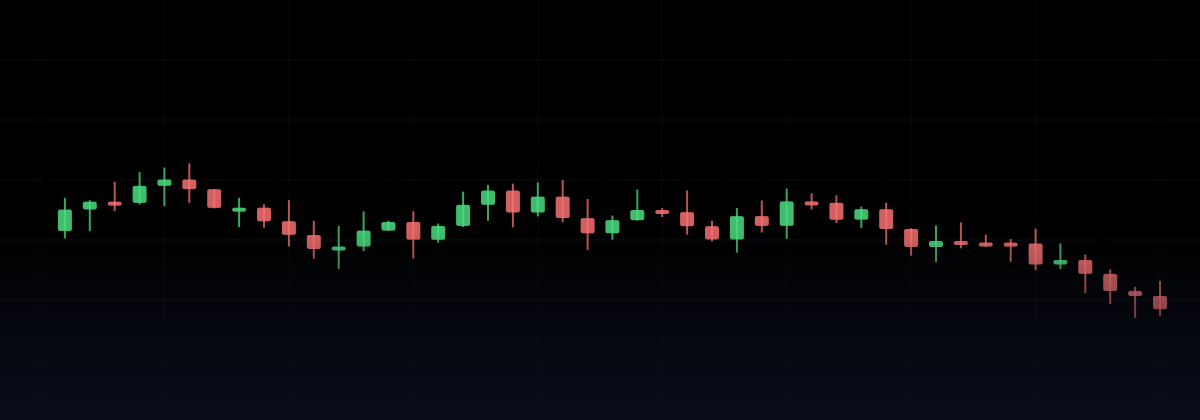
ICT smart money concepts (SMC) are a set of chart-reading ideas, popularised by the trader and educator known as the Inner Circle Trader, which assume that large institutions engineer price moves to collect liquidity from retail stop losses before moving in their intended direction. In practice, SMC traders look for liquidity grabs above highs or below lows, a shift in short-term market structure, and an entry at an order block or fair value gap, usually during the London or New York session. Many of the ideas are renamed versions of older concepts, the "smart money" story cannot be verified from a retail chart, and the method is only as good as the strictness of the rules you apply.
Key takeaways
- ICT is a person and a teaching brand; SMC is the wider online movement built on and around his terminology.
- The core sequence is: higher-timeframe bias, liquidity sweep, market structure shift, entry at an imbalance or order block.
- Much of the vocabulary maps onto older ideas: supply and demand, stop runs, gaps and Fibonacci retracements.
- Definitions vary widely between teachers, which makes hindsight bias the biggest practical risk.
- The online SMC scene is heavy with paid mentorships and signal groups; vet them hard, especially in Nigeria and South Africa where offshore brokers dominate.
- Use it, if at all, as a tested, written rule set with fixed risk, not as a story about what banks are doing.
Where ICT and SMC came from
The Inner Circle Trader is the online name of Michael J. Huddleston, a US-based trader and educator who has published free video material for many years and built a large following on YouTube and social media. His terminology, including "fair value gap", "optimal trade entry" and "killzones", spread rapidly from around 2020 onwards, carried by thousands of smaller educators on YouTube, TikTok, Instagram and Telegram.
"Smart money concepts" is the broader label that emerged from that spread. Some SMC teachers follow ICT closely; others mix his ideas with Wyckoff accumulation and distribution, classic supply and demand, and their own variations. There is no single authoritative SMC rulebook, which is important for anyone trying to learn or test it.
The core vocabulary, decoded
A large part of SMC's appeal is its language. Here is what the main terms describe in plain terms, and the older concept each one most resembles.
| SMC / ICT term | What it describes | Closest older idea |
|---|---|---|
| Break of structure (BOS) | Price breaks a swing high in an uptrend (or low in a downtrend), confirming continuation | Higher high / lower low in Dow theory |
| Change of character (CHoCH) / market structure shift (MSS) | The first break against the prevailing structure, hinting at reversal | Trend reversal signal, failed swing |
| Liquidity (buy-side / sell-side) | Clusters of stop orders likely sitting above highs or below lows, especially equal highs or lows | Stop runs, stop hunting |
| Liquidity sweep / grab | Price spikes beyond a high or low and quickly reverses | False breakout, spring or upthrust (Wyckoff) |
| Order block | The last opposite-coloured candle before a strong move that breaks structure | Supply or demand zone base |
| Fair value gap (FVG) | A three-candle pattern where the wicks of the first and third candles do not overlap, leaving an inefficient price area | Gaps, imbalance, thin price areas |
| Premium / discount | Above or below the 50% level of a defined range | Fibonacci 50% retracement, buying low in a range |
| Optimal trade entry (OTE) | The 62% to 79% retracement zone of a swing | Fibonacci retracement entries |
| Killzones | Specific time windows, mainly the London and New York opens, when setups are taken | Session-based trading |
| Power of three (AMD) | Accumulation, manipulation, distribution within a session or day | Wyckoff phases, opening range fake-outs |
Seeing the mapping helps in two ways. It tells you there is decades of prior discussion on each idea, and it removes some of the mystique that makes a method feel more powerful than it is. Our dedicated pages go deeper on order blocks, fair value gaps and liquidity sweeps, and the overlap with supply and demand trading is covered there.
How a typical SMC trade is built
Teachers differ, but most SMC intraday models follow a similar sequence.
- Higher-timeframe bias. On the daily or 4-hour chart, decide whether price is likely heading for buy-side liquidity (old highs) or sell-side liquidity (old lows), and whether it is in premium or discount of the current range.
- Mark the liquidity. Asian session high and low, previous day's high and low, obvious equal highs or lows.
- Wait for the killzone. Usually the London open or the New York open, local equivalents being roughly 07:00 to 10:00 and 12:00 to 15:00 UK time. Our guide to forex trading sessions converts these for other time zones.
- Look for a sweep. Price runs one of the marked levels against your bias, for example below the Asian low when the bias is bullish.
- Confirm with a structure shift. On a low timeframe (1- to 5-minute), price breaks a recent swing high with a strong move, often leaving a fair value gap.
- Enter on the retrace. A limit order in the fair value gap or the order block that caused the shift, sometimes refined to the OTE zone.
- Stop and target. Stop below the sweep low; target the opposite liquidity, such as the Asian high or previous day's high.
Worked example on EUR/USD
The daily chart is bullish and price is in the lower half (discount) of last week's range. The Asian session range on EUR/USD is 1.0850 to 1.0872.
- At 07:40 UK time, price drops to 1.0841, sweeping the Asian low by 9 pips.
- By 08:05 it rallies sharply to 1.0866, breaking the last 5-minute lower high at 1.0858. The move leaves a fair value gap between 1.0849 and 1.0854.
- A buy limit is placed at 1.0853, with the stop at 1.0839 (2 pips below the sweep low). Risk: 14 pips.
- Target: the Asian high at 1.0872, then the previous day's high at 1.0895. First target is 19 pips (1.36R), second 42 pips (3R).
Position size for a $2,000 account risking 1% ($20): $20 / 14 = $1.43 per pip, or 0.14 lots of EUR/USD. With a raw-spread account costing roughly 1 pip all-in, that cost is about 7% of the risk, which is manageable but not trivial at such tight stops.
Notice how many judgement calls were involved: which swing counted for the structure shift, whether the gap or the order block was the right entry, whether 1.0895 or 1.0872 was the true target. Each choice is defensible, and each can be chosen differently after the fact to make a backtest look better.
An honest assessment of the weaknesses
The "smart money" story cannot be checked
Spot forex has no central exchange, no consolidated order book and no public record of who traded what. A retail trader cannot see where institutions placed orders or why price moved. SMC narratives explain moves after they happen in terms of institutional intent, which is persuasive but unfalsifiable. The useful part is the chart pattern; the story is decoration.
Definitions are flexible
What counts as an order block, which candle defines a structure shift, which swing high is the "real" liquidity: teachers disagree, and many give themselves room to reinterpret. Flexible definitions make every historical chart look like it confirms the method.
Low-timeframe execution is costly
Entries on the 1- or 5-minute chart mean small stops, so spread, commission and slippage are a large share of risk. Results that look excellent on a chart with no costs can be marginal in a live account.
Confluence stacking
Because SMC offers so many concepts, it is easy to keep adding conditions until almost no trade qualifies, or to find enough confluence to justify almost any trade. A trader who lost on a fair value gap entry can always point to an order block slightly lower that "should" have been used. Neither extreme is a strategy. Pick the minimum set of conditions you need, write them down, and stop adding new ones after each losing week; changing rules mid-test makes every result meaningless.
The education market
SMC has a large paid ecosystem: mentorships, "funded trader" courses, signal channels and account management offers. Some educators are genuine; many sell lifestyle rather than evidence. Red flags include screenshots of wins without full account statements, pressure to join quickly, guaranteed or "high accuracy" claims, requests to deposit with a specific offshore broker through their link, and offers to trade your account or pass your prop-firm challenge for you. Passing a challenge on someone else's behalf breaches the terms of virtually every prop firm.
Regulation notes for the main SMC audiences
United States: retail forex only through CFTC-registered, NFA-member dealers; 50:1 leverage on majors, 20:1 on others; FIFO and no hedging. United Kingdom: FCA-authorised firms; 30:1 on majors; negative balance protection. South Africa: providers should be FSCA-authorised; there is no ESMA-style leverage cap, so high leverage is widely offered. Nigeria: SMC is especially popular among Nigerian retail traders, but there is no well-established local licensing regime for retail margin forex comparable to the FCA or FSCA, and most Nigerians trade through offshore entities, which offer limited recourse if something goes wrong. The SEC Nigeria has repeatedly warned the public about unregistered schemes promising forex returns. Our guide to brokers for Nigerian traders explains which regulators stand behind which entities.
Risk warning: No trading framework, including ICT or SMC, gives you knowledge of institutional orders. Most retail CFD and forex accounts lose money, and leverage magnifies losses. Be especially wary of anyone selling SMC mentorships, signals or account management alongside offshore broker referrals or promises of consistent profits; these are common routes to losing money that has nothing to do with the market.
If you want to test SMC properly
Treat it like any other strategy. Choose one model, such as the sweep, structure shift and fair value gap sequence above. Write precise definitions: the exact swing you use for a structure shift, the minimum gap size, the killzone hours, the targets. Backtest at least 100 trades with bar replay, including costs, and record the ones you were unsure about separately. If the rules only work when you are allowed to reinterpret them, you have learned something important. The New York session reversal page and our Fibonacci retracement guide are useful reference points for the session timing and retracement logic that underpins many SMC models.
Frequently asked questions
What is ICT in forex trading?
ICT stands for Inner Circle Trader, the online name of educator Michael J. Huddleston. His free videos introduced terms like fair value gap, optimal trade entry, killzones and power of three. "ICT concepts" refers to his framework for reading price as institutions seeking liquidity, which has been widely copied and adapted by other educators.
Is smart money concepts the same as ICT?
Not exactly. SMC is the broader movement that grew out of ICT's teachings, mixed with older ideas such as supply and demand and Wyckoff phases. Many SMC teachers use ICT terms with their own definitions. Learning from multiple SMC sources can therefore mean learning slightly different versions of the same words.
Does SMC trading actually work?
There is no independent evidence that SMC as a whole produces consistent profits. Some components, like trading false breakouts at session highs and lows, reflect real market behaviour that traders have used for decades. Whether a specific SMC model works for you depends on precise rules, realistic costs and properly tested results, not on the framework's popularity.
Can retail traders really see what banks are doing?
No. Spot forex is decentralised, with no public order book or record of institutional positions. Retail traders see price and, at best, broker-specific tick volume. SMC explanations of what institutions intended are interpretations made from price patterns, and they cannot be verified from a retail chart.
What is the best timeframe for ICT concepts?
Most ICT-style models use the daily or 4-hour chart for bias and the 1- to 15-minute charts for entries during London or New York killzones. Lower timeframes give tighter stops but make trading costs a much larger share of each trade. Some traders apply the same concepts on the 1-hour and 4-hour charts to reduce noise and costs.
Are paid ICT or SMC mentorships worth it?
Much of the core ICT material has been released free, so paying for the basics is rarely necessary. Before paying any mentor, ask for verifiable long-term results, avoid anyone promising returns or high win rates, and refuse arrangements tied to depositing with a specific offshore broker or handing over account access. Many paid groups make their money from students, not trading.
This article is general information, not personal financial advice. Figures such as spreads, fees, leverage and rules change; confirm them with the provider and check the provider is authorised for your country of residence.