Carry Trade Forex Strategy: How Interest Differentials Pay, and How They Bite
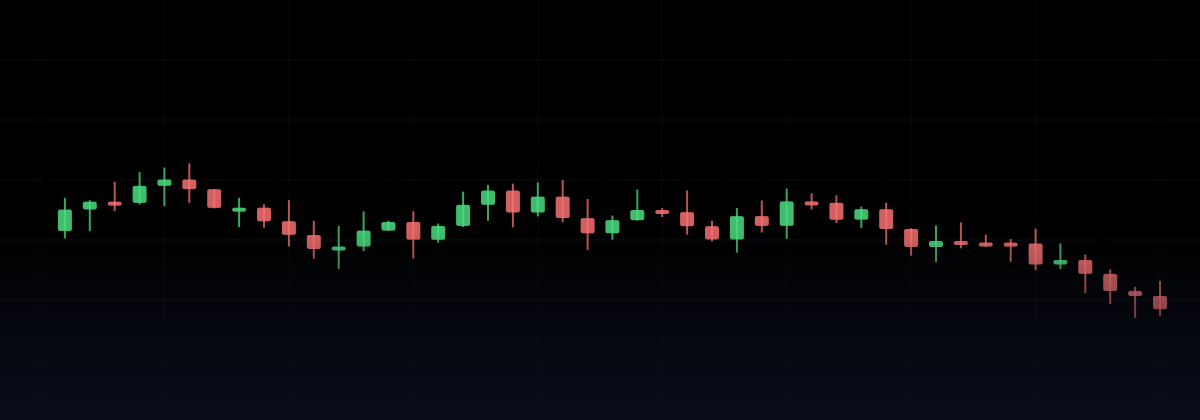
A carry trade forex strategy buys a currency with a high interest rate against one with a low rate and holds the position to earn the daily interest difference, paid through the broker's swap or rollover. The income is small and steady; the risk is that the exchange rate moves against you by far more than the interest earned, which tends to happen suddenly when markets turn fearful. Carry is a bet on stability as much as on interest rates.
Key takeaways
- Carry income comes from the interest rate gap between two currencies, credited or debited nightly as swap, minus the broker's markup.
- A daily carry of a few dollars per lot can be wiped out by a move of a few dozen pips, so price risk dominates the result.
- Carry trades tend to do well in calm, risk-on markets and suffer sharp, crowded unwinds in risk-off episodes.
- Low-yield funding currencies have historically included the yen and Swiss franc; high-yield targets include some emerging-market and commodity currencies.
- Broker swap rates can differ widely from the theoretical differential; check the swap table before relying on carry.
- Leverage magnifies both carry and price losses; position size should be set by the price risk, not the income.
How the carry trade earns money
When you hold a currency pair overnight, you are effectively holding one currency and borrowing the other. If the currency you hold pays a higher interest rate than the one you borrow, you earn the difference; if lower, you pay it. Brokers settle this daily through a swap (also called rollover). Our explainer on swap in forex covers the mechanics.
The carry trader's plan is to hold the high-yield currency for weeks or months and collect that difference. The second, less advertised source of carry returns is price: in calm periods, money flowing into high-yield currencies can push them higher, adding capital gains to the interest. The same flows reverse when markets get scared, which is where the strategy's reputation for "picking up coins in front of a steamroller" comes from.
The link between policy rates and exchange rates is explained in more depth in how interest rates affect currency value.
The maths: interest income versus price risk
A simplified swap calculation for one night:
Daily carry ≈ position notional x (rate differential − broker markup) / 365
Take a hypothetical example where the US policy rate is 4.0 percent above the Japanese rate, and a broker applies a markup that leaves an effective differential of 3.4 percent for a long USD/JPY position. One standard lot is 100,000 USD.
- Daily carry: 100,000 x 0.034 / 365 = about 9.32 USD per night.
- Annual carry if held for a year at the same rates: about 3,400 USD.
Now the price side. On USD/JPY, one standard lot is worth 1,000 JPY per pip. At 150.00 that is 6.67 USD per pip. A 100-pip move against the position costs 667 USD, which is about 72 nights of carry. A 500-pip move, which USD/JPY has made within days during past risk-off episodes, costs about 3,335 USD, close to a full year of carry. This is the core reality of the strategy: the income is measured in pips per week, the risk in hundreds of pips.
The figures above are illustrative. Real swap rates depend on current central bank rates, interbank funding and each broker's pricing, and change frequently. Use our swap rollover calculator with your broker's published rates.
Funding and target currencies
| Role | Typical characteristics | Examples historically | Main risk |
|---|---|---|---|
| Funding currency (sold) | Low interest rates, deep liquidity, often a safe haven | Japanese yen, Swiss franc, and at times the euro | Sharp appreciation when investors rush to safety or when its central bank tightens |
| Target currency (bought), developed | Higher rates, liquid, often commodity-linked | US dollar in high-rate periods, Australian and New Zealand dollars at times | Rate cuts narrowing the differential; commodity slumps |
| Target currency (bought), emerging | High rates, wider spreads, less liquidity | Mexican peso, South African rand, Turkish lira at points | Large devaluations, political shocks, capital controls, very wide spreads in stress |
Which currencies play which role changes with the rate cycle. A currency that was a funding currency in one decade can become a target in another. The current rate levels determine the trade, so always check where each central bank stands. Emerging-market carry is particularly sensitive; our guide to USD/MXN as a carry pair covers the specific issues with the peso.
What makes carry trades unwind
Carry positions accumulate quietly and leave all at once. Common triggers:
- Risk-off shocks. A financial crisis, equity sell-off or geopolitical event sends investors into safe-haven currencies, which are often the funding currencies. Carry traders are forced to buy them back, accelerating the move.
- Funding-currency rate hikes. If the central bank of the funding currency turns hawkish, the differential narrows and the funding currency strengthens at the same time. The yen's sharp rally in early August 2024, which followed a Bank of Japan rate rise and weak US data, is a recent example of a crowded yen carry trade unwinding quickly.
- Target-currency rate cuts. When the high-yield central bank starts cutting, future carry shrinks and holders leave. See hawkish vs dovish policy for how traders read those signals.
- Volatility spikes. Higher volatility makes the price risk larger relative to the carry, so risk-managed funds reduce positions mechanically.
The 2008 financial crisis produced one of the best-known carry unwinds, with yen crosses such as AUD/JPY falling dramatically in a matter of months. The pattern is consistent: years of steady gains, then a short period that takes back a large share of them.
Building a carry strategy with risk controls
A naive carry trade simply buys the highest-yielding currency and holds. Practitioners usually add layers.
- Rank by carry. List pairs by the swap you would actually earn, using your broker's swap table, not headline policy rates.
- Diversify. Hold several carry pairs rather than one, recognising that they will still be correlated in a crisis.
- Add a trend filter. Only hold a carry position while the pair is above its 100-day or 200-day average. This often cuts losses in unwinds, at the cost of whipsaws.
- Add a risk filter. Reduce exposure when measures of market stress rise. Our page on risk-on vs risk-off sentiment lists the usual gauges.
- Size by price volatility. Set the stop from ATR or a percentage of price, and size so that a stop-out costs a small, fixed share of the account.
- Watch the calendar. Central bank meetings for both currencies can change the differential overnight.
A sized position, worked through
The earlier example used one full lot to show the raw numbers. Here is what happens when the same idea is sized by price risk, as a disciplined trader would. All figures are illustrative.
A trader with a 20,000 USD account considers a long AUD/JPY carry position at 98.00. Assume the effective differential after the broker's markup is 3.0 percent on the Australian dollar notional, and AUD/USD is 0.6500. The daily ATR on AUD/JPY is 90 pips, and the trader uses a stop three ATRs away: 270 pips, at 95.30.
- Pip value: 1,000 JPY per pip per standard lot, which at 98.00 is about 10.20 AUD, or roughly 6.63 USD at AUD/USD 0.6500. (Converting JPY to USD directly via USD/JPY gives the same answer, within rounding.)
- Risk budget at 1 percent: 200 USD.
- Size: 200 / (270 x 6.63) = 0.11 lots, or 11,000 AUD.
- Carry: 11,000 x 0.03 / 365 = about 0.90 AUD per night, roughly 0.59 USD.
- Carry over a full year at unchanged rates: about 215 USD, roughly 1.1 percent of the account.
So, sized to lose 1 percent if the stop is hit, a year of carry earns about the same as one stop-out costs. That is the uncomfortable arithmetic behind the strategy. To make carry income look large, traders increase size, which increases the price risk in exactly the same proportion. Leverage does not improve the ratio between carry and risk; it only scales both. What can improve the ratio is a wider rate differential, lower volatility in the pair, or a trend filter that keeps you out during the worst unwinds.
Swap details that catch traders out
Broker markups
Brokers apply a markup to both sides of the swap. It is common to see a pair where the long side earns a small positive swap and the short side pays a much larger negative one, and on some pairs and brokers both sides are negative. Carry only works if the side you hold is positive by a meaningful amount after the markup.
Triple swap day
Because spot forex settles two business days after the trade date, the rollover applied on Wednesday nights typically covers the weekend, so three days of swap are charged or credited at once. Details are in triple swap Wednesday explained.
Islamic (swap-free) accounts
Swap-free accounts do not pay or receive overnight interest, so carry as a strategy does not apply to them. Some replace swap with an administration fee.
Regional notes for US, Singapore and UK traders
In the USA, retail spot forex is offered by CFTC-registered, NFA-member firms with leverage capped at 50:1 on majors and 20:1 on others; CFDs are not available to US retail clients. Rollover is credited or debited in the same way. In Singapore, MAS-licensed providers apply retail leverage caps of 20:1 on major pairs. In the UK, FCA-authorised firms cap retail leverage at 30:1 on majors and 20:1 on non-major pairs, and many UK traders use spread betting, where the overnight financing is built into the daily charge. Tax treatment of swap income differs by country and product; check local rules or a qualified adviser.
The key risk. Carry income is small and predictable; the price risk is large and unpredictable. A position sized for the income rather than the price risk can be wiped out by a single unwind. High-yield emerging-market currencies can gap and spreads can widen dramatically in stress. Leverage magnifies these losses, and most retail forex and CFD accounts lose money. This guide is educational and not personal advice.
Frequently asked questions
Is the carry trade still profitable?
That depends on current interest rate differentials, broker swap rates and, above all, exchange rate moves, none of which can be promised. Carry has had long profitable stretches and sharp losing episodes historically. Check your broker's swap table for the actual positive carry available today, and model the price risk before deciding anything.
How much can I earn from a carry trade per day?
It equals the position size times the effective interest differential after broker markup, divided by 365. For a 100,000-unit position with a 3 percent effective differential, that is about 8.22 per night in the base currency. Compare that with pip value: a move of a dozen pips against you can erase a week of carry.
Which currency pairs are best for carry trades?
The best candidates are pairs where the side you would hold earns a meaningfully positive swap after the broker's markup, and where the exchange rate is not excessively volatile. These change with the rate cycle. Historically, yen and Swiss franc crosses against higher-yielding currencies have been common, but current rates determine what works.
Why do carry trades crash suddenly?
Because many investors hold the same positions funded in the same currencies. When fear rises or the funding currency's central bank tightens, they all try to exit at once, buying back the funding currency. That crowded exit can move prices far more in days than the carry earned over months.
Do I earn carry on a demo account?
Many demo accounts apply swap using the broker's live swap rates, so you can observe how carry accrues. Some do not. Check with the broker. A demo is useful for understanding swap mechanics, triple swap day and how small the nightly amount is compared with normal price movement.
Is carry trading allowed for US traders?
Yes. US residents can hold spot forex positions overnight with CFTC-registered, NFA-member firms and receive or pay rollover. Leverage is capped at 50:1 on majors and 20:1 on others, and FIFO and no-hedging rules apply. Check the firm's rollover rates, which can differ widely from theoretical differentials.
This article is general information, not personal financial advice. Figures such as spreads, fees, leverage and rules change; confirm them with the provider and check the provider is authorised for your country of residence.