News Trading Strategy in Forex: Releases, Entries and the Real Costs
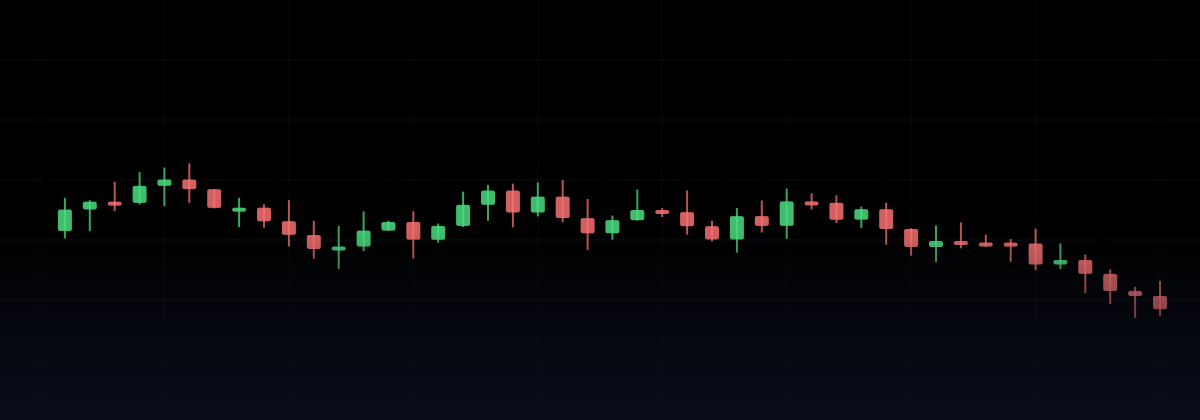
A forex news trading strategy is a plan for trading the price reaction to scheduled economic releases such as US non-farm payrolls, CPI and central bank rate decisions. The workable versions do not try to guess the number; they either wait for the first spike to settle and trade the direction the market accepts, or they trade the gap between the actual figure and the consensus forecast with strict size limits. Spreads widen and stops slip around big releases, so the cost side of news trading is larger than most beginners expect.
Key takeaways
- Price reacts to the surprise (actual minus forecast) and to revisions, not to whether a number is "good" in isolation.
- The first 30 to 120 seconds after a top-tier release are the most expensive to trade: spreads can widen several times and stop orders can fill well beyond their level.
- Three main approaches exist: pre-release straddles, fading the first spike, and post-release continuation entries. Each fails in a specific, predictable way.
- Size news trades from the realistic worst-case fill, not from where your stop sits on the chart.
- Many prop firms restrict trading near high-impact news, and some brokers widen margin requirements around events, so check the rules before you rely on any news approach.
What actually moves a currency on a news release
Every scheduled release on an economic calendar comes with three numbers: the previous reading, the consensus forecast (the median of economist estimates) and the actual figure. The market has already priced in the forecast before the release. What moves the exchange rate is the surprise: how far the actual figure lands from what was expected, and whether that surprise changes the outlook for interest rates.
That last point matters more than the headline. A strong US jobs report pushes the dollar up mainly because it makes the Federal Reserve more likely to keep rates higher for longer. If the jobs number beats but average hourly earnings miss badly and the previous month is revised down, the net message on rates can be neutral or even dovish, and the dollar may fall on a "beat". Traders who only read the headline get whipsawed by this constantly.
Tiers of impact
Roughly, releases sort into three tiers for the major pairs:
- Top tier: central bank rate decisions and press conferences (Fed, ECB, BoE, BoJ, RBA, BoC, SNB), US non-farm payrolls, US CPI. These regularly move majors 50 to 150 pips within an hour and occasionally much more.
- Second tier: retail sales, GDP, PMIs, employment data outside the US, core PCE. Moves of 20 to 60 pips are common, but they depend heavily on how much the market is focused on that data point at the time.
- Third tier: housing data, sentiment surveys, minor regional indices. Often barely visible on a 5-minute chart unless the figure is wildly off.
Market focus rotates. When inflation is the dominant concern, CPI outranks payrolls. When recession fears dominate, jobs and GDP take over. Before building a plan around a release, look at how the pair reacted to the last four or five prints of that same release.
The hidden costs: spreads, slippage and gaps
News trading is where retail traders learn how liquidity actually works. In the seconds before a top-tier release, liquidity providers pull or thin out their quotes because nobody wants to be on the wrong side of a 60-pip jump. The result is a wide spread and a thin order book.
On EUR/USD, a spread that normally sits under one pip on a raw account can widen to several pips around payrolls, and on crosses such as GBP/JPY or EUR/NZD the widening can be far larger. A stop-loss becomes a market order once triggered, and in a fast market it fills at the next available price. That difference is slippage, and on news it is routinely 3 to 10 pips on majors and occasionally much worse.
Worked example of a slipped news stop
Say you are long EUR/USD at 1.0850 with a 15-pip stop at 1.0835 and a position of 2 standard lots. On a normal day the worst you expect is 15 pips x $10 x 2 = $300. On a payrolls surprise, the price gaps from 1.0848 straight to 1.0822 in one tick. Your stop fills at 1.0822, which is 28 pips from entry. Loss: 28 x $10 x 2 = $560, almost double the plan. Add a spread that was 4 pips instead of 0.3 at entry and the real damage is larger still.
This is why the single most important rule in news trading is to size positions from a realistic slipped exit, not from the chart stop. If you would have been comfortable losing $300, the position above should have been closer to 1 lot. The position size calculator works fine for this; just enter a stop distance that includes a slippage buffer.
| Cost factor | Normal conditions (EUR/USD, typical) | Around a top-tier release (typical range) | What to do about it |
|---|---|---|---|
| Spread | Fraction of a pip to about 1 pip | Several pips, briefly more | Avoid entering in the final minute before and first minute after |
| Stop slippage | 0 to 1 pip | 3 to 10+ pips, occasionally far more | Size from stop distance plus a slippage buffer |
| Order rejection or requote | Rare | More frequent on some account types | Use limit entries after the spike rather than market orders into it |
| Margin requirement | Standard for your account | Some brokers raise it temporarily | Check broker notices before major events |
Figures are illustrative ranges; spreads and execution vary by broker, account and event.
Approach 1: the pre-release straddle (and why it disappoints)
The classic beginner news strategy is to place a buy stop above the current price and a sell stop below it a few minutes before the release, expecting one side to trigger on the spike and run. On paper it looks clever because you do not need to predict direction.
In practice it fails in three common ways. First, the widened spread can trigger both orders without any real move, leaving you long and short at a loss. Second, the initial spike often reverses within seconds (the "whipsaw"), so the triggered order is underwater at once. Third, stop entry orders also slip, so you enter at a worse price than planned and the trade begins in a hole.
Straddles can work on the rare release where the surprise is huge and one-directional, but over ordinary releases the cost drag tends to dominate.
Approach 2: fading the first spike
Fading means trading against the initial move on the assumption that it overshoots. Some releases do produce a reflexive spike that retraces half or more of its range within 15 minutes, especially when the surprise is small or the details contradict the headline.
The risk is obvious: when the surprise is large and changes the rate outlook, there is no retrace, and you are standing in front of a trend that may run for the rest of the session. A fade needs a reason beyond "it moved a lot". Reasonable reasons include a headline beat with a contradicting revision, price spiking into a well-defined higher-timeframe level, or a spike that fails to make progress after the first two or three 1-minute candles.
A basic fade checklist
- Read the full release, not just the headline: revisions, core vs headline, sub-components.
- Note where price has spiked to relative to daily support and resistance or a round number.
- Wait for at least one 1-minute or 5-minute candle to close showing rejection (a long wick back inside the range).
- Enter with a limit order, stop beyond the spike extreme plus a buffer, and a target no greater than the midpoint of the spike.
- Abandon the idea entirely if price makes a fresh extreme after your rejection candle.
Approach 3: the post-release continuation entry
This is the approach that most experienced discretionary traders lean toward. You do nothing during the release. You wait 5 to 30 minutes for spreads to normalise and the first wave of orders to clear, then you look at what the market has decided. If the surprise was meaningful and price has held its move, you look for a pullback entry in the direction of the reaction.
Institutional repositioning after a genuine surprise does not all happen in the first minute; a shift in rate expectations can drive a pair for hours. The entry tactics are the same as any pullback strategy: wait for a retrace toward the 20-period moving average on the 5- or 15-minute chart, or toward the breakout level of the spike, and enter when the pullback stalls.
Worked example
US CPI comes in 0.3 percentage points above forecast on the core reading. USD/JPY jumps from 149.20 to 149.95 in two minutes, pulls back to 149.60 over the next 20 minutes, then forms a higher low. You buy at 149.68 with a stop at 149.38 (30 pips, below the pullback low) and a target at 150.28 (60 pips). On a $10,000 account risking 1%, you can lose $100. On USD/JPY at around 149.7, one standard lot pip is worth roughly 1,000 / 149.7 = about $6.68. So $100 / (30 pips x $6.68) = about 0.5 lots. You would round down to 0.49 or 0.5 depending on how strictly you apply the 1% cap.
You give up the first chunk of the move in exchange for normal spreads, a defined stop level and evidence of which way the market leaned.
Deciding when not to trade the news
A news strategy is as much about avoidance as entry. Many swing and day traders use a simple rule: no new positions in the 15 minutes either side of top-tier releases for the currencies in the pair, and existing positions either reduced or protected at break-even. If you are in a trade with a tight stop and a decision is minutes away, ask whether you would open that trade now. If not, close or reduce it. Unscheduled headlines matter too; the page on risk-on vs risk-off sentiment covers how safe-haven flows into JPY and CHF tend to behave.
Prop firm and broker rules on news
If you trade a funded or evaluation account, read the news clause before you do anything else. Many prop firms ban opening or closing trades within a window (often a few minutes either side) of specified high-impact releases on funded accounts, and some void profits made in that window. Others allow news trading freely. A list of firms with lighter rules is at prop firms allowing news trading, but rules change, so read the current terms on the firm's own site.
On the broker side, widening spreads or raising margin around major events is normal and usually disclosed. Cancelling profitable trades after the fact without a clear contractual rule is not. Read the order execution policy and use a broker regulated where you would have a complaint route.
Building and testing your own news plan
A news strategy needs a narrow test. Pick one release, one or two pairs, and one approach. Go back through at least 30 past releases and record the surprise size, revisions, the first 5-minute range, the spread at release, whether your rules triggered, and the result in R (multiples of risk) with a realistic slippage assumption. Thirty releases is still a small sample, so treat the result as a sanity check rather than proof. Then forward-test on a demo account, accepting that demo fills around news are often kinder than live fills.
News trading sits inside a broader toolkit. If you want to see how it compares with session-based and trend approaches, the forex trading strategies overview sets them side by side, and the payrolls trading guide goes deeper on the single most-watched release.
Frequently asked questions
Is news trading profitable in forex?
It can be for some traders, but there is no evidence that news trading as a category is reliably profitable for retail accounts. The extra costs from wide spreads and slippage are significant, and many apparent edges disappear once realistic fills are modelled. Waiting for the initial spike to settle and trading the confirmed direction tends to be more manageable than trying to catch the first move.
Which news has the biggest impact on forex?
Central bank interest rate decisions and press conferences, US non-farm payrolls and US consumer price inflation are generally the biggest movers for major pairs. Their impact varies with what the market is worried about at the time. When inflation dominates, CPI often outweighs jobs data. Review how a pair reacted to the last few releases of an event before treating it as high impact.
Should I close my trades before high-impact news?
Many traders do, or they reduce size or move the stop to break-even. The reason is that stops can slip well past their level and spreads widen sharply, so the risk you planned is not the risk you carry through the release. Whether to hold is a choice that should be made in advance and written into your plan, not decided in the final minute.
Why did my stop-loss fill at a worse price during news?
A stop-loss becomes a market order when price touches it. During a fast news move there may be no buyers or sellers at your exact level, so the order fills at the next available price. That gap is slippage. It is normal behaviour in thin liquidity, not necessarily broker misconduct, though a regulated broker should apply slippage symmetrically and disclose its execution policy.
What is the best time frame for trading forex news?
The release itself is best watched on a 1-minute or 5-minute chart to see the spike and rejection, while the decision about direction usually comes from the 15-minute to 1-hour chart and the daily levels nearby. Using only a 1-minute chart tends to produce overtrading. Combining a short chart for timing with a higher chart for context keeps entries grounded.
Can I trade news on a prop firm account?
It depends entirely on the firm and the account phase. Some prop firms prohibit opening or closing positions within a set number of minutes around high-impact releases on funded accounts, and profits made in breach can be removed. Others permit news trading. Read the current rules on the firm's official website, because these clauses change and breaking them can cost the account.
This article is general information, not personal financial advice. Figures such as spreads, fees, leverage and rules change; confirm them with the provider and check the provider is authorised for your country of residence.