London Breakout Forex Strategy: Trading the Open Without Getting Whipsawed
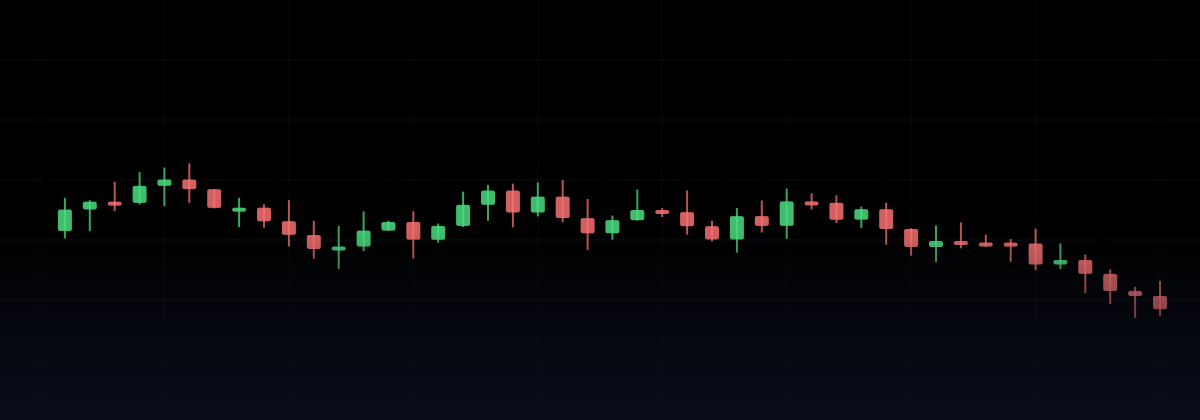
The London breakout forex strategy marks the high and low that price sets before London opens, then trades in the direction of whichever side breaks once European volume arrives. It works on the idea that the quiet overnight range compresses orders that the London open releases. It is simple to define and simple to test, and it suffers from false breaks often enough that filters and position sizing decide whether it is worth anything.
Key takeaways
- Define the box: the high and low between a fixed start time (often midnight London) and the London or Frankfurt open.
- Entries are buy stops above and sell stops below the box, usually with a small buffer, and one side is cancelled once the other fills.
- Stops commonly sit at the opposite side of the box or at the box midpoint; targets are often a multiple of the box height.
- Box size is the main filter: very wide boxes leave little room to run, very narrow ones fake out more.
- Daylight saving shifts change UTC times twice a year; build your box in London local time to stay consistent.
- Breakouts fail regularly; expect strings of losses and test over hundreds of sessions, not a handful.
Why the London open moves markets
London is the largest foreign exchange trading centre in the world by turnover, and the hours around its open are when European banks, asset managers and corporates start dealing. Before that, the market is mostly in the hands of Asian and Pacific participants, and EUR, GBP and CHF pairs tend to drift in narrow ranges. When London desks arrive, order books thicken, spreads tighten and news from the European morning (German, French and UK data, often released between 07:00 and 09:30 London time) gets priced.
The breakout trader's hypothesis is that orders build up just outside the overnight range: stop losses from range traders and entry stops from other breakout traders. When London volume pushes through one edge, those orders add fuel. Sometimes the move runs for most of the European morning. Sometimes it reverses straight back through the box, which is the problem we will spend much of this article on.
For a full schedule of when each centre opens and closes, see our forex market hours guide, and for how the overnight session behaves, our page on Asian session forex trading.
Building the pre-London box
The box is the high and low of a defined window. There are a few common choices, and the key is to pick one and keep it fixed.
| Box window (London time) | Typical use | Trade-off |
|---|---|---|
| 00:00 to 07:00 | Frankfurt-open breakout, popular with German-based traders | Enters earlier, but Frankfurt's first hour can be choppy |
| 00:00 to 08:00 | Classic London-open breakout | Includes the Frankfurt hour, so the box is wider |
| Asian session only (roughly 00:00 to 06:00) | Pure Asian-range version | Narrower box, more false breaks |
| Last 3 hours before 08:00 | Short pre-open consolidation | Tight box, but sensitive to one spike |
Use London local time rather than UTC. The UK moves its clocks in late March and late October, the USA moves on different dates, and a box defined in UTC silently shifts by an hour twice a year. A session time zone converter helps if you trade from Singapore, Dubai or the Americas. German traders often set the box against the Frankfurt open at 08:00 CET, which is 07:00 in London for most of the year.
Entry, stop and target rules
A testable baseline version looks like this:
- Box: high and low from 00:00 to 07:59 London time.
- Orders: at 08:00, place a buy stop a few pips above the high and a sell stop a few pips below the low. The buffer (2 to 3 pips on majors is common) reduces fills on a one-tick poke. Factor in the spread: a buy stop triggers on the ask.
- One cancels the other: when one side fills, cancel the opposite order. Some traders allow a reverse trade if the first fails; that is a separate rule to test.
- Stop: either the opposite side of the box or the box midpoint. The midpoint stop halves your risk but gets hit more often by normal retracement.
- Target: a fixed multiple of box height (1x is common), a fixed reward-to-risk ratio, or the previous day's high or low.
- Time exit: close any open position by a set time, for example 12:00 or the New York open, if neither stop nor target has been hit.
- Expiry: cancel unfilled orders after a set time, such as 11:00. A late break is a different trade.
A worked GBP/USD example
The figures are illustrative. Between 00:00 and 07:59 London time, GBP/USD trades between 1.2652 and 1.2688, a 36-pip box. At 08:00 the trader places a buy stop at 1.2691 and a sell stop at 1.2649 (3-pip buffers).
At 08:25 a strong UK services reading lifts sterling, and the buy stop fills at 1.2692, one pip of slippage. The sell stop is cancelled.
- Stop at the box midpoint: 1.2670, which is 22 pips below entry.
- Target at one box height above the high: 1.2688 + 36 = 1.2724, which is 32 pips above entry.
- Reward to risk: 32 / 22, about 1.45.
Position sizing on a 5,000 GBP account risking 1 percent means a maximum loss of 50 GBP. GBP/USD is quoted in dollars, so one standard lot is worth 10 USD per pip. At an exchange rate of 1.2692, that is 10 / 1.2692 = 7.88 GBP per pip. Divide 50 GBP by 22 pips to get 2.27 GBP per pip, then divide by 7.88 to get 0.29 lots. At 0.29 lots, the target pays roughly 32 x 0.29 x 7.88 = 73 GBP and the stop costs about 50 GBP, before spread and commission.
Had the stop been placed at the box low instead, the risk would have been 43 pips and the size would have dropped to roughly 0.14 lots, with the same 50 GBP at risk. The trade-off is fewer stop-outs in exchange for a smaller payoff on each winner. Neither is right in the abstract; your backtest decides.
Filters that matter
The raw strategy, applied every day on every pair, tends to give back much of what it makes in whipsaws. These filters are the ones most worth testing.
Box size relative to volatility
Compare the box height with the pair's average daily range, measured with the Average True Range. If the overnight box is already 70 percent of a typical day's range, there may be little movement left. If it is under 20 percent, the market is very compressed and a break may be more significant, or may just be noise. Many traders skip boxes outside a band they set from testing. Our guide to the ATR indicator for stop losses shows how to read it.
Scheduled news
Check the economic calendar every morning. A high-impact release at 09:30 can turn an early breakout into a reversal. Some traders skip days with top-tier releases before noon; others wait until after the release and treat that as the breakout trigger.
Higher-timeframe trend
Only taking breakouts in the direction of the daily trend reduces the number of trades. Whether it improves results depends on the period and pair, so test it rather than assume it.
Day of week
Mondays sometimes have thin early books after the weekend gap, and Fridays can see positions squared ahead of the weekend or US payrolls. Test whether excluding particular days changes the outcome, but beware of slicing the data so finely that you are fitting noise.
Which pairs suit a London breakout
Pairs that contain a European currency are the natural candidates because their main dealing activity starts at the London open. GBP/USD and EUR/USD are the most common choices, with GBP/JPY and EUR/JPY popular among traders who want bigger moves and accept wider stops and spreads. Our GBP/USD trading guide covers cable's typical behaviour in detail.
Pairs like AUD/USD or USD/JPY often make their key moves in Asian or New York hours, so a London box on those pairs is a weaker idea. Exotic pairs are generally poor fits because the spread can be a large share of the box.
Why London breakouts fail
Knowing the failure modes is more useful than memorising the setup.
- The fakeout. Price clears one side, fills your order, then reverses through the box. This is often a liquidity sweep of the overnight range, and it is the single most common loss.
- The double fill. If you do not cancel the opposite order, you can be stopped out long and then short in the same morning.
- Spread at the open. Spreads are often wider just before and at 08:00 than they are an hour later. See when forex spreads widen the most.
- Slippage on news. Stop entry orders fill at the next available price. On a fast release, that can be several pips worse.
- Crowding. The setup is widely known. That does not make it worthless, but it means you should not expect a large, persistent edge.
- Regime change. A strategy that worked during a trending year can bleed during a ranging one. Losing streaks of five, eight or more trades are normal for breakout systems.
Risk point. Pending stop orders at the open can fill with slippage, and breakouts reverse often. Never size the trade from the buffer or from what you hope the slippage will be; size from the stop distance and assume fills can be worse. Retail leverage in the UK and Germany is capped at 30:1 on major pairs under FCA and ESMA-derived rules, but even within those caps most retail CFD and forex accounts lose money.
How to test it before trading it
The London breakout is a good strategy to learn testing on, because every rule can be written down. Use at least two years of data on each pair, ideally longer, so you include trending and ranging periods. Record for each day: box high, low and height, which side broke, entry price, exit price and reason (stop, target or time), and the spread at entry.
Then compute win rate, average win, average loss and the expectancy per trade in R (multiples of the amount risked). A version that wins 40 percent of the time with an average win of 1.6R and an average loss of 1R has an expectancy of 0.4 x 1.6 minus 0.6 x 1 = 0.04R per trade before costs. That is thin; a spread of a pip and a half on a 20-pip stop is 0.075R per trade and would wipe it out. This kind of arithmetic is why costs and stop size matter so much for short-term breakout strategies.
If the result survives costs, forward test on a demo or with very small size for a few months. Compare live fills against your backtest assumptions; slippage at the open is the usual gap. Our London and New York overlap page is useful if you plan to add a time exit around the US open.
Frequently asked questions
What time does the London breakout start?
Most versions place orders at the London open, 08:00 London time, which is 07:00 UTC during British Summer Time and 08:00 UTC in winter. Traders who key off Frankfurt place orders an hour earlier. What matters is consistency: set the box window in London local time and keep it fixed throughout your testing and trading.
Is the London breakout strategy profitable?
It can be on some pairs in some periods, and lose in others. There is no reliable universal figure. Results depend on the box window, filters, stop placement and costs. Breakout systems typically have win rates below 50 percent and rely on larger winners, so they produce long losing streaks. Test it yourself, including spreads, before committing money.
Should I use the box midpoint or the opposite side for my stop?
The midpoint gives a smaller stop and bigger position for the same risk, but normal retracements hit it more often. The opposite side survives more pullbacks but needs a smaller position. Test both on the same data. Whichever you choose, size the position from the stop distance so each loss costs the same fraction of your account.
Can I automate the London breakout?
Yes. The rules are mechanical, which makes it one of the easiest strategies to code as an MT4 or MT5 expert advisor or a cTrader cBot. Automation removes hesitation, but it also executes faithfully on bad days. Test with realistic spreads and slippage, and make sure the code handles daylight saving changes correctly.
Which pairs are best for the London breakout?
Pairs with a European currency, mainly GBP/USD, EUR/USD and their yen crosses, because their liquidity jumps at the London open. GBP/JPY moves more but costs more to trade and needs wider stops. Pairs driven by Asian or North American hours are weaker candidates. Check typical spreads with your broker, since they vary.
What should I do on news days?
Decide in advance and test the decision. Common choices are skipping days with top-tier European releases before noon, or waiting until after the release and treating the post-news range break as the trigger. Spreads widen and slippage rises around releases, so the risk of a poor fill is higher regardless of which rule you adopt.
This article is general information, not personal financial advice. Figures such as spreads, fees, leverage and rules change; confirm them with the provider and check the provider is authorised for your country of residence.