Asian Range Breakout Forex Strategy: Using the Tokyo Range as a Trigger
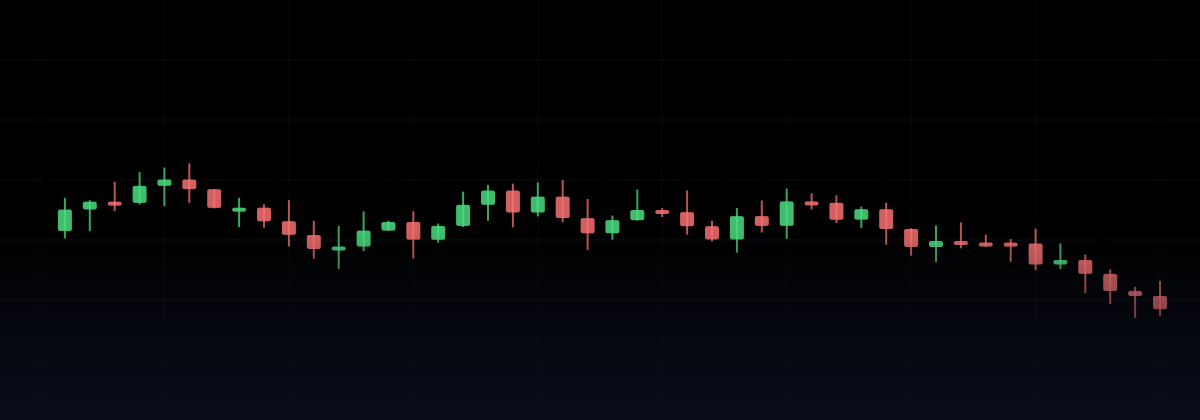
The Asian range breakout forex strategy measures the high and low that a pair sets during the Tokyo session, then trades a break of that range, either as the Asian session ends or as Europe arrives. The range acts as a map of where overnight orders are sitting. Whether you trade the break, fade it, or ignore it depends on the pair, the size of the range, and what your own testing shows.
Key takeaways
- The Asian range is usually measured from about 00:00 to 06:00 or 07:00 UTC; Japan does not use daylight saving, so Tokyo hours stay fixed in UTC.
- Breakouts can be traded at the end of Tokyo (JPY and AUD pairs) or at the European open (EUR and GBP pairs); these are different trades with different behaviour.
- Range width is the most important filter: compare it with the pair's average daily range before trading.
- Because many traders watch the same range, false breaks and sweeps of its edges are common.
- Singapore retail traders face MAS leverage limits; UK traders face the FCA's 30:1 cap on majors.
- Expect losing streaks and test over hundreds of sessions, with realistic spreads for the hours you trade.
What the Asian range is and why traders watch it
From roughly midnight to early morning UTC, the forex market is driven by Tokyo, Sydney, Singapore and Hong Kong. Turnover in most pairs is lower than during European or US hours, and pairs that do not involve the yen, Australian dollar or New Zealand dollar often trade in a narrow band. That band, the Asian range, is the subject of this strategy.
Traders watch it for two reasons. First, it compresses positioning: range traders put stops just outside it and breakout traders put entry orders there. Second, it gives an objective reference. Unlike a hand-drawn trendline, two traders measuring the same window get the same high and low.
The session itself is covered in depth in our guide to Asian session forex trading, and the pairs most active in Tokyo hours are listed in Tokyo forex session pairs.
Defining the range precisely
Pick a window and never change it mid-test. Common choices:
- 00:00 to 06:00 UTC. Covers most of the Tokyo morning and Singapore morning. Leaves an hour before Frankfurt.
- 23:00 to 07:00 UTC. Adds the Sydney afternoon and runs right up to the European pre-open.
- Tokyo cash hours, 00:00 to 06:00 UTC (09:00 to 15:00 Tokyo, 08:00 to 14:00 Singapore).
Japan does not observe daylight saving, which makes Tokyo-anchored windows unusually stable in UTC. The European open, by contrast, moves by an hour relative to UTC twice a year. If your trigger is the London open, the gap between the end of your Asian window and the trigger will change with the seasons unless you account for it. Traders in Singapore have it easiest: Singapore time is UTC+8 all year, so the Tokyo session is always 08:00 to 14:00 local.
Two different trades from the same range
This is the point many guides blur. "Asian range breakout" can mean two quite different setups.
| Feature | End-of-Tokyo breakout | European-open breakout |
|---|---|---|
| Typical pairs | USD/JPY, AUD/JPY, AUD/USD, NZD/USD | EUR/USD, GBP/USD, EUR/JPY, GBP/JPY |
| Trigger window | Late Tokyo morning to early afternoon | Frankfurt and London opens |
| Main drivers | Japanese and Australian data, Tokyo fix, regional flows | European data and the arrival of European liquidity |
| Range character | The range is still forming as you trade, so it is often defined over a shorter window | Range is complete before the trigger |
| Main risk | Low liquidity, choppy breaks that lack follow-through | Fakeouts at the open as the range edges are swept |
| Related guide | USD/JPY trading strategy | London breakout strategy |
The European-open version overlaps heavily with the London breakout, and our separate guide covers its mechanics. The rest of this article focuses on what is specific to the Asian range: how to read its width, how to handle the yen and Aussie pairs that actually move during Asia, and how to decide whether to break or fade.
Reading range width
A range only means something relative to how far the pair normally moves. Suppose EUR/USD's 14-day Average True Range is 70 pips. An Asian range of 18 pips is about 26 percent of a typical day; a range of 45 pips is about 64 percent.
- Narrow range (say under 25 percent of ATR): energy has been compressed. Breakouts may have room to run, but the edges are also easy to sweep because they are close together.
- Middle range: no strong signal either way. Many traders skip these or demand extra confirmation.
- Wide range (say over 50 percent of ATR): a lot of the day's movement may already have happened. Breakouts beyond a wide range often stall, and fading the edges can be more sensible than chasing them.
The thresholds above are examples, not recommendations. Find your own bands from historical data, and resist the temptation to optimise them to the last pip.
Rules for an end-of-Tokyo breakout on yen pairs
For pairs that are genuinely active in Asia, a shorter range is often used. One testable framework:
- Define the range from 00:00 to 03:00 UTC (09:00 to 12:00 Tokyo), covering the Tokyo morning including the 09:55 Tokyo fix.
- From 03:00 UTC, place a buy stop above the high and a sell stop below the low, each with a buffer of two pips plus the typical spread.
- Cancel the opposite order once one side fills.
- Place the stop at the opposite side of the range or at a fixed ATR multiple, whichever is smaller.
- Target 1.5 times the risk, or close at 07:00 UTC (the European pre-open) if neither stop nor target is reached.
- Skip days with Bank of Japan or Reserve Bank of Australia decisions in the window unless you have tested news behaviour separately.
A worked USD/JPY example
Illustrative numbers. Between 00:00 and 03:00 UTC, USD/JPY trades from 149.62 to 149.98, a 36-pip range. A buy stop is set at 150.01 and a sell stop at 149.59. At 04:10 UTC, after a rise in US Treasury yields, the buy stop fills at 150.02.
- Stop at the range low minus a pip: 149.61, a risk of 41 pips.
- Target at 1.5R: 41 x 1.5 = 61.5 pips, so 150.635, rounded to 150.63.
Pip value: on USD/JPY a pip is 0.01, and one standard lot (100,000 USD) gains or loses 1,000 JPY per pip. At 150.02, that is 1,000 / 150.02 = 6.67 USD per pip. A trader with a 20,000 USD account risking 0.75 percent can lose 150 USD. 150 / 41 = 3.66 USD per pip, divided by 6.67 is 0.55 lots. At 0.55 lots, the target is worth about 61 x 0.55 x 6.67 = 224 USD and the stop costs about 150 USD. Our pip calculator handles the conversion for any account currency, including SGD and GBP.
A Singapore-based trader with an SGD account would convert again from USD to SGD at the prevailing rate. The risk in account currency is what matters, not the pip count.
When to fade the Asian range instead
A sizeable share of attempts to break the Asian range fail, particularly when the range is already wide or when the break comes in the low-liquidity hour before Europe. Some traders build a mirror-image strategy: wait for price to break an edge, close back inside, and then trade back towards the middle or the opposite edge. That is essentially a liquidity sweep strategy applied to the Asian range.
Breaking and fading the same range are not contradictory if you have clear rules about when each applies, for example breaking narrow ranges and fading wide ones, or breaking in the direction of the daily trend and fading against it. What does not work is deciding after the fact which one you meant.
Regulatory context for UK and Singapore traders
In the UK, retail CFD and spread betting accounts with FCA-authorised firms are limited to 30:1 leverage on major currency pairs and 20:1 on minors, golds and major indices, with negative balance protection and standardised risk warnings. In Singapore, the Monetary Authority of Singapore caps retail leverage on major currency pairs at 20:1 and lower on other pairs; see our guide to MAS leverage limits. Many global brands run separate legal entities for different regions, and the protections you get depend on which entity holds your account, not the logo on the website.
Liquidity risk in Asian hours. Spreads on EUR and GBP pairs are often wider during the Asian session, and the hour around the daily rollover (about 22:00 UTC in northern summer) can see very wide spreads. A pending breakout order in those conditions can fill far from your planned price. Most retail CFD and forex accounts lose money; size from your stop distance and assume execution will sometimes be worse than planned.
Common mistakes and how to evaluate the strategy
- Moving the window. Extending the range "because price was still moving" makes results untestable.
- Ignoring spreads. A two-pip buffer means little if the spread is three pips at 23:00 UTC.
- Treating every pair the same. GBP/USD often sleeps through Tokyo; AUD/USD may not. Measure behaviour pair by pair.
- Trading straight into data. Australian employment or Japanese inflation figures can blow through the range in seconds. Check the calendar.
- Forgetting the weekend open. Monday's Asian session follows the weekend gap, so the range can open with a jump that distorts its high or low. Some traders exclude Mondays or start the window after the first hour.
- Overleveraging tight ranges. A small range means a small stop and a large position. A gap or slippage on that position hurts more.
How to evaluate it properly
Record, for each session, the range high and low, its width as a percentage of ATR, which side broke first, whether the break held for one hour, and where price was at the European open. After a few hundred sessions per pair, patterns will show whether breaks of narrow ranges tend to follow through on your chosen pairs, or whether fades do better. Calculate expectancy in R after spreads. If neither approach shows a positive result after costs, that is a useful finding too: it tells you to spend your screen time elsewhere.
Frequently asked questions
What time is the Asian range in UK time?
With a 00:00 to 06:00 UTC window, the range runs from midnight to 06:00 in the UK during winter (GMT) and from 01:00 to 07:00 during British Summer Time. Because Japan does not use daylight saving, the Tokyo session stays fixed in UTC while UK clock time shifts. Set your platform clock and window carefully.
Which pairs work best with the Asian range breakout?
For breakouts during Tokyo hours, yen and Australian or New Zealand dollar pairs are the logical candidates because they are actively traded then. For breakouts at the European open, EUR and GBP pairs are more common. Spreads, volatility and behaviour differ by broker and period, so measure each pair separately rather than assuming.
Is the Asian range breakout better than the London breakout?
Neither is better in general; they are related setups. The London version usually uses a box ending at the London open, while the Asian version uses Tokyo hours specifically, and can be traded during Asia itself on yen and Aussie pairs. Compare both on the same data with the same cost assumptions.
How wide should the Asian range be to trade it?
There is no universal number. Compare the range with the pair's average true range: very wide ranges leave less room for continuation, very narrow ones are prone to fakeouts. Many traders set minimum and maximum percentages of ATR from their own backtests. Keep the bands broad rather than tuning them precisely to past data.
Can Singapore residents trade this strategy legally?
Singapore residents can trade leveraged forex with firms licensed by the Monetary Authority of Singapore, which applies retail leverage caps. Offshore brokers that are not licensed in Singapore may accept clients but do not give MAS protections. Check the MAS register, confirm which entity your account sits with, and remember leverage magnifies losses.
Should I hold an Asian range breakout into the London session?
That is a rule to test. Some traders close Tokyo-session trades before Europe arrives because the new liquidity can reverse the move; others let winners run with a trailing stop. Decide in advance, apply it consistently in testing, and compare the results rather than deciding trade by trade.
This article is general information, not personal financial advice. Figures such as spreads, fees, leverage and rules change; confirm them with the provider and check the provider is authorised for your country of residence.