Asian Session Forex Trading: A Practical Guide for Singapore and Australia
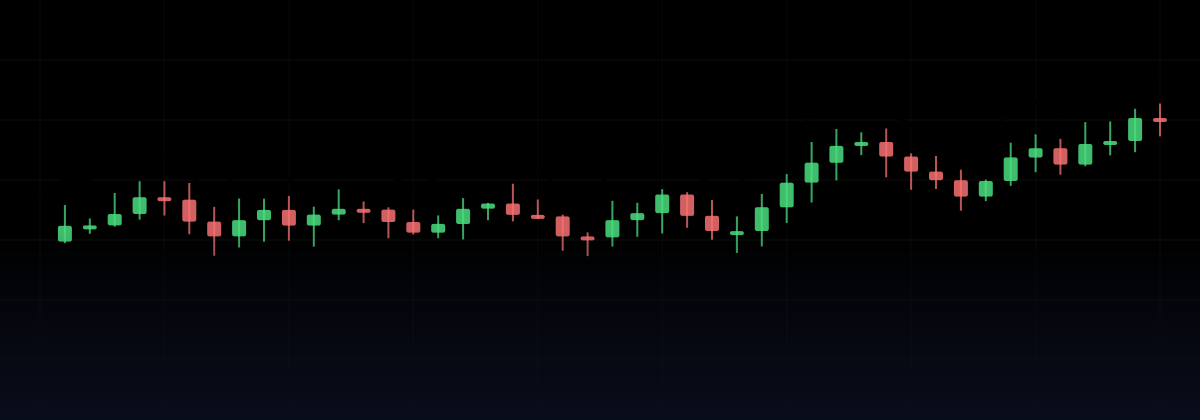
The Asian session covers forex trading while Tokyo, Sydney, Singapore and Hong Kong are open, roughly 8 a.m. to 5 p.m. Singapore time, which is mid-morning to early evening on Australia's east coast. It is usually quieter than London or New York, so many pairs trade in ranges, but yen, Australian dollar and New Zealand dollar pairs can move meaningfully on local data, Chinese releases and Japanese flows. For traders in Singapore and Australia, it is the session that fits a normal day, as long as you choose pairs and tactics that suit its character.
Key takeaways
- Asian hours run from the Sydney open through the Tokyo session, with Singapore and Hong Kong adding liquidity in the middle of the day.
- JPY, AUD and NZD pairs are the natural focus; EUR and GBP pairs often move little until Europe arrives.
- Scheduled catalysts include Japanese data, Australian employment and inflation, RBA and RBNZ decisions, Chinese data and the daily CNY fixing.
- The quieter tone suits range-based approaches, and the Asian range is a reference level for London breakout traders.
- Spreads can be wider than in London for some crosses, and thin liquidity can produce sudden spikes.
- Singapore retail traders deal under MAS leverage limits; Australian retail traders under ASIC's 30:1 cap on majors.
When the Asian session runs
There is no single Asian session clock. It is a sequence: Wellington opens first, then Sydney, then Tokyo, with Singapore and Hong Kong starting an hour after Tokyo in local terms but at the same time in UTC once you account for time zones. Convention puts the Tokyo session at 9 a.m. to 6 p.m. Japan time (00:00 to 09:00 UTC). Japan has no daylight saving, so those UTC hours are fixed all year.
| Event | Singapore time (SGT, UTC+8) | Sydney time, Oct to Apr (AEDT) | Sydney time, Apr to Oct (AEST) |
|---|---|---|---|
| Weekly market open (5 p.m. Sunday New York) | Monday 05:00 to 06:00 depending on US daylight saving | Monday 08:00 to 09:00 | Monday 07:00 |
| Sydney business day | 05:00 or 06:00 to 14:00 or 15:00 | 08:00 to 17:00 | 08:00 to 17:00 |
| Tokyo session | 08:00 to 17:00 | 11:00 to 20:00 | 10:00 to 19:00 |
| Singapore and Hong Kong active | 09:00 to 17:00 or later | 12:00 to 20:00 | 11:00 to 19:00 |
| London open (approx.) | 15:00 (UK summer) or 16:00 (UK winter) | 19:00 (Nov to Mar) | 17:00 (Jun to Aug) |
The transition months, when Australia, the UK and the US change clocks on different dates, shift some of these by an hour. Our Sydney session hours page covers the daylight saving calendar in detail.
What the Asian session is like
Compared with London and New York, the Asian session typically has lower overall volume in the most traded pairs. The big European banks are not yet at their desks and US participants are asleep. That produces a recognisable character:
- Ranges are common: EUR/USD and GBP/USD often drift within a modest band, setting the "Asian range" that London traders later test.
- Yen flows matter: Japanese importers, exporters, life insurers and retail investors are active, and USD/JPY reacts to their flows and to Japanese policy news.
- Antipodean currencies are local: AUD and NZD respond to their own data and to China, Australia's largest trading partner.
- Liquidity can be thin: in the early hours after the weekly open, and around holidays in Japan or China, a single large order can move prices more than usual.
The pairs that move in Asian hours
USD/JPY and yen crosses
USD/JPY is usually the most traded pair in Asian hours. It reacts to Japanese data, Bank of Japan communication, Ministry of Finance comments about the yen, and to moves in US Treasury yields carried over from the previous New York session. Crosses such as EUR/JPY, GBP/JPY and AUD/JPY combine yen flows with risk sentiment and can be more volatile than USD/JPY itself. Our Tokyo session pairs page and USD/JPY strategy guide go further.
AUD/USD and NZD/USD
The Australian and New Zealand dollars are most active when their home markets are open. Australian employment and inflation data, Reserve Bank of Australia decisions and Chinese activity data can produce the day's main move in these pairs during the Asian session. AUD is also sensitive to iron ore and broader commodity prices. See our page on AUD/USD hours and catalysts.
AUD/NZD and AUD/JPY
AUD/NZD often trades in long ranges because the two economies are closely linked, which makes it popular with range traders, though spreads are wider than on majors. AUD/JPY is a classic risk-sentiment barometer: it tends to rise when global risk appetite improves and fall sharply in risk-off episodes.
USD/SGD and USD/CNH
Singapore-based traders sometimes look at USD/SGD and offshore yuan (CNH). The Monetary Authority of Singapore manages the Singapore dollar against an undisclosed basket within a policy band, so USD/SGD tends to be less volatile than freely floating pairs. CNH reacts to the People's Bank of China's daily fixing for the onshore yuan.
Scheduled catalysts in Asian hours
Times below are approximate and can change, so confirm them on an economic calendar.
| Release or event | Typical local time | Singapore time | Pairs most affected |
|---|---|---|---|
| New Zealand data and RBNZ decisions | 10:45 NZ (data); 14:00 NZ (RBNZ) | Early morning (varies with NZ daylight saving) | NZD/USD, AUD/NZD |
| Japanese data (CPI, GDP, Tankan) | 08:30 or 08:50 JST | 07:30 or 07:50 | USD/JPY, yen crosses |
| Tokyo fixing | Just before 10:00 JST | Just before 09:00 | USD/JPY |
| PBoC CNY midpoint fixing | 09:15 Beijing | 09:15 | USD/CNH, AUD/USD |
| Australian employment and CPI | 11:30 Sydney | 08:30 (AEDT) or 09:30 (AEST) | AUD/USD, AUD crosses |
| Chinese activity data, trade, PMIs | Often 09:30 or 10:00 Beijing | 09:30 or 10:00 | AUD, NZD, CNH, risk sentiment |
| RBA decision | 14:30 Sydney | 11:30 (AEDT) or 12:30 (AEST) | AUD/USD, AUD crosses |
| Bank of Japan decision | No fixed time; usually around midday JST | Around 11:00 | USD/JPY, yen crosses |
Gotobi days
Traders in USD/JPY sometimes watch "gotobi" days, Japanese business days whose date is a multiple of five (the 5th, 10th, 15th, 20th, 25th and month-end). Many Japanese companies settle payments on these dates, and importers buying dollars ahead of the Tokyo fixing can push USD/JPY up in the early Tokyo session. It is a well-known seasonal tendency, not a reliable edge; plenty of gotobi days show no effect, and acting on it without a stop is a gamble.
Strategies that fit the session
Range trading
When a pair is confined to a range in quiet hours, traders may buy near the lower boundary and sell near the upper one, with stops just outside. This works only while the range holds. The usual failure is a breakout on data or as London arrives, so many range traders stop opening new trades an hour or two before the London open. Our guide on trading ranging markets covers how to define a range objectively.
Asian range breakout
Some traders do not trade the Asian session at all but use it as a setup. They mark the session's high and low and place orders to catch a breakout when London opens. This is popular with GBP/USD and EUR/USD. False breakouts are frequent, so position sizing and a clear invalidation level matter more than the entry trigger. See the Asian range breakout strategy for rules and pitfalls.
News-driven trades in AUD and JPY
Australian employment, Chinese data and Japanese policy news can produce directional moves in Asian hours. These carry the usual news risks: wider spreads around the release and slippage on stops.
A worked example: sizing a range trade on AUD/USD
Suppose you trade from Singapore with an account worth US$5,000 and you risk 1 percent, or $50, per trade. AUD/USD has spent the morning between 0.6520 and 0.6550. You plan to buy at 0.6523 with a stop at 0.6510, 13 pips below, and a target at 0.6545, 22 pips above.
- Pip value on AUD/USD is $10 per standard lot, $1 per mini lot and $0.10 per micro lot.
- Risk per mini lot at 13 pips is $13, so $50 ÷ $13 = 3.8 mini lots. Round down to 3 mini lots (30,000 units), risking $39.
- If the target is hit, the gain is 22 × $3 = $66, a reward-to-risk of about 1.7.
- If your broker's spread is 0.8 pips in this hour, that costs about $2.40 on the position, around 6 percent of your risk.
Now repeat the calculation for AUD/NZD with a 3-pip spread at the same hour: the cost is much larger relative to a similar range, which is why spread checks matter more in Asian hours than in London. Also note the exit plan: if AUD/USD is still inside the range an hour before London opens, many range traders close the position rather than carry it into a likely breakout.
Regulation for Singapore and Australian traders
In Singapore, retail leveraged forex is regulated by the Monetary Authority of Singapore. MAS caps retail leverage at 20:1 on major currency pairs, with lower limits for other products, and brokers must hold a capital markets services licence. Our page on MAS leverage limits covers the details; confirm current limits with MAS and your broker.
In Australia, retail CFDs fall under ASIC's product intervention order: 30:1 on major currency pairs, 20:1 on minor pairs, gold and major indices, margin close-out at 50 percent and negative balance protection. Both countries' rules apply only if you are a client of the locally licensed entity; signing up with an offshore arm of the same brand removes them.
The main risk in Asian hours: quiet does not mean safe. Thin liquidity after the weekly open, around Japanese or Chinese holidays and during surprise policy news can produce sudden spikes and wide spreads that trigger stops at poor prices. Range strategies tend to win small and lose big when the range breaks. Leverage magnifies these losses, and most retail forex and CFD accounts lose money. Know the session's scheduled events and size every trade for a breakout against you.
Frequently asked questions
What time does the Asian forex session start in Singapore?
Trading for the week starts at about 5 a.m. or 6 a.m. Singapore time on Monday, depending on US daylight saving. The Tokyo session, usually regarded as the core of Asian hours, runs roughly 8 a.m. to 5 p.m. Singapore time. Liquidity builds through the morning as Tokyo, Singapore and Hong Kong become active.
Which currency pairs are best to trade in the Asian session?
USD/JPY, the yen crosses, AUD/USD, NZD/USD and AUD/NZD are usually the most active because their home markets are open and their data is released in these hours. EUR/USD and GBP/USD often move little until London arrives, so trading costs can be large relative to the movement available.
Is the Asian session good for scalping?
It can be in liquid pairs like USD/JPY during the busier middle of the session, but scalping depends on tight spreads. Many crosses have wider spreads in Asian hours than in London, which makes small targets expensive. Check your broker's typical spread by hour and pair before committing to a scalping approach in this session.
Why is the Asian session quieter than London?
Because the largest FX trading centres, London and New York, are closed, and European and US banks and funds are not active. Tokyo, Singapore and Hong Kong are significant centres, but combined Asian activity in pairs like EUR/USD is lower. Local currencies such as JPY, AUD and NZD are the exceptions.
Can Australians and Singaporeans trade forex legally?
Yes, through locally licensed brokers. Australians should use a broker holding an Australian Financial Services Licence from ASIC; Singapore residents should use a firm licensed by MAS. Each regulator sets leverage limits and conduct rules. Brokers' offshore entities may offer higher leverage but without those protections.
What is the Asian range in forex?
It is the high and low a pair sets during Asian trading hours, often used by London traders as a reference. A break above or below it after the London open can mark the start of the day's main move, but false breaks are common. Traders define the range using fixed times so it is consistent day to day.
This article is general information, not personal financial advice. Figures such as spreads, fees, leverage and rules change; confirm them with the provider and check the provider is authorised for your country of residence.