New York Session Reversal Strategy: Fading the London Move With Rules
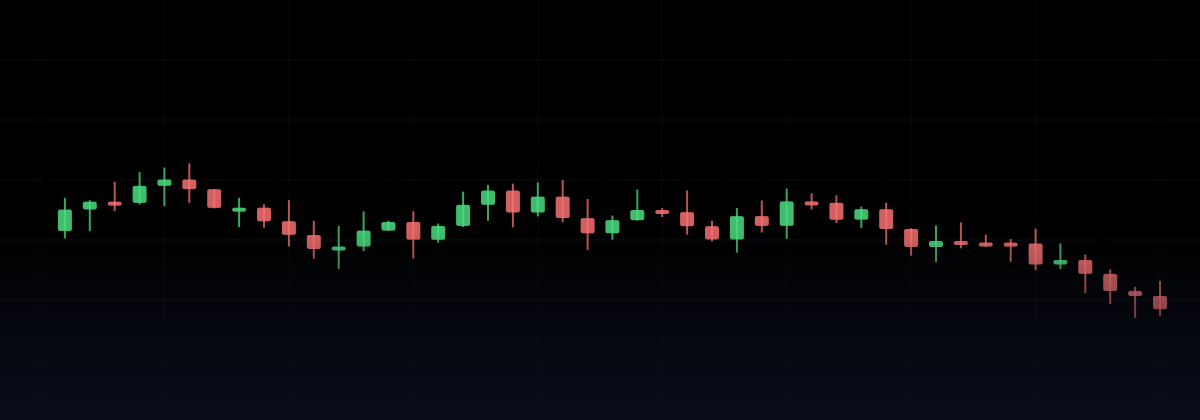
A New York session reversal strategy looks for the move that London made in the morning to stall and turn once US traders arrive, usually after the 08:30 New York data window or around the 10:00 to 11:00 period, and trades back towards the day's open. It is a counter-trend idea, so it needs a clear reason for the London move to be exhausted and a confirmation that the turn has started. On strong trend days it simply loses, and the rules have to accept that.
Key takeaways
- The setup: London drives a pair to a new daily extreme, New York extends it briefly, then price fails and reverses.
- Key time windows are the US data release at 08:30 ET, the US equity open at 09:30 ET, and the run into the London close and 4pm London fix.
- Confirmation usually means a failed new extreme plus a break of intraday structure in the opposite direction.
- Targets are modest: the London open price, the session midpoint or a prior level, not the whole London move.
- US retail traders deal with CFTC-registered, NFA-member firms, face 50:1 leverage on majors and FIFO rules, and cannot trade CFDs.
- Fading a trend that keeps going is the main failure mode; daily trend filters and strict stops matter.
Why the London move sometimes reverses in New York
Between about 13:00 and 16:00 London time, both London and New York are open, and this overlap is typically the most liquid part of the forex day. By the time New York traders arrive, European participants may have been pushing a pair in one direction for five hours. Some of them will take profit before their own day ends. US participants arrive with fresh information: US data, US equity futures, Treasury yields and the overnight news from their own perspective. If that information does not support the London move, the move can unwind.
There is also a positioning story. A London trend often leaves late buyers or sellers near the extreme. If New York extends the move just far enough to trigger stops beyond the London high or low, then fails, those late traders become sellers or buyers on the way back. That is the same mechanism described in our liquidity sweep strategy guide, applied at a specific time of day.
None of this is guaranteed. Plenty of days see New York add to the London move, especially when US data confirms it. The reversal strategy is a bet that a particular subset of days, those where certain conditions line up, are more likely to turn than continue. For the session schedule, see our page on the London and New York overlap.
The timing windows that matter
| New York time (ET) | Event | Why it matters for reversals |
|---|---|---|
| 08:30 | Major US data releases (payrolls, CPI, retail sales, jobless claims) | A data surprise can extend or end the London move in seconds; spreads widen |
| 09:30 | US equity cash open | Risk sentiment shifts flow into USD, JPY and commodity currencies |
| 10:00 | Second-tier US data (ISM, consumer sentiment, JOLTS) | Often the point where a fading London move gets its second push or gives up |
| 11:00 (16:00 London) | WM/Reuters 4pm London fix and London close approach | Fix-related flows can produce sharp moves, then reversals as London squares up |
| 12:00 onwards | London closed | Liquidity thins; late-day reversals tend to be smaller and choppier |
These times are in New York local time. London and New York change clocks on different dates in March and in October/November, so for a week or two each year the gap between them is four hours rather than five. Check your platform clock during those weeks.
Conditions that favour a reversal
Reversals are most worth considering when several of these are present together.
- An extended London move. The London session range is already a large share of the pair's typical daily range. If EUR/USD averages 70 pips a day and London has already moved 60, the remaining room in that direction is limited on an average day.
- A clear reference level was hit. The move reached the previous day's high or low, a weekly level or a round number, and pushed beyond it only briefly.
- The US catalyst disappointed. The move needed US data to confirm it, and the data was mixed or contradictory.
- Momentum is fading. Successive pushes to new extremes are smaller, and candles show long wicks in the trend direction.
- No strong higher-timeframe trend. Reversals against a powerful daily trend are much harder to hold.
Conditions that argue against the trade are just as important: a central bank meeting that day, a genuine shift in rate expectations, or a broad risk-off move where the London trend is part of a bigger story.
Entry rules: a testable framework
- Measure London. At 08:00 ET, record the London session high and low and the London open price.
- Wait for the extension. Price must make a new session extreme in the London direction after 08:00 ET. No new extreme, no setup.
- Wait for failure. On the 15-minute chart, price closes back below the prior London high (for a long London day) or above the prior London low.
- Confirm with structure. Price breaks the most recent 15-minute swing low (for a short). Our page on market structure explains how to define swings consistently.
- Enter on the break or the first pullback to the broken swing.
- Stop beyond the New York extreme plus a buffer covering the typical spread.
- Target the 50 percent retracement of the London move first, then the London open price.
- Time stop: close by 12:00 ET if neither target nor stop has been hit. After London closes, the momentum that drives reversals often fades.
A worked EUR/USD example
Illustrative numbers. London opens with EUR/USD at 1.0815. By 08:00 ET it has rallied to 1.0874, a 59-pip London move. At 08:30 ET a US jobs report comes in close to expectations. EUR/USD spikes to 1.0889, beyond the previous day's high of 1.0880, then the 08:45 to 09:00 candle closes at 1.0871. At 09:40, after the US equity open, price breaks the most recent swing low at 1.0862. A short is entered at 1.0861.
- Stop: New York high 1.0889 plus 3 pips = 1.0892, so 31 pips of risk.
- First target: halfway back through the London move. The move ran from 1.0815 to 1.0889, 74 pips; half is 37 pips, giving 1.0852. That is only 9 pips from entry.
- Second target: the London open at 1.0815, 46 pips from entry.
The first target is too close to justify a 31-pip stop on its own, which is a common problem with this setup. A trader might instead use a single target at the London open for a reward-to-risk of 46 / 31 = 1.48, or wait for a better pullback entry. Our risk-to-reward calculator makes these comparisons quick.
Sizing for a 10,000 USD account at 1 percent risk: 100 USD / 31 pips / 10 USD per pip = 0.32 lots. If the London-open target is hit, that is about 46 x 0.32 x 10 = 147 USD before costs. If stopped, about 99 USD plus costs.
Trading around US data
Many New York reversals start right after 08:30 ET. That is also when execution is at its worst. Spreads can widen sharply in the seconds around a release and stop orders can slip; see why spreads widen during news releases. A reversal entry triggered on a spike candle may fill several pips from the price you saw.
A cautious approach is to ignore the first 15 minutes after a major release and wait for a closed candle. That costs some entry price but avoids most of the spread problem. For the biggest releases, also read our guides to trading non-farm payrolls and the CPI inflation report. On those days, the London move can be the market positioning ahead of the number, and the reversal can be violent; it can also go the other way entirely.
US rules if you trade from the United States
Retail forex in the USA is traded through firms registered with the CFTC and members of the NFA. CFDs are not available to US retail clients, so you trade spot forex directly. Leverage is capped at 50:1 on major pairs and 20:1 on others. NFA rules require first-in, first-out closing of positions in the same pair and prohibit holding simultaneous long and short positions in the same pair in one account; our page on the CFTC FIFO rule explains the practical effect. For a reversal trader, FIFO matters if you scale in at several prices and want to close the newest position first: you cannot.
The core risk. A reversal strategy is a bet against the day's dominant flow. On trend days, the reversal never comes and every entry is stopped. Strings of such days are normal, and a trader who widens stops or adds to losers to avoid being wrong can turn a small, planned loss into a large one. Leverage magnifies these losses, and most retail forex and CFD accounts lose money. This guide is educational, not personal advice.
Failure modes and how to limit them
- Trend days. Use a daily filter: for example, no reversal shorts when the daily chart has made higher highs and higher lows for the past week and price is above the 20-day average. Test whether this helps on your pairs.
- Second push. Price fails, you enter, then the London direction resumes to a new extreme. Taking only one attempt per day keeps losses contained.
- Reversal too small. If the London move was 30 pips, a reversal to the open may not pay for the stop. Set a minimum London move size.
- Afternoon drift. After London closes, many reversals simply stall. The time stop prevents a trade from sitting open into thin late-day liquidity.
- Holiday and half days. When either the UK or the US has a bank holiday, liquidity is thinner and the usual timing windows can behave very differently. Many traders skip those sessions entirely.
- Hindsight. Reversals look obvious on a finished chart. Only a recorded, rule-based backtest tells you how often the conditions led to a profitable trade.
Frequently asked questions
What time does the New York session reversal usually happen?
There is no fixed time, but many reversals start between 08:30 and 11:00 New York time, around US data, the equity open and the run-up to the 4pm London fix. After London closes, reversals tend to be smaller. Track the time of each setup in your journal to see which window works for your pairs.
Is fading the London move a good strategy for beginners?
It is harder than it looks. Counter-trend trades need tight discipline about stops, and the setup fails on trend days, which can come in clusters. Beginners often do better first learning to identify trend and structure. If you test reversals, use a demo or very small size and log every setup, including the ones you skip.
Which pairs suit a New York reversal strategy?
Liquid pairs that move in both London and New York hours are the usual choices: EUR/USD, GBP/USD, USD/JPY and USD/CAD. USD/CAD reacts to oil and Canadian data released at the same time as US numbers. Exotic pairs tend to have spreads too wide for intraday reversals. Measure behaviour pair by pair.
How do I know the London move is exhausted?
You do not know; you look for evidence. Useful signs include the move already covering most of the average daily range, a brief push beyond a key level that fails to hold, smaller successive pushes, and a break of short-term structure against the trend. Even with all of these, the trend can resume, so a stop is essential.
Can US traders use this strategy given FIFO rules?
Yes. FIFO and the no-hedging rule limit how you manage multiple positions in the same pair, not whether you can trade reversals. You enter and exit one position, or close scaled entries in the order they were opened. Trade with a CFTC-registered, NFA-member firm and check its specific order handling.
Should I trade reversals on news days?
Decide in advance and test it. News days produce the biggest reversals and the biggest losses. Spreads widen and slippage increases around releases. Many traders wait for at least one closed 15-minute candle after major data before considering an entry, accepting a worse price for more reliable information.
This article is general information, not personal financial advice. Figures such as spreads, fees, leverage and rules change; confirm them with the provider and check the provider is authorised for your country of residence.