How to Calculate Pip Value for USD/JPY
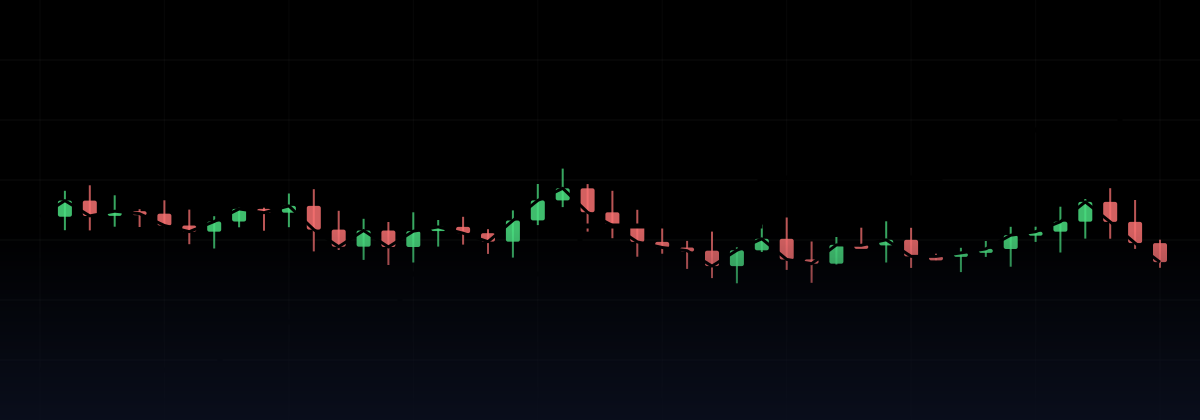
For USD/JPY, one pip is 0.01, so a pip on one standard lot (100,000 dollars) is worth 1,000 yen. To express that in dollars, divide by the current exchange rate: at 150.00, 1,000 ÷ 150 = $6.67 per pip per standard lot, or about $0.67 per mini lot and $0.067 per micro lot. Because the conversion uses the live rate, USD/JPY's pip value in dollars changes as the pair moves, unlike EUR/USD's fixed $10.
Key takeaways
- On USD/JPY, a pip is the second decimal place (0.01); a pipette is the third (0.001).
- Pip value in yen is fixed: 1,000 yen per standard lot, 100 yen per mini lot, 10 yen per micro lot.
- Pip value in US dollars = 1,000 ÷ USD/JPY rate per standard lot, so it falls as USD/JPY rises.
- For accounts in other currencies, convert the yen value using the relevant exchange rate, for example GBP/JPY or EUR/JPY.
- Use pip value with your stop distance to size positions; a 30-pip stop on one standard lot at 150.00 risks about $200.
Why a USD/JPY pip is 0.01
For most currency pairs, a pip is the fourth decimal place, 0.0001, because the rates are close to 1. The yen is different: one dollar buys well over a hundred yen, so prices are quoted to two decimal places (three with pipettes). A move in USD/JPY from 150.00 to 150.01 is one pip. A move from 150.000 to 150.001 is one pipette, a tenth of a pip.
This convention applies to every pair with the yen as the quote currency: EUR/JPY, GBP/JPY, AUD/JPY, CAD/JPY, CHF/JPY and NZD/JPY. A common beginner error is to apply 0.0001 to a yen pair and get a pip value a hundred times too small. If pips themselves are unfamiliar, see what is a pip in forex, and for the tenth-of-a-pip increment, what is a pipette.
The formula, step by step
Step 1: pip value in the quote currency (yen)
The general formula is:
Pip value (quote currency) = Pip size × Position size in units
For USD/JPY: 0.01 × 100,000 = 1,000 yen per standard lot. This figure never changes with the exchange rate; it depends only on position size.
Step 2: convert to your account currency
For a US dollar account, the quote currency (yen) must be converted into dollars. Since the pair itself is USD/JPY, you divide by the current rate:
Pip value (USD) = 1,000 ÷ USD/JPY rate (per standard lot)
Equivalently, you can write the whole thing as (0.01 ÷ rate) × units. At 150.00: (0.01 ÷ 150) × 100,000 = $6.667.
Step 3: scale by lot size
Multiply by the number of lots. 0.30 lots at 150.00 = 0.30 × $6.667 = $2.00 per pip.
USD/JPY pip values at different exchange rates
Because the dollar value depends on the rate, here is a reference table. Figures are rounded to the nearest cent.
| USD/JPY rate | Standard lot (100,000) | Mini lot (10,000) | Micro lot (1,000) |
|---|---|---|---|
| 110.00 | $9.09 | $0.91 | $0.09 |
| 120.00 | $8.33 | $0.83 | $0.08 |
| 130.00 | $7.69 | $0.77 | $0.08 |
| 140.00 | $7.14 | $0.71 | $0.07 |
| 150.00 | $6.67 | $0.67 | $0.07 |
| 160.00 | $6.25 | $0.63 | $0.06 |
Notice the pattern: the higher USD/JPY trades, the less each pip is worth in dollars. Between 110 and 160, the dollar value of a pip falls by about 31%. If you size positions using a fixed "$10 a pip" rule of thumb borrowed from EUR/USD, you will consistently misjudge risk on yen pairs.
Worked examples
Example 1: profit on a long trade
You buy 0.50 lots of USD/JPY at 149.20 and close at 150.10. The move is 150.10 − 149.20 = 0.90, which is 90 pips.
- Profit in yen: 90 pips × 1,000 yen × 0.50 = 45,000 yen.
- Convert at the closing rate: 45,000 ÷ 150.10 = $299.80.
Platforms convert the yen profit at the rate when the trade closes, which is why calculating with the closing rate gives the most accurate figure. Using the entry rate (149.20) would give $301.61, a small difference that grows with larger positions.
Example 2: loss on a short trade
You sell 1.2 lots at 151.40 and are stopped out at 151.85, a 45-pip loss.
- Loss in yen: 45 × 1,000 × 1.2 = 54,000 yen.
- In dollars at 151.85: 54,000 ÷ 151.85 = $355.61.
Remember that a short closes at the ask, so if the spread widened when your stop triggered, the fill and therefore the loss could be larger.
Example 3: account in another currency
Your account is in British pounds and you trade 1 lot of USD/JPY. The yen pip value is 1,000 yen. To convert yen to pounds, divide by GBP/JPY. If GBP/JPY is 190.00, the pip value is 1,000 ÷ 190 = £5.26. For a euro account, divide by EUR/JPY: at 162.00, 1,000 ÷ 162 = €6.17.
The rule: take the yen pip value and convert it using the exchange rate between your account currency and the yen. For a wider table across pairs, see our forex pip calculator.
Yen pairs can move fast, especially around Japanese policy surprises. USD/JPY has a history of sharp moves around Bank of Japan decisions and periods of official intervention by Japan's Ministry of Finance, when the pair can move hundreds of pips in minutes and stops may slip badly. Size positions assuming your stop may not fill exactly. Most retail CFD and forex accounts lose money, and leverage magnifies losses.
Using pip value to size a position
Pip value is the bridge between your stop distance and your risk in money. The position-size formula is:
Lots = Risk amount ÷ (Stop distance in pips × Pip value per lot)
Example: a $5,000 account risking 1% ($50), buying USD/JPY at 150.00 with a stop at 149.60, 40 pips away.
- Pip value per standard lot at 150.00: $6.667.
- Risk per lot over 40 pips: 40 × $6.667 = $266.67.
- Lots: $50 ÷ $266.67 = 0.1875, round down to 0.18 lots.
- Actual risk: 40 × $6.667 × 0.18 = $48.00.
Compare with EUR/USD: the same $50 risk and 40-pip stop would allow only 0.125 lots, because each EUR/USD pip is worth $10 per lot. Same risk, different lot sizes; this is why lot size should always come from the calculation rather than habit. Our position sizing guide covers the general method, and the position size calculator does it instantly.
Margin on USD/JPY
Pip value and margin are separate calculations. Margin on USD/JPY for a USD account is straightforward because the base currency is the dollar: one standard lot is $100,000 of exposure.
| Leverage | Who it typically applies to | Margin for 1 standard lot | Margin for 0.10 lots |
|---|---|---|---|
| 50:1 | US retail clients on majors | $2,000 | $200 |
| 30:1 | UK, EU and Australian retail clients on majors | $3,333 | $333 |
| 20:1 | Retail caps on non-major pairs in those regions | $5,000 | $500 |
Leverage changes how much capital is tied up, not how much a pip is worth. A 0.18-lot position risks the same $48 over a 40-pip stop whether margin is $360 at 50:1 or $600 at 30:1. See how forex leverage works for more.
The same method for other yen pairs
Once you understand USD/JPY, every other yen pair follows the same logic, with one useful consequence: for a US dollar account, all yen pairs have the same dollar pip value at any given moment, because the yen pip value is always converted through USD/JPY.
Take a USD account with USD/JPY at 150.00 and these positions, each one standard lot:
| Pair | Pip value in yen | Conversion | Pip value in USD |
|---|---|---|---|
| USD/JPY | 1,000 yen | ÷ 150.00 | $6.67 |
| EUR/JPY | 1,000 yen | ÷ 150.00 (USD/JPY) | $6.67 |
| GBP/JPY | 1,000 yen | ÷ 150.00 (USD/JPY) | $6.67 |
| AUD/JPY | 1,000 yen | ÷ 150.00 (USD/JPY) | $6.67 |
What differs between them is not the pip value but how many pips they typically move. GBP/JPY has historically been one of the more volatile major crosses, often covering noticeably more pips per day than USD/JPY, so the same lot size carries more risk in practice even though each pip is worth the same. That is why stop distance belongs in the sizing formula: a wider stop on a more volatile pair automatically produces a smaller position for the same risk.
Margin is where the pairs do differ. For EUR/JPY, one standard lot is 100,000 euros of exposure, so margin is calculated on the euro value converted to dollars, not on $100,000. Your platform handles this automatically, but it explains why a lot of GBP/JPY ties up more margin than a lot of USD/JPY. If you want to trade the more active yen cross, see our GBP/JPY trading guide for how its behaviour differs.
Common mistakes with USD/JPY pip value
- Using 0.0001 as the pip size. On yen pairs it is 0.01. This error makes pip value look 100 times smaller than it is.
- Confusing pips and pipettes. A five-digit platform shows 150.123; the last digit is a pipette. A move from 150.120 to 150.130 is one pip, not ten.
- Assuming $10 per pip. That holds for pairs quoted in dollars, such as EUR/USD and GBP/USD, not for USD/JPY.
- Ignoring rate changes. If USD/JPY moves from 140 to 155 over months, your dollar pip value falls by nearly 10%. Recalculate rather than reusing old figures.
- Forgetting the account currency. A GBP or EUR account needs conversion through GBP/JPY or EUR/JPY, not USD/JPY.
- Mixing up "points" in MetaTrader. MT4 and MT5 often express stop distances in points, which are pipettes on five-digit and three-digit quotes. A 100-point stop on USD/JPY is 10 pips.
Quick mental shortcut
For fast estimates, remember that around 150, a standard-lot pip on USD/JPY is roughly two-thirds of a EUR/USD pip, about $6.67 versus $10. Around 110, it is roughly nine-tenths. That is close enough for a sanity check before you place a trade, but use the exact formula or a calculator for actual sizing. If you also trade gold, which has its own conventions, see how to calculate pip value for XAU/USD.
Frequently asked questions
How much is 1 pip worth on USD/JPY?
One pip on a standard lot of USD/JPY is always 1,000 yen. In US dollars, divide 1,000 by the exchange rate: about $6.67 at 150.00, $7.14 at 140.00 or $9.09 at 110.00. A mini lot is one tenth of that and a micro lot one hundredth. The dollar value changes as USD/JPY moves.
Why is a pip 0.01 on USD/JPY and not 0.0001?
Because the yen has a much lower unit value than the dollar, so USD/JPY trades above 100 and is quoted to two decimal places. The pip is defined as the second decimal place, 0.01, for all pairs where the yen is the quote currency. Platforms add a third decimal place for pipettes, which are tenths of a pip.
How many pips is a move from 150.00 to 151.00?
One hundred pips. Each 0.01 change is one pip, so a full 1.00 move equals 100 pips. On a standard lot that is 100,000 yen, about $662 at a closing rate of 151.00. On a micro lot it is 1,000 yen, roughly $6.62 at the same rate.
Does USD/JPY pip value change with the exchange rate?
In yen, no: it is always 1,000 yen per standard lot. In US dollars or any other account currency, yes, because the yen value must be converted at the current rate. When USD/JPY rises, each pip is worth fewer dollars; when it falls, each pip is worth more. Recalculate periodically if you trade the pair often.
How do I calculate USD/JPY pip value for a euro account?
Start with the yen pip value, 1,000 yen per standard lot, then convert yen into euros by dividing by the EUR/JPY rate. At EUR/JPY 162.00, one pip on a standard lot is about €6.17. Multiply by your lot size for smaller positions, for example €0.62 per pip on a mini lot.
What is a point on USD/JPY in MetaTrader?
On brokers quoting USD/JPY to three decimals, a point is 0.001, one tenth of a pip. So a 200-point stop loss is 20 pips. On older three-digit quotes (two decimals), a point and a pip are the same. Check the symbol's digit setting in the contract specification to avoid placing stops ten times too tight or too wide.
This article is general information, not personal financial advice. Figures such as spreads, fees, leverage and rules change; confirm them with the provider and check the provider is authorised for your country of residence.