A Forex Day Trading Strategy You Can Actually Follow, Session by Session
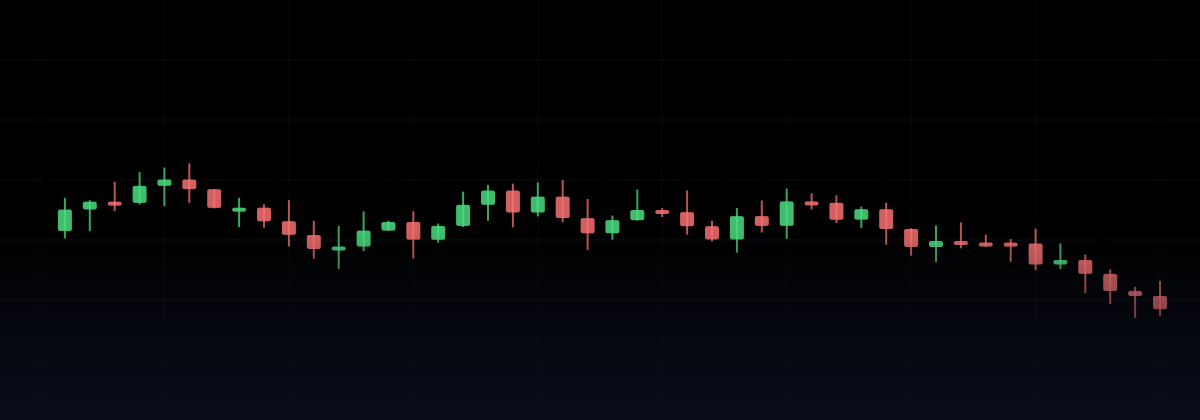
A workable forex day trading strategy opens and closes every position within the same trading day, takes one to three planned trades during the most liquid session, and uses the 15-minute chart for entries with the 1-hour and 4-hour charts for direction. The edge, where one exists, comes from preparation, a short list of setups you execute the same way every time, and fixed risk per trade. Leverage limits and order rules differ between the US, UK and Canada, so the same plan needs small adjustments depending on where your account sits.
Key takeaways
- Day trading means flat by the end of your session: no overnight swap, no weekend gap risk.
- Use a top-down routine: 4-hour for context, 1-hour for bias, 15-minute for execution.
- Two setups are enough: a session-range breakout with retest, and a trend pullback to a moving average.
- Stops of 15 to 30 pips on majors are typical, so position size must be calculated for each trade.
- US accounts face 50:1 leverage on majors, FIFO and no hedging; UK retail accounts are capped at 30:1; Canadian limits are set by CIRO margin rates.
- Most retail day traders lose money; a daily loss limit and a trade journal matter more than the entry signal.
What makes day trading different from scalping and swing trading
Day trading sits between the two. A scalper may take a dozen trades on the 1- or 5-minute chart aiming for a handful of pips each. A swing trader holds for days and accepts overnight risk. A day trader takes fewer, larger intraday moves, typically 20 to 60 pips on majors, and is flat before the session ends.
That middle position has real advantages. Costs are a smaller share of each trade than in scalping, there is no overnight financing charge, and you never wake up to a gap through your stop after a weekend headline. The disadvantage is time: you need to be at the screen during a defined window, usually the London session, the New York session or the overlap between them. If you cannot commit two to four focused hours on weekdays, a slower approach from our forex trading strategies hub may suit you better.
Before the session: a 20-minute preparation routine
Most of the work happens before the first trade. The routine below is short enough to repeat daily.
- Check the economic calendar. Note any high-impact releases for the currencies you trade: central bank decisions, CPI, employment reports, retail sales. Decide in advance whether you will be flat through them.
- Mark the key levels. Previous day's high and low, the Asian session range, any 4-hour swing highs and lows within about 100 pips of current price, and nearby round numbers.
- Define the bias on the 4-hour and 1-hour charts. Is the pair trending, ranging, or unclear? Write one sentence: "EUR/USD 4H uptrend, 1H pulling back towards 1.0850 support; longs only above 1.0830." Our guide to multi-timeframe analysis explains how to stack these views without contradicting yourself.
- Pick two or three pairs at most. Watching eight pairs means taking mediocre trades on all of them.
- Set your risk for the day. Risk per trade (for example 0.75% or 1%) and a daily stop (for example 2% or two losing trades).
Setup 1: session range breakout and retest
Overnight, during the Asian session, majors like EUR/USD and GBP/USD often trade in a compressed range. When London opens, liquidity arrives and price frequently breaks one side of that range. Trading the raw break catches many false moves, so this version waits for a retest.
Rules
- Mark the high and low of the Asian session (roughly 00:00 to 07:00 UK time). If the range is unusually wide relative to the pair's average daily range, skip the setup; the move may have already happened.
- Wait for a 15-minute candle to close beyond the range high (for longs) or low (for shorts).
- Wait for price to come back and test the broken level. Enter when a 15-minute candle rejects the level and closes back in the breakout direction.
- Stop goes beyond the retest candle's extreme or back inside the range by a sensible margin, typically 15 to 25 pips on EUR/USD.
- Target the next 1-hour level or 2 times risk, whichever comes first.
Many breakouts never retest, and you will miss some strong moves. That is the price of filtering out the breaks that immediately reverse. We cover the pure version, and its failure rate, in the London breakout strategy guide, and the retest logic in more depth in breakout and retest.
Setup 2: trend pullback to the 20 EMA on the 15-minute chart
Once the session has a clear direction, the second setup trades the pullbacks within it.
Rules
- The 1-hour chart must show a trend in your bias direction: higher highs and higher lows for longs.
- On the 15-minute chart, wait for price to pull back to or slightly through the 20-period EMA without closing decisively beyond the 50 EMA.
- Enter on a candle that closes back in trend direction, such as a bullish engulfing bar or a strong close above the prior candle's high.
- Stop beyond the pullback's swing point plus a few pips for spread.
- Take half at 1.5R, trail the rest behind each new 15-minute swing low, and close whatever remains before your session ends.
This setup works on trending days and fails on choppy ones. If two pullback trades in a row are stopped out on the same pair, the market is probably not trending the way your bias assumed. Stop trading that pair for the day.
Position sizing and margin: a worked example
Suppose you trade a $10,000 USD account and risk 1% per trade, so $100. A GBP/USD long has a 20-pip stop. For pairs quoted in USD (EUR/USD, GBP/USD, AUD/USD), one standard lot is worth $10 per pip.
- Allowed risk per pip: $100 / 20 = $5
- Position size: $5 / $10 = 0.50 standard lots (50,000 units)
Now the margin. At a GBP/USD price of 1.2700, 50,000 units has a notional value of $63,500. The margin required depends on where your account is regulated:
| Jurisdiction (retail) | Max leverage on majors | Margin for $63,500 notional | Other rules that affect day traders |
|---|---|---|---|
| USA (CFTC/NFA) | 50:1 | $1,270 | FIFO closing order, no hedging in one account, no CFDs for retail |
| UK (FCA) | 30:1 | $2,117 | Negative balance protection, 50% margin close-out rule |
| EU (ESMA rules) | 30:1 | $2,117 | Same core rules as UK; national regulators enforce |
| Canada (CIRO) | Set by CIRO margin rates per currency | Varies by pair | Margin rates differ for majors and less liquid currencies |
Leverage only determines how much margin is tied up; your actual risk is set by position size and stop distance. A trader at 50:1 and one at 30:1 lose the same $100 if the stop is hit. Our margin calculator handles other pairs and account currencies, and Canadian readers should check our page on CIRO leverage rules for how margin is set there.
The US-specific rules in practice
FIFO (first in, first out) means that if you hold two long positions on the same pair, you must close the older one first. It breaks some scale-in and partial-close workflows, so US day traders often split a planned partial into two separate orders with their own targets from the outset. The no-hedging rule means you cannot hold a long and a short in the same pair in the same account. Neither rule stops you day trading; they just constrain trade management. Only brokers registered with the CFTC and members of the NFA may legally offer retail forex to US residents; our list of US forex brokers covers the options.
A common misconception is that the US pattern day trader rule ($25,000 minimum equity for frequent day trading) applies to forex. It is a FINRA rule for securities margin accounts and does not apply to spot forex accounts with a CFTC-registered dealer.
Managing the trading day
When to stop
Write your daily stop before the session and treat it as non-negotiable. Two losses at 1% each means you stop. So does a single large win, for some traders, because the urge to "give a bit back" after a good trade is real. The goal is to keep your worst days small enough that they never threaten the account.
When to close
Set a hard flat time. For a London-session trader, that might be 12:00 UK time; for someone trading the overlap, 16:30 UK time. Anything still open at that time is closed at market. This rule is what makes you a day trader rather than a swing trader who failed to exit.
News
Spreads widen and price can jump tens of pips in seconds around major releases. Either be flat for five minutes either side of high-impact data, or trade news deliberately with a separate, tested plan. Do not let an open day trade drift into a release by accident.
Expectations, failure modes and the numbers behind them
With 2R targets and typical costs, a day trading strategy needs a win rate of roughly 35% or more to break even. That sounds forgiving, but the live win rate is often lower than the backtest suggests, for reasons that are predictable:
- Range days. Both setups depend on directional movement. On days when price oscillates inside a 30-pip range, breakouts fail and pullbacks never resume.
- Late entries. Entering a breakout after it has already run 40 pips, instead of waiting for the retest, turns good setups into poor risk-reward trades.
- Moving the stop. Widening a stop "to give the trade room" converts a planned 1% loss into a 2% or 3% loss.
- Overtrading after a miss. Missing a clean breakout often leads to chasing a worse one an hour later.
Even with a sound process, expect losing weeks and the occasional losing month. At 1% risk per trade, ten straight losses would draw the account down by about 9.6%. That is painful but recoverable. At 3% per trade the same streak costs about 26%, which needs a 35% gain to recover. Trading for a living is a goal very few retail traders achieve; most who try do not cover their costs.
Risk and tax note: Regulator disclosures in the UK and EU consistently show that a majority of retail CFD and spread betting accounts lose money, and US dealers publish similar profitability figures quarterly. Leverage magnifies losses as much as gains. Tax treatment also differs: in the US, spot forex gains default to Section 988 ordinary income treatment unless an election is made, and in the UK spread betting profits are currently not subject to capital gains tax for most individuals while CFD profits are. See our note on spread betting tax in the UK and confirm your position with a qualified tax adviser.
Building your own version and testing it
The two setups above are a starting framework, not a finished system. Adapt the session times to your time zone, pick pairs whose behaviour you know, and test the rules exactly as written before changing anything. A sensible process is 100 or more backtested trades per setup using bar replay, then a month of forward testing on a demo account during your real trading hours, then live trading at reduced size. Track results per setup, per pair and per time of day; you will often find that one setup on one pair produces most of the results and the rest is noise.
Frequently asked questions
What is the best time to day trade forex?
For most major pairs, the London session and the overlap with New York, roughly 08:00 to 17:00 UK time, offer the deepest liquidity and tightest spreads. The first two to three hours of London often set the day's direction for European pairs. USD/JPY and AUD/USD can also be traded in the Asian session, but movement is usually smaller.
How much money do you need to day trade forex?
There is no legal minimum for spot forex in the US, UK or Canada, and brokers offer micro lots. The practical question is risk per trade. With $1,000 and 1% risk you can lose $10 per trade, which with a 20-pip stop on EUR/USD means 0.05 lots. Only trade money you can afford to lose completely.
Does the pattern day trader rule apply to forex?
No. The US pattern day trader rule is a FINRA requirement for securities margin accounts and does not apply to spot forex accounts held with a CFTC-registered, NFA-member forex dealer. US forex accounts do have their own rules instead, including 50:1 leverage on majors, 20:1 on others, FIFO and a ban on hedging within the same account.
How many trades should a forex day trader take per day?
Most disciplined day traders take between zero and three trades per session. The number should come from how many valid setups appear, not from a target. Days with no trades are normal and often protect capital. Taking many trades usually signals that the rules have loosened, especially after a loss.
Can you day trade forex for a living?
A small minority of traders do, but most retail accounts lose money and many who try to trade for a living run out of capital before developing a consistent edge. Living expenses also pressure you to take trades. Most experienced traders recommend proving consistent results over a long period, with a separate income, before considering it.
Is day trading forex better than swing trading?
Neither is inherently better. Day trading avoids overnight and weekend gap risk and swap costs, but requires fixed screen time and pays more in spreads per unit of profit than slower styles. Swing trading needs less screen time but accepts overnight risk. The right choice depends on your schedule, temperament and the costs your broker charges.
This article is general information, not personal financial advice. Figures such as spreads, fees, leverage and rules change; confirm them with the provider and check the provider is authorised for your country of residence.