A Forex Swing Trading Strategy for the Daily and 4-Hour Charts
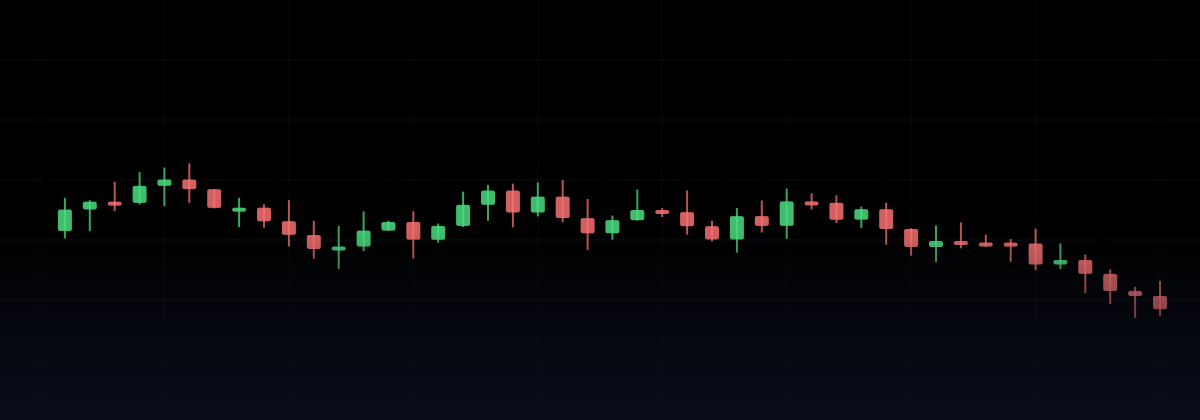
A forex swing trading strategy holds positions for a few days to two weeks, aiming to capture one leg of a larger trend. The most reliable version identifies the trend on the daily chart, waits for a pullback into a support or resistance zone, and enters on a 4-hour or daily rejection candle with a stop placed using the pair's average true range. Because trades stay open overnight, swap charges and weekend gaps become part of the risk, and US and Canadian traders face specific leverage and order rules that shape how positions are sized and managed.
Key takeaways
- Swing trading suits people with jobs: analysis takes 20 to 40 minutes a day, usually after the New York close.
- Trade only in the direction of the daily trend, entering on pullbacks rather than breakouts.
- Stops are wider, often 50 to 150 pips on majors, so position sizes are smaller than in day trading.
- Overnight swap can add to or subtract from returns, and Wednesday usually carries a triple charge.
- US retail accounts are limited to 50:1 on majors and 20:1 on other pairs, with FIFO and no hedging.
- Win rates are often below 50%; the strategy depends on winners being meaningfully larger than losers.
Why swing trading appeals to part-time traders
Most retail traders cannot sit at a screen during the London session. Swing trading works around that. The decisions are made once a day, on charts where each candle represents four hours or a full day, so the noise that dominates the 5-minute chart largely disappears. Orders can be placed in advance as limit or stop orders, and the market does the rest.
The trade-off is patience. A good swing setup on EUR/USD might appear twice a month. You will hold through days where the trade moves against you by half your stop and then recovers, and you have to sleep with an open position. If that is uncomfortable, consider whether a shorter or a much longer holding period fits you better.
The chart setup
- Daily chart: 50 EMA and 200 EMA for trend context, plus clearly marked swing highs and lows from the past six to twelve months.
- 4-hour chart: used for timing entries once the daily chart shows a pullback into a zone.
- 14-period ATR on the daily chart: used to set stop distance relative to how much the pair normally moves.
- Fibonacci retracement tool: optional, used to measure how deep a pullback has gone, not as a signal in itself. Our Fibonacci retracement guide explains the levels and their limitations.
Use a broker whose daily candles close at 17:00 New York time. That produces five daily candles per week. Brokers that close the day at midnight GMT create a small Sunday candle that distorts indicators and patterns.
The strategy rules
1. Trend filter
For longs, the daily close must be above the 200 EMA, the 50 EMA must be above the 200 EMA, and the most recent daily swing structure must show a higher high followed by a higher low (or a pullback in progress towards one). Reverse everything for shorts. If the 50 and 200 EMAs are tangled and price has crossed them repeatedly in the past month, the pair is ranging: leave it alone.
2. The pullback zone
After a fresh daily swing high, wait for price to pull back. The target zone is where at least two of these overlap:
- A previous resistance level that has been broken and may now act as support.
- The 50 EMA on the daily chart.
- The 38.2% to 61.8% retracement of the most recent swing.
A pullback that drives straight through all of them and closes below the prior higher low has broken the trend structure. The setup is cancelled.
3. The entry trigger
When price reaches the zone, drop to the 4-hour chart and wait for evidence that buyers are returning: a bullish engulfing candle, a pin bar with a long lower wick rejecting the zone, or a break above the most recent 4-hour lower high. Enter at the close of that candle or on a buy stop above it. The more general mechanics of this approach are covered in our pullback trading strategy guide.
4. Stop placement
Place the stop beyond the swing low of the pullback, then check it against the ATR. A stop of at least 1 times daily ATR keeps you outside normal daily noise. If the structural stop is less than 0.75 ATR away, widen it to around 1 ATR. If it is more than 2 ATR away, the trade's risk-reward is probably poor; consider skipping it. Our page on ATR stop losses shows the method across different pairs.
5. Targets and management
The first target is the previous swing high, which often provides 1.5R to 2.5R. Many swing traders close half there and trail the remainder behind each new daily higher low, letting it run until the structure breaks. Do not move the stop to breakeven on the first day; daily candles routinely retrace into the entry zone before the move resumes.
Worked example: sizing a USD/CAD swing trade
Pairs where USD is the base currency have a pip value quoted in the other currency, which catches many traders out. Take a $20,000 USD account risking 1% ($200) on a USD/CAD short with an 80-pip stop, with USD/CAD at 1.3600.
- One standard lot of USD/CAD is worth CAD 10 per pip.
- Converted to USD: 10 / 1.3600 = $7.35 per pip per standard lot.
- Allowed risk per pip: $200 / 80 = $2.50.
- Position size: $2.50 / $7.35 = 0.34 standard lots.
Compare that with a day trader on EUR/USD using a 20-pip stop on the same account, who would trade 1.0 lot for the same $200 risk. Swing positions are smaller because stops are wider; the cash at risk is identical. If you need a refresher on the formula across account currencies, see how to calculate position size. Pair-specific behaviour, including the oil correlation and Bank of Canada sensitivity, is covered in our USD/CAD trading strategy page.
The costs of holding overnight
Every position open at 17:00 New York time is rolled to the next value date and charged or credited a swap. The rate reflects the interest-rate gap between the two currencies plus the broker's markup. Depending on the pair and direction, a swing trader can either earn a small credit or pay a charge, and the markup often means both sides of a pair pay something.
Spot forex settles two business days after the trade date, so the rollover taken on Wednesday night usually covers the weekend and is charged at three times the normal rate. Holding a position across a Wednesday close is normal for swing traders; just know it is coming.
| Holding cost or risk | When it applies | How it affects a swing trade | What to do |
|---|---|---|---|
| Daily swap | Every 17:00 New York rollover | Small credit or debit, adds up over 1 to 2 weeks | Check the swap rates in your platform's symbol specification before entering |
| Triple swap | Usually Wednesday rollover | Three days of swap in one charge | Factor into trades expected to last over a Wednesday |
| Weekend gap | Sunday open | Price can open beyond your stop, which fills at the next available price | Reduce size before major weekend risk events, or close |
| Spread widening at rollover | Around 17:00 New York | Tight stops can be triggered by temporary spread spikes | Keep stops well clear of current price; avoid entering at rollover |
| Event risk | Central bank decisions, CPI, jobs data | Sharp moves that can hit stops or targets in minutes | Know the calendar for the whole planned holding period |
Our swap and rollover calculator estimates what a given position costs per night. On a carry-positive trade, swap can be a modest tailwind; on a carry-negative one held for two weeks, it can take a noticeable bite out of a 2R winner.
Rules for US and Canadian swing traders
United States
Retail forex in the US is offered only by firms registered with the CFTC as retail foreign exchange dealers or futures commission merchants and that are members of the NFA. Leverage is capped at 50:1 on major pairs and 20:1 on others. Positions on the same pair must be closed in FIFO order and hedging (holding a long and short on the same pair in one account) is not allowed. For swing traders FIFO matters mainly when scaling in: if you add a second position at a better price, the first one must be closed first. Placing separate orders with separate targets from the outset is the usual workaround. CFDs on forex are not available to US retail clients.
Canada
Canadian dealers are regulated by CIRO (the Canadian Investment Regulatory Organization, formed from the merger of IIROC and the MFDA) alongside provincial securities commissions. CIRO sets margin requirements by currency, so effective leverage varies by pair. Canadian swing traders also need to watch for brokers that pay or charge swaps in USD on a CAD account, adding a currency conversion to every rollover. Our list of Canadian forex brokers covers dealers authorised for Canadian residents.
In both countries, offshore brokers that accept residents without proper registration offer much weaker protection. If a dispute arises, there is often no meaningful regulator to complain to.
Realistic expectations and common failure modes
A trend-pullback swing strategy commonly wins somewhere between a third and a half of its trades in backtests, with results depending heavily on the period tested. It makes money only if average winners are clearly larger than average losers. That creates specific pressures:
- Few trades, high variance. With perhaps 30 to 60 trades a year across several pairs, a losing quarter is entirely normal even if the strategy has an edge. Sample size takes years to build.
- Cutting winners early. Closing at 1R because a trade "feels toppy" removes the large winners that pay for everything else.
- Correlated exposure. Long EUR/USD, GBP/USD and AUD/USD at once is essentially one large short-dollar bet. Three 1% risks become one 3% risk.
- Checking the chart hourly. Swing trades judged on 15-minute candles get closed during normal noise. Look once or twice a day.
- Ranging regimes. Long sideways periods, which major pairs go through regularly, produce repeated stop-outs at the edge of each pullback zone.
If you are trading a prop firm account, check the rules on overnight and weekend holding before using this strategy; many firms restrict weekend positions on standard accounts. See our list of prop firms allowing weekend holding.
Risk warning: Holding leveraged positions overnight and over weekends exposes you to gaps that can fill stops at much worse prices than intended. Most retail forex and CFD accounts lose money, and leverage magnifies losses. Keep total open risk across correlated pairs within a level you could lose without changing your life, and remember that your protection depends on which regulated entity actually holds your account.
How to test it
Swing strategies are the easiest to backtest manually because there are few candles to review. Use five or more years of daily data across four to six pairs, step through it bar by bar without looking ahead, and log every setup that meets the rules, including the ones that look ugly. Record result in R, holding time and swap paid. Then forward test on a demo or with very small size for at least three months, since a month of swing trading is too short to tell you anything.
Frequently asked questions
What timeframe is best for forex swing trading?
The daily chart is the standard choice for identifying trend and key levels, with the 4-hour chart used to time entries. Some traders use the weekly chart for broader context. Lower timeframes such as the 1-hour can refine entries but tend to increase the number of false signals and the temptation to manage trades too actively.
How long do forex swing trades last?
Typically from two days to two weeks, though strong trends can keep a trailed position open for a month or more. The holding period is a result of the strategy, not a rule: you exit when the target or stop is hit or the trend structure breaks, rather than after a fixed number of days.
How big should stop losses be in swing trading?
On major pairs, swing stops commonly range from about 50 to 150 pips, depending on volatility. Setting the stop beyond the pullback's swing point and checking it against the daily average true range is a sensible method. Position size then shrinks so that the cash at risk stays the same percentage of the account as with tighter stops.
Do swing traders pay swap fees?
Yes. Positions held past the 17:00 New York rollover are credited or charged swap based on the interest-rate difference between the two currencies plus the broker's markup. Wednesday's rollover usually covers the weekend and is charged three times. Islamic or swap-free accounts replace swap with other fees, so check the terms.
Can Americans swing trade forex legally?
Yes, through a broker registered with the CFTC and a member of the NFA. US retail accounts are limited to 50:1 leverage on major pairs and 20:1 on others, must close positions on the same pair in FIFO order and cannot hedge within a single account. CFDs are not available to US retail traders.
Is swing trading more profitable than day trading?
There is no evidence that either style is more profitable in general. Swing trading pays less in spread per unit of profit and needs less screen time, but carries overnight and weekend risk and produces fewer trades, so results take longer to evaluate. Profitability depends on the individual's process, discipline and costs, and most retail traders in either style lose money.
This article is general information, not personal financial advice. Figures such as spreads, fees, leverage and rules change; confirm them with the provider and check the provider is authorised for your country of residence.