Position Trading Forex: A Strategy for Trades That Last Months
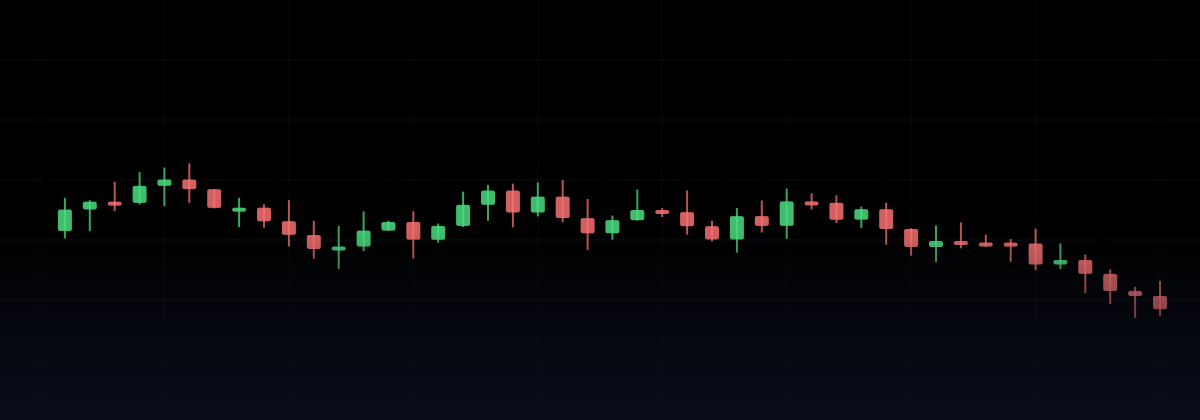
A position trading forex strategy holds trades for weeks to months, aiming to capture a major trend driven by shifts in interest rates, growth and risk appetite. A practical version combines a fundamental view (which central bank is tightening or easing relative to the other) with a simple weekly-chart trend rule, very wide stops of several hundred pips and small position sizes. It needs the least screen time of any style, but it demands tolerance for long drawdowns, careful attention to swap costs and acceptance that many trends never materialise.
Key takeaways
- Position trades are built on big drivers: interest-rate differentials, central bank cycles and global risk sentiment.
- The weekly chart sets direction; the daily chart times entries; analysis takes perhaps an hour a week.
- Stops of 200 to 500 pips are common on majors, so position sizes are small relative to the account.
- Swap becomes a material cost or income over months; it can decide whether a trade is worth taking.
- Expect low win rates and long flat periods; returns come from a few large trends.
- US accounts face 50:1 leverage caps, FIFO and no hedging; UK traders choose between spread bets and CFDs with different tax and funding effects.
How position trading differs from other styles
The difference is not only the holding period but what drives the decision. A day trader reacts to intraday order flow and session behaviour. A swing trader trades a single leg of a trend over days. A position trader asks a slower question: over the next three to nine months, which currency is likely to be favoured by interest rates, growth and capital flows, and is the chart already confirming it?
| Feature | Day trading | Swing trading | Position trading |
|---|---|---|---|
| Typical holding period | Minutes to hours | 2 days to 2 weeks | Several weeks to many months |
| Main charts | 15-minute, 1-hour | 4-hour, daily | Daily, weekly |
| Typical stop on majors | 15 to 30 pips | 50 to 150 pips | 200 to 500 pips |
| Main cost | Spread and commission | Spread plus some swap | Swap over time |
| Role of fundamentals | Mainly scheduled news | Background context | Central to the thesis |
| Trades per year | Hundreds | Dozens | A handful to perhaps twenty |
| Screen time | Hours daily | 20 to 40 minutes daily | An hour or two weekly |
Building the fundamental thesis
Exchange rates over months respond mainly to three things. None of them predicts the market reliably on its own, but together they tell you which side of a pair has a tailwind.
Interest-rate direction, not just level
Money tends to flow towards currencies where expected yields are rising relative to others. What matters is the expected path of policy rates, which shows up in two-year government bond yields. If US two-year yields are rising faster than German two-year yields, that has historically tended to support the dollar against the euro, though the relationship breaks down at times. Note where each central bank is in its cycle: hiking, on hold, or cutting, and whether markets are pricing more or less than the bank is signalling.
Growth and inflation surprises
Data that repeatedly beats or misses expectations shifts rate expectations. Track the trend in surprises rather than single releases.
Global risk appetite
In risk-off periods, the US dollar, Japanese yen and Swiss franc have often strengthened while commodity currencies such as AUD and NZD weakened. Our article on risk-on vs risk-off sentiment covers the typical patterns and their exceptions.
Write the thesis down in two or three sentences, including what would prove it wrong. For example: "The central bank of currency A is expected to cut faster than that of currency B; two-year spread is moving in B's favour. Thesis fails if A's inflation re-accelerates and the spread reverses." A written invalidation point stops you holding a trade purely out of hope.
The technical rules
Fundamentals can be right for months before price agrees. The technical layer keeps you out until the market confirms.
Trend confirmation on the weekly chart
Use one of these, and stick to it:
- Moving average rule: weekly close above a rising 40-week simple moving average (roughly the 200-day) for longs, below a falling one for shorts. The daily equivalent is covered in our 200 EMA strategy guide.
- Channel breakout rule: a weekly close above the highest high of the previous 20 to 26 weeks for longs, or below the lowest low for shorts. This is the classic Donchian approach described in our Donchian channel breakout page.
Entry timing on the daily chart
Once the weekly rule and the thesis agree, use the daily chart to avoid buying the top of a spike. Wait for a pullback of several days towards the 50-day moving average or a recent breakout level, then enter when the daily chart resumes in trend direction. Some position traders split the entry into two or three pieces over a couple of weeks to average in.
Stops and exits
The initial stop goes below the last significant weekly swing low (for longs), often 200 to 500 pips away on majors. Exit on whichever comes first:
- The initial stop is hit.
- A weekly close back through the moving average or the opposite channel boundary (for example a 10- to 13-week low for longs).
- The written fundamental thesis is invalidated.
Most position traders do not use fixed profit targets. The method relies on letting a small number of trends run as far as they go. The broader logic is in our trend following strategy guide.
Worked example: sizing a 300-pip stop from a GBP account
A UK trader with a £25,000 account risks 1% (£250) on a EUR/USD long with a 300-pip stop. GBP/USD is at 1.2700.
- One standard lot of EUR/USD is worth $10 per pip.
- In GBP: $10 / 1.2700 = £7.87 per pip per standard lot.
- Allowed risk per pip: £250 / 300 = £0.83.
- CFD size: £0.83 / £7.87 = 0.106 lots, roughly 10,600 euros notional.
- Spread bet equivalent: about £0.83 per point (one point being one pip on EUR/USD).
The notional exposure is around $12,000, less than half the account balance, so effective leverage is well under 1:1. That is normal for position trading. It also means margin calls are rarely an issue, but correlation is: three such trades all short the dollar are one large bet. Check exposures with our currency correlation matrix before adding positions.
Swap: the cost that decides long-term trades
Over a day or two, swap is a rounding error. Over six months it can be a significant part of the result. A position held long the higher-yielding currency may earn a daily credit; the opposite side pays. Brokers apply a markup to both sides, so the credit is smaller than the raw interest-rate gap and the charge is larger.
Before entering, check the long and short swap figures in your platform's symbol specification and multiply out the cost over your expected holding period. If a trade's expected move is 600 pips and holding it for five months would cost the equivalent of 80 pips in negative swap, that is a material drag. When the fundamental thesis and positive carry point the same way, the position effectively gets paid to wait, which is the logic behind the carry trade strategy. When they conflict, you need a stronger reason to take the trade.
UK-specific funding choices
UK spread betting and CFD providers charge daily funding on rolling positions. Many spread betting providers also offer quarterly or forward contracts, which have no daily funding charge but a wider spread built in, and which can work out cheaper for trades held for months. Compare both for your expected holding period. Tax treatment differs too: spread betting profits are currently not subject to capital gains tax for most UK individuals, while CFD gains are, though CFD losses can be offset against other gains. Confirm with a tax adviser; rules depend on personal circumstances. Our guide to UK forex brokers covers FCA-authorised providers.
US-specific points
US traders must use a CFTC-registered, NFA-member dealer, with leverage capped at 50:1 on majors and 20:1 on others. Since position traders use little leverage, the cap rarely binds. FIFO affects scaling in: when you add a second tranche, closing order rules apply, so treat each tranche as a separate planned trade with its own exit logic. Hedging within the same account is not allowed.
What realistic results look like
Long-term trend-following approaches in currencies have historically gone through multi-year periods of poor performance, interspersed with occasional strong years when large trends emerge. A retail position trader with only a few pairs will feel that more sharply.
- Low win rates. Win rates of 30% to 40% are typical for trend rules; most trades are small losses as trends fail to develop.
- Long drawdowns. Six to twelve months without a new equity high is a plausible scenario, not a failure of the method. Use our drawdown recovery calculator to see how a given drawdown translates into the gain needed to recover.
- Giving back open profit. A trend that ran 800 pips may retrace 300 before the exit rule triggers. That is built into the design.
- Thesis attachment. The more time you invest in a fundamental view, the harder it is to accept the market disagreeing. Respect the exit rules.
- Tiny sample size. With a handful of trades a year, it can take a decade to know whether you have an edge. Many traders change rules after one bad year, which guarantees they never find out.
Risk warning: Long holding periods mean exposure to gaps, central bank surprises and occasional extreme moves, such as the 2015 Swiss franc de-pegging, when some currencies moved far beyond any reasonable stop in minutes. Most retail CFD and spread betting accounts lose money. Keep total risk across all open positions within a level you can tolerate losing, and check that your broker offers negative balance protection, which applies to retail clients in the UK and EU but not necessarily to offshore entities of the same brand.
A weekly routine
Once a week, ideally at the weekend, review each pair you follow: update the fundamental notes, check whether the weekly trend rule has changed, adjust trailing exits, and set alerts at the levels where you would act. During the week, check the charts once a day at most, mainly to respond to alerts. The less you look, the less likely you are to close a good position over normal noise.
Frequently asked questions
What is position trading in forex?
Position trading is a long-term style in which trades are held for weeks to months to capture major trends. It typically combines fundamental analysis of interest rates, growth and risk sentiment with trend rules on the weekly and daily charts. Positions are sized small with very wide stops, and the trader relies on a few large winners to outweigh frequent small losses.
How much capital do you need for forex position trading?
Because stops are often 200 to 500 pips, position sizes are small. A $5,000 account risking 1% with a 300-pip stop on EUR/USD would trade about 0.017 lots, or 1,700 units, which requires a broker offering very small lot increments. Larger accounts make fine-grained sizing easier, but no amount guarantees results.
Is position trading less risky than day trading?
It carries different risks rather than less risk. Position traders avoid much of the intraday noise and cost drag but face overnight and weekend gaps, large central bank surprises and long drawdowns. Risk per trade is controlled by position size in both styles; the main differences are how often you trade and what can go wrong between your checks.
Which currency pairs are best for position trading?
Liquid majors such as EUR/USD, USD/JPY, GBP/USD, AUD/USD and USD/CAD are most common, because their macro drivers are well covered and swap costs are moderate. Exotic pairs can trend strongly but often carry high negative swap on one side, wide spreads and political risk, which make long holding periods more expensive.
Do position traders pay overnight fees?
Yes, on rolling spot or CFD positions a swap is credited or charged each night, and over months this becomes significant. UK spread betting providers often offer quarterly forward contracts without daily funding, at the cost of a wider spread. Check both costs against your expected holding period before choosing the instrument.
Can I position trade with a prop firm?
It is difficult. Many prop firms restrict weekend holding, set time limits on evaluations, or use daily drawdown rules that a 300-pip stop strategy will struggle with. Some firms offer swing accounts that allow overnight and weekend positions. Read the full rules, including any inactivity clauses, before attempting it.
This article is general information, not personal financial advice. Figures such as spreads, fees, leverage and rules change; confirm them with the provider and check the provider is authorised for your country of residence.