Base Currency and Quote Currency Explained, With Worked Examples
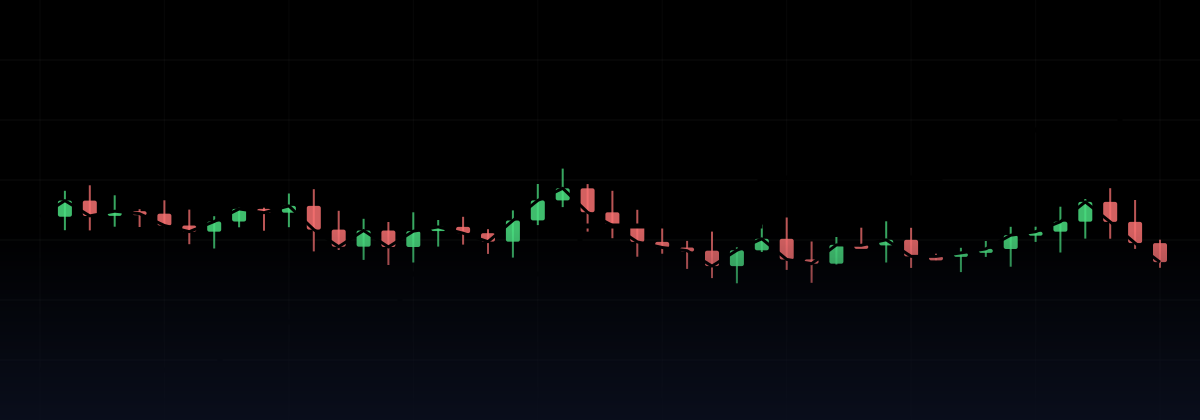
In a currency pair, the base currency is the first one listed and the quote currency is the second. The price tells you how many units of the quote currency it takes to buy one unit of the base currency: EUR/USD at 1.0850 means one euro costs 1.0850 US dollars. When you trade, you buy or sell the base currency, your profit or loss is first calculated in the quote currency, and margin is usually based on the base currency's value.
Key takeaways
- Base currency = first, always one unit. Quote currency (also called counter or terms currency) = second, the price.
- If the pair's price rises, the base currency has strengthened relative to the quote currency.
- Buying the pair means buying the base and selling the quote; selling the pair is the reverse.
- Profit and loss arrive in the quote currency and are converted to your account currency.
- Pair order follows market convention (EUR before GBP before AUD before NZD before USD before CAD before CHF before JPY), not alphabetical order.
The definitions, plainly
Every forex price is a ratio between two currencies, written with their three-letter ISO codes: EUR for the euro, USD for the US dollar, JPY for the Japanese yen, GBP for the British pound, and so on.
- Base currency: the first code. It is always fixed at one unit. In GBP/USD, the base is the pound.
- Quote currency: the second code. It is the amount needed to buy one unit of the base. In GBP/USD, the quote is the dollar. You will also see it called the counter currency or terms currency.
So GBP/USD 1.2740 reads as "one pound equals 1.2740 dollars". USD/JPY 151.20 reads as "one dollar equals 151.20 yen". AUD/NZD 1.0950 reads as "one Australian dollar equals 1.0950 New Zealand dollars".
The slash is sometimes omitted (EURUSD) or replaced with a dot or dash on certain platforms. The order is what matters. For how the two prices in a live quote work, see how to read bid and ask quotes.
What a rising or falling price means
Because the base is fixed at one unit, the price measures the base in terms of the quote.
| Pair | Price moves from | To | Base currency | Quote currency |
|---|---|---|---|---|
| EUR/USD | 1.0850 | 1.0950 | Euro strengthened | Dollar weakened |
| USD/JPY | 151.20 | 148.70 | Dollar weakened | Yen strengthened |
| GBP/USD | 1.2740 | 1.2610 | Pound weakened | Dollar strengthened |
| USD/CAD | 1.3650 | 1.3800 | Dollar strengthened | Canadian dollar weakened |
| EUR/GBP | 0.8510 | 0.8480 | Euro weakened | Pound strengthened |
A common confusion: in EUR/USD the dollar is on the right, so a rising chart is dollar weakness. In USD/JPY the dollar is on the left, so a rising chart is dollar strength. Headlines saying "the dollar rallied" can therefore show up as EUR/USD falling and USD/JPY rising at the same time. Once this clicks, reading several charts together becomes much easier, and tools like a currency strength meter make more sense.
A move in a pair is always relative. If EUR/USD rises, it could be because the euro strengthened against everything, the dollar weakened against everything, or both. Checking the same currency in other pairs helps work out which.
Buying and selling a pair: what you actually hold
A forex trade is two transactions at once:
- Buy (long) EUR/USD = buy euros, sell dollars. You profit if the euro rises against the dollar.
- Sell (short) EUR/USD = sell euros, buy dollars. You profit if the euro falls against the dollar.
Lot sizes are always measured in the base currency. One standard lot of EUR/USD is 100,000 euros; one standard lot of USD/JPY is 100,000 dollars; one standard lot of GBP/JPY is 100,000 pounds. This is why the dollar value of "one lot" differs from pair to pair.
If you want to express a view on the dollar alone, you have to choose a counterpart. "Short USD" could be long EUR/USD, long GBP/USD, short USD/JPY or short USD/CHF, each with its own volatility, costs and exposure to the other currency. The mechanics of going long and short are covered in long vs short positions.
Why profit and loss arrive in the quote currency
Because price is measured in quote currency per base unit, any change in price multiplied by your position size gives an amount in the quote currency.
Example 1: EUR/USD, USD account
You buy 0.30 lots (30,000 EUR) at 1.0850 and sell at 1.0910. Change: 0.0060.
30,000 × 0.0060 = 180 USD. The quote currency is already your account currency, so the profit is $180.
Example 2: EUR/GBP, USD account
You sell 0.50 lots (50,000 EUR) at 0.8510 and buy back at 0.8470. Change: 0.0040.
50,000 × 0.0040 = £200. To report it in dollars, convert at GBP/USD, say 1.2700: £200 × 1.27 = $254.
Example 3: USD/JPY, GBP account
You buy 0.20 lots (20,000 USD) at 150.00 and sell at 151.00. Change: 1.00 yen.
20,000 × 1.00 = ¥20,000. Convert to pounds at GBP/JPY, say 191.00: ¥20,000 ÷ 191 = about £104.71.
The same logic is why pip values are fixed only when the quote currency matches your account currency. On EUR/USD with a dollar account, a pip per standard lot is always $10. On USD/JPY, it is ¥1,000, and its dollar value shifts as the rate moves. The pip calculator does this conversion for any pair and account currency.
Margin and the base currency
Margin requirements are normally calculated on the notional value of the position, which starts in the base currency and is then converted to your account currency.
- 1 lot of EUR/USD = 100,000 EUR. At 1.0850, notional = $108,500. At 30:1 leverage, margin ≈ $3,617.
- 1 lot of USD/JPY = 100,000 USD. Notional = $100,000. At 30:1, margin ≈ $3,333.
- 1 lot of GBP/JPY = 100,000 GBP. At GBP/USD 1.2700, notional ≈ $127,000. GBP/JPY counts as a non-major under UK and EU retail rules, with a 20:1 cap, so margin ≈ $6,350.
So the base currency influences how much margin a position uses, while the quote currency determines the currency your profit and loss is booked in. Both feed into the final numbers in your account currency. The margin calculator handles the conversion if your account is in another currency.
Why EUR/USD and not USD/EUR? Pair ordering conventions
Market convention decides which currency is the base. The commonly used priority order for the main currencies is:
EUR → GBP → AUD → NZD → USD → CAD → CHF → JPY
Whichever currency appears earlier in this list becomes the base. So the euro is base against everything (EUR/USD, EUR/GBP, EUR/JPY), the pound is base against all except the euro (GBP/USD, but EUR/GBP), and the yen is almost always the quote (USD/JPY, AUD/JPY).
| Currencies | Market convention | Not usually quoted as |
|---|---|---|
| Euro and dollar | EUR/USD | USD/EUR |
| Pound and dollar | GBP/USD | USD/GBP |
| Dollar and yen | USD/JPY | JPY/USD |
| Australian and NZ dollar | AUD/NZD | NZD/AUD |
| Dollar and Canadian dollar | USD/CAD | CAD/USD |
| Dollar and Swiss franc | USD/CHF | CHF/USD |
| Dollar and emerging market currencies | USD/ZAR, USD/MXN, USD/TRY, USD/INR | ZAR/USD and so on |
For most emerging market currencies, the dollar is the base. That is why exotic quotes often have large numbers (USD/ZAR around the high teens, USD/TRY well above that). The full lists are in our guides to major currency pairs and minor and exotic pairs.
Direct and indirect quotes
You will also see "direct" and "indirect" quotes, which depend on where you are. A direct quote expresses the foreign currency as the base and your home currency as the quote (for someone in the US, EUR/USD is direct: euros priced in dollars). An indirect quote does the opposite (USD/JPY is indirect from a US viewpoint because it prices dollars in yen). The labels matter mostly in banking and textbooks; in trading you simply follow market convention.
Base and quote in specific situations
Currency pairs involving the Indian rupee
USD/INR, EUR/INR, GBP/INR and JPY/INR follow the same logic: the first currency is the base, the rupee is the quote, and a rising price means the rupee weakened. For Indian residents, the legal position matters more than the notation. Under FEMA, residents may trade these INR pairs (and permitted cross-currency contracts) only as exchange-traded derivatives on recognised Indian exchanges (NSE, BSE, MSEI) through SEBI-registered brokers. Trading margin forex or CFDs with offshore brokers is not permitted, and the RBI publishes an Alert List of unauthorised platforms. See USD/INR trading and RBI rules.
Metals quoted like currencies
Gold and silver are often written as XAU/USD and XAG/USD, using ISO codes for an ounce of gold or silver. The base is one troy ounce and the quote is dollars per ounce. Contract sizes for metals are set by the broker, often 100 ounces per lot for gold, so check the specification.
Your account currency is neither
Trading AUD/CAD from a euro account means three currencies are in play: you hold Australian dollars against Canadian dollars, profit arrives in Canadian dollars, and it is converted to euros. Your result is affected slightly by the CAD/EUR rate at the time of conversion, though the effect is usually small compared with the pair's own movement.
Risk point: mixing up base and quote reverses the meaning of your trade. Buying USD/JPY because you expect yen strength is a trade in the wrong direction. Before every order, say in words which currency you are buying and which you are selling. Leveraged forex carries a high risk of loss and most retail accounts lose money.
Common mistakes with base and quote
- Reading every chart as "up = dollar up". Only true when the dollar is the base.
- Assuming a lot is always $100,000. It is 100,000 units of the base currency, whose dollar value varies.
- Doubling exposure by accident. Long EUR/USD and short USD/CHF are both short-dollar trades. Holding both concentrates risk.
- Forgetting the conversion step when the quote currency differs from the account currency, which leads to wrong pip values and position sizes.
- Typing a pair in the wrong order on a platform that lists both conventions for some instruments. Check the symbol before clicking.
Frequently asked questions
Which is the base currency in EUR/USD?
The euro is the base currency because it is listed first, and the US dollar is the quote currency. The price shows how many dollars one euro costs. If EUR/USD is 1.0850, one euro buys 1.0850 dollars. Buying EUR/USD means buying euros and selling dollars, and the profit or loss is calculated in dollars.
What is another name for the quote currency?
The quote currency is also called the counter currency, and in some banking contexts the terms currency or secondary currency. All refer to the second currency in a pair, in which the price is expressed. Profit and loss on a trade is calculated in this currency first, then converted into your account currency if they differ.
If USD/JPY goes up, is the dollar stronger?
Yes. In USD/JPY the dollar is the base currency, so a higher price means one dollar buys more yen. The dollar has strengthened relative to the yen, or the yen has weakened relative to the dollar. Whether that is broad dollar strength or yen-specific weakness can be judged by comparing other dollar and yen pairs.
Why is the euro always the base currency?
By market convention the euro sits at the top of the priority order used to decide which currency is quoted first. Since its launch, it has been quoted as the base against all other major currencies, so you see EUR/USD, EUR/GBP and EUR/JPY. This is a convention for consistency, not a judgement about which currency is more important.
Does the base currency affect the margin I need?
Yes. Margin is calculated from the notional value of the position, and that value is defined in units of the base currency. One lot of GBP/USD is 100,000 pounds, which is worth more in dollars than 100,000 euros or 100,000 Australian dollars, so it requires more margin at the same leverage. The leverage cap for the pair also matters.
Can I trade a pair in the reverse order, like USD/EUR?
Most brokers only offer the market-convention version, such as EUR/USD. You can take either side of it: selling EUR/USD is economically the same as buying USD/EUR. Some platforms list a few reversed pairs, but liquidity and pricing are usually better on the standard version, and using it avoids confusion when reading analysis.
This article is general information, not personal financial advice. Figures such as spreads, fees, leverage and rules change; confirm them with the provider and check the provider is authorised for your country of residence.