Trailing Stop Loss in Forex Explained: How It Works and When It Hurts
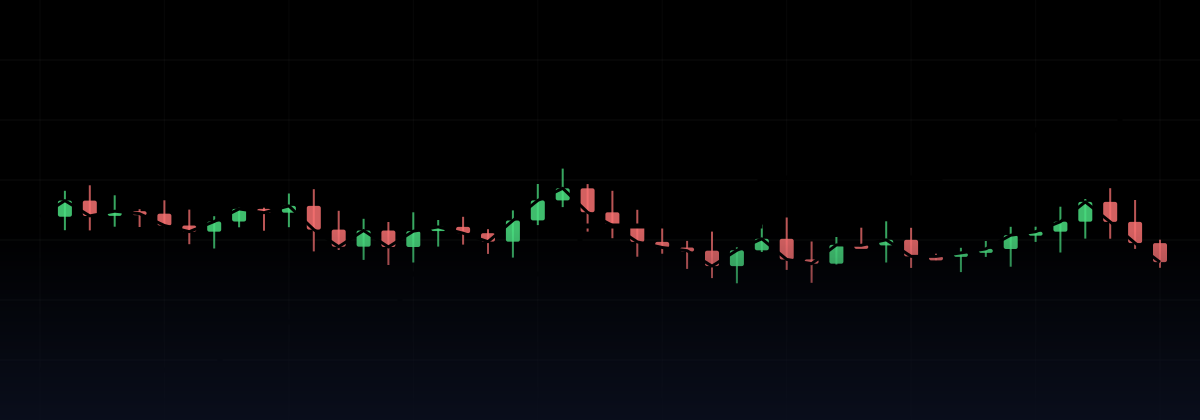
A trailing stop loss is a stop that follows price in your favour by a set distance and never moves back against you. On a long EUR/USD trade with a 30-pip trail, every new high pulls the stop up so it stays 30 pips below; if price then falls 30 pips from its best level, the trade closes. It locks in gains automatically, but a trail set too tight will close good trades on ordinary noise.
Key takeaways
- A trailing stop only moves in one direction: up for longs, down for shorts.
- Trails can be a fixed pip distance, a volatility measure such as ATR, a moving average, or manual moves behind swing points.
- On MetaTrader 4 and 5, the built-in trailing stop runs on your terminal: close the platform and it stops trailing (the last stop level stays on the server).
- Once triggered, a trailing stop is an ordinary stop order and can slip in gaps or fast markets.
- Tight trails raise the win rate of small gains but often cut the large winners that pay for losing trades.
- US and UK retail traders have the same trailing tools; the difference is the regulatory leverage cap and, in the UK, the option of guaranteed stops with some providers.
How a trailing stop moves: step by step
You buy 1 mini lot (10,000 units) of EUR/USD at 1.0800, with a 30-pip trailing stop. Pip value: $1.
| Event | Bid price | Highest bid since entry | Trailing stop level | Locked-in result if hit |
|---|---|---|---|---|
| Entry | 1.0800 | 1.0800 | 1.0770 | -30 pips (-$30) |
| Price rises | 1.0825 | 1.0825 | 1.0795 | -5 pips (-$5) |
| Price rises | 1.0850 | 1.0850 | 1.0820 | +20 pips (+$20) |
| Pullback | 1.0835 | 1.0850 | 1.0820 (unchanged) | +20 pips |
| New high | 1.0890 | 1.0890 | 1.0860 | +60 pips (+$60) |
| Reversal | 1.0860 | 1.0890 | Triggered | Closed at about +60 pips |
Two points stand out. During the pullback, the stop did not move down. And the trade gave back 30 pips from its peak before closing, which is the inherent cost of any trail: you never exit at the top.
The figures ignore spread and slippage. Long trades are closed at the bid, so the stop is triggered by the bid. For a short, the trail sits above price and is triggered by the ask.
Types of trailing stop
Fixed-distance trail
The stop sits a set number of pips behind the best price. This is the version built into MetaTrader. It is simple, but it ignores how volatile the pair is. Thirty pips on EUR/USD in a quiet Asian session is very different from thirty pips on GBP/JPY during London.
Volatility (ATR) trail
The distance is a multiple of the Average True Range. If the 14-period ATR on the H1 chart is 12 pips and you use 2.5 × ATR, the trail is 30 pips; if volatility doubles, the trail widens to 60. This adapts the stop to conditions. A popular variant is the chandelier exit, which hangs the stop a multiple of ATR below the highest high. Our ATR stop loss guide covers the settings and their trade-offs.
Moving-average trail
The stop is moved to just below a moving average (for longs) at each candle close. A 20-period EMA trail on the H4 chart keeps you in sustained trends but exits fairly quickly when momentum fades. See how to trail a stop using a moving average.
Structure trail
The stop is moved manually to just below each new higher low (for longs) once it forms. It respects market structure, so normal pullbacks do not knock you out, but it needs judgment and is slower to lock in gains. It pairs naturally with an understanding of market structure.
Breakeven then trail
Many traders move the stop to entry once the trade has gained a set amount (say 1R, the distance of the original stop), then start trailing. It removes the risk of a winner turning into a loss, at the cost of more breakeven exits on trades that dip before continuing.
The MetaTrader caveat almost everyone learns the hard way
In MetaTrader 4 and 5, right-clicking a position and choosing Trailing Stop sets a trail that is managed by your client terminal, not by the broker's server. Whenever price moves, your terminal sends a modification to move the stop. If you shut the laptop, lose internet, or close the platform, the trailing stops moving. The stop that was last sent stays in place on the server, so you are not unprotected, but it will not follow price any further.
Practical consequences:
- A trade left overnight with a terminal trail effectively has a fixed stop at its last position.
- Traders who need continuous trailing run the platform on a VPS or use an expert advisor that trails, which also needs the terminal running.
- Some platforms, including cTrader and various proprietary broker platforms, run trailing stops on the server. Check your platform's documentation instead of assuming.
MetaTrader's built-in trail is set in points, and on five-digit quotes one point is a tenth of a pip, so a setting of 300 points is 30 pips. Entering 30 by mistake gives a 3-pip trail that will close almost any trade within minutes. The broker's stops level can also prevent very tight trails.
Trailing a short position
For shorts, everything flips. You sell 0.30 lots of GBP/USD at 1.2700 with an ATR-based trail of 35 pips, so the first stop sits at 1.2735. Pip value is $3. As the ask falls to 1.2650, the stop follows down to 1.2685, which already locks in 15 pips ($45) if hit. If the ask then drops to 1.2610, the stop moves to 1.2645, locking in 55 pips ($165). A bounce back to 1.2645 on the ask closes the trade.
The short-side detail that catches people out is that the trail and the trigger both use the ask. When spreads widen at the daily rollover or around data, the ask can jump several pips while the bid-based chart barely moves, and a short's trailing stop can fire on that spike alone. Adding the typical rollover spread to your trail distance, or tightening only after the rollover, reduces these exits.
Combining a trail with partial profits
Many traders split the decision. They close half the position at a fixed target, often 1R or 1.5R, move the stop on the remainder to breakeven, and trail the rest. On a 1-lot EUR/USD trade risking 30 pips, closing 0.5 lots at +30 pips banks $150; if the remaining 0.5 lots then stop out at breakeven, the trade still made $150. If the trend runs 120 pips before the trail triggers at +90, the second half adds $450.
The trade-off is that partial exits reduce the size of your largest winners, which is exactly where trend strategies make their money. Whether the smoother equity curve is worth it is a question for your own backtest data, not a rule.
Why tight trails often hurt results
A trailing stop feels like pure protection: the stop only ever improves. The cost is invisible because it shows up in the trades you did not let run.
Consider a simplified comparison over 20 trades with the same entries, risking 30 pips each:
| Exit method | Winners | Average winner | Losers | Average loser | Net pips |
|---|---|---|---|---|---|
| Tight 15-pip trail after 1R | 12 | +28 | 8 | -30 | +96 |
| Wider 2.5×ATR trail | 8 | +75 | 12 | -30 | +240 |
These figures are illustrative arithmetic, not results from any test. They show the pattern traders often find when they backtest their own systems: the tighter trail wins more often but makes less, because it repeatedly exits trends during normal pullbacks. The opposite can also happen in choppy markets, where wide trails give back most of each gain. The only way to know for your own strategy is to test it, for example by backtesting manually on TradingView, and compare exit rules on the same set of entries.
A trailing stop is still a normal stop. When triggered, it becomes a market order and fills at the next available price. Weekend gaps, central bank surprises and thin rollover liquidity can fill it well beyond the level shown. In the UK, some spread-betting and CFD providers offer guaranteed stops for a premium, but these are generally fixed rather than trailing. Leverage magnifies losses in both directions, and most retail leveraged accounts lose money.
USA and UK specifics
United States. Retail forex is offered by CFTC-registered, NFA-member brokers, with leverage capped at 50:1 on major pairs and 20:1 on others. FIFO rules require positions in the same pair to be closed in the order they were opened, which matters if you scale in and trail each portion separately: the platform may close the oldest position first regardless of which stop triggered. Our FIFO rule explainer covers how US platforms handle this. Some US broker platforms offer server-side trailing stops; MetaTrader trails remain terminal-side.
United Kingdom. FCA-authorised firms cap retail leverage at 30:1 on majors and must provide negative balance protection for retail clients. Spread betting and CFDs are the usual products. Trailing stops are widely available; check whether your provider runs them on the server and whether guaranteed stops can be combined with trailing (often they cannot).
A sensible way to set a trailing stop
- Start with the initial stop. Place it where your setup is invalidated, not at a round number of pips. Size the position from that distance.
- Decide when trailing begins. Common choices: immediately, at 1R profit, or after a new swing forms.
- Match the trail to volatility. Use ATR or recent swing size so the trail is outside normal noise for that pair and time frame.
- Know where it runs. If your trail is terminal-side, either keep the platform running or accept it will freeze when you log off.
- Review the results. Log the maximum favourable excursion on each trade (how far it went your way) and how much the trail gave back. A trading journal makes this easy.
When not to use a trailing stop
- Range trading. If your target is the other side of a range, a fixed take profit usually makes more sense than a trail.
- Ahead of high-impact news. Spikes can trigger a trail and then reverse. Either tighten deliberately and accept the exit, or reduce size before the release.
- Very short-term scalps. When the target is a few pips, the spread and stops level leave little room for a meaningful trail.
Frequently asked questions
Does a trailing stop work when MT4 is closed?
No. MetaTrader 4 and 5 manage the built-in trailing stop from your terminal. When the platform closes or loses connection, trailing pauses and the last stop level stays on the server. To keep trailing around the clock, run MetaTrader on a VPS or use a platform that runs trailing stops server-side.
What is a good trailing stop distance in forex?
There is no single good number. A distance based on volatility, such as two to three times the ATR on your trading time frame, adapts to each pair and session. Fixed pip distances work only if they reflect the pair's typical movement. Test different distances on the same historical entries before choosing one.
Can a trailing stop guarantee profit?
No. Once the trail passes your entry, the stop level implies a profit, but the order can still slip if price gaps through it. A weekend gap or sudden news can fill the stop below the locked-in level, and in extreme cases below entry. A trailing stop reduces giveback; it does not guarantee any outcome.
Is a trailing stop better than a fixed take profit?
They suit different market conditions. Trailing stops keep you in trends and capture occasional large moves; fixed targets bank gains at planned levels and work better in ranges. Some traders combine them, taking partial profit at a fixed target and trailing the rest. Which works better depends on your strategy's behaviour, which backtesting reveals.
Do prop firms allow trailing stops?
Prop firms generally allow traders to use trailing stops on their positions. Do not confuse this with a firm's trailing drawdown rule, which is a separate account-level limit that rises with your equity high. Read each firm's rules directly, because drawdown definitions differ between firms and even between account types.
Why did my trailing stop close my trade at a loss?
Usually because the trail had not yet moved past your entry when price reversed. A 30-pip trail on a trade that only gained 20 pips still sits 10 pips below entry. Spread widening and slippage can also push the fill below the displayed stop. Starting the trail only after breakeven avoids the first issue.
This article is general information, not personal financial advice. Figures such as spreads, fees, leverage and rules change; confirm them with the provider and check the provider is authorised for your country of residence.