The Best Time Frame for Beginner Forex Traders
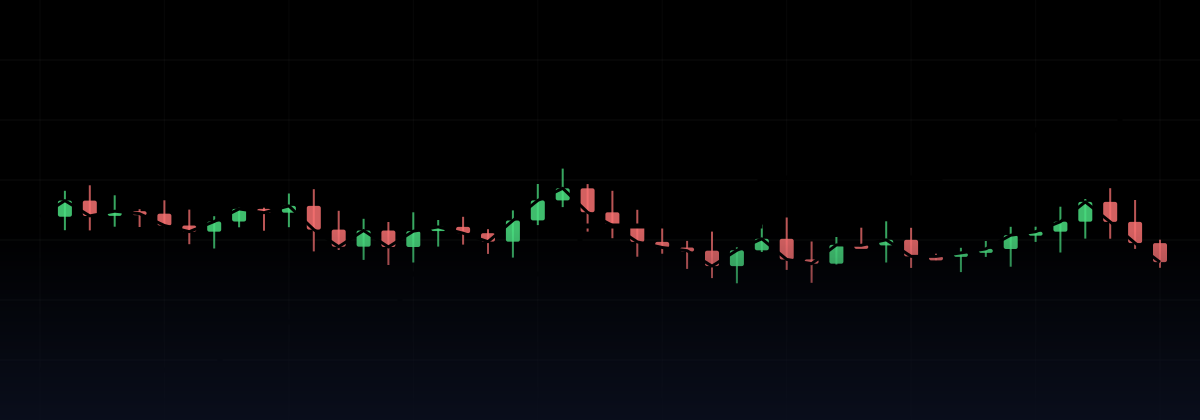
For most beginners, the four-hour (H4) and daily charts are the most forgiving time frames to start on. They produce fewer but clearer signals, make spreads a small fraction of each trade's risk, and give you time to think before acting. Lower time frames such as the 1-minute and 5-minute charts are not forbidden, but they magnify costs, noise and emotional pressure at exactly the stage when you are least equipped to handle them.
Key takeaways
- A time frame is defined by how long each candle represents; it shapes stop size, trade frequency, cost burden and how much screen time you need.
- On higher time frames, spread and commission are a much smaller share of the stop, so a strategy needs less edge to cover costs.
- H4 and daily suit people with jobs: decisions can be made at candle closes, a few times a day.
- Higher time frames mean wider stops, so position sizes are smaller in lots for the same money at risk, plus overnight swap and weekend gap exposure.
- The trade-off is speed of learning: fewer trades per month means building a meaningful sample takes longer.
- Use a higher time frame for direction and a lower one for timing, rather than switching between many charts.
What "time frame" actually changes
A time frame is just the period each candle covers. On an M5 chart, one candle is five minutes; on H4 it is four hours; on D1, one trading day. The market is the same; the zoom level is different. If chart reading itself is new to you, start with how to read forex charts.
Changing the time frame changes five things that matter to a beginner:
- Stop distance. A logical stop beyond a swing point might be 5 to 10 pips on M5 and 60 to 120 pips on D1 for EUR/USD, depending on volatility.
- Cost as a share of risk. The spread is fixed per trade regardless of time frame, so it eats a far bigger slice of a small stop.
- Trade frequency. Lower time frames produce many more setups.
- Screen time and decision speed. M1 requires constant attention and split-second decisions; daily charts can be checked once a day.
- Holding-period risks. Higher time frames mean holding overnight and over weekends, with swap costs and gap risk.
The cost argument, with numbers
This is the most objective reason higher time frames suit beginners. Assume an all-in cost (spread plus commission) of 1.2 pips per round trip on EUR/USD. The stop distances below are illustrative typical values, not fixed rules; check your pair's actual volatility with a tool such as the ATR.
| Time frame | Illustrative stop | Cost as % of stop | Extra win rate needed at 1:2 just to cover costs | Typical setups per pair |
|---|---|---|---|---|
| M1 | 4 pips | 30% | break-even rises from 33% to about 43% | Many per session |
| M5 | 8 pips | 15% | break-even rises to about 38% | Several per day |
| M15 | 15 pips | 8% | break-even rises to about 36% | A few per day |
| H1 | 25 pips | 4.8% | break-even rises to about 35% | One or two per day |
| H4 | 50 pips | 2.4% | break-even rises to about 34% | A few per week |
| D1 | 90 pips | 1.3% | break-even barely moves (about 33.8%) | A few per month |
The break-even column assumes a planned 1:2 ratio, with the cost subtracted from the reward and added to the risk. On M1, a 4-pip stop becomes a 5.2-pip real loss and an 8-pip target becomes a 6.8-pip real gain, so you need to win about 43% of trades instead of 33%. On the daily chart, costs hardly change the picture. A beginner without a proven edge is much better off on the side of the table where costs do not demand extra skill.
Comparing time frames for beginners
M1 and M5: scalping territory
These charts move fast, are heavily affected by spread changes and news spikes, and demand quick decisions. They do give a lot of practice trades. The problem is that many of those trades are noise, costs are high relative to risk, and the speed encourages impulsive behaviour. If you are drawn to this style anyway, read the realistic expectations in our scalping strategy guide first.
M15 and H1: day trading
A middle ground. Setups are frequent enough to build a sample within months, stops are wide enough that costs are manageable on major pairs, and trades usually close the same day, avoiding swap. The downside is screen time: you need to be available during active sessions such as the London–New York overlap, which does not suit everyone's job or time zone. See day trading strategy for the approach.
H4: the common starting point
Six candles a day. You can check the chart at a few candle closes, ideally ones that fit your day, set pending orders and alerts, and walk away. Stops are wide enough that costs matter little. Trades may last one to several days, so swap and weekend gaps become relevant.
Daily: slowest, calmest, fewest trades
One decision point per day, usually around the New York close. Very little noise and very low cost relative to risk. The drawbacks are wider stops (so smaller positions for the same money at risk), longer holding periods and slow sample building. The end-of-day trading strategy is built for this time frame.
What higher time frames cost you
Higher time frames are not free of drawbacks, and a fair comparison should say so.
- Slower feedback. At a few trades a month per pair, reaching 100 trades can take a year or more unless you watch several pairs. Learning is slower in calendar terms.
- Swap. Holding positions for days means paying or receiving overnight financing, which can be significant on pairs with large interest-rate differences.
- Weekend gaps. Positions open on Friday can reopen on Sunday at a very different price, sometimes beyond your stop.
- Patience. Many beginners find waiting days for a setup harder than it sounds, and start forcing trades on lower charts out of boredom.
- Bigger account needed for some pairs. A 90-pip stop risking $20 means about $0.22 per pip, which requires micro-lot sizing. Check that your broker allows lot steps of 0.01.
Position sizing makes the money risk identical across time frames: the wider stop simply means fewer lots. Risking $50 with a 10-pip stop is 0.50 lots; risking $50 with a 100-pip stop is 0.05 lots. Our lot size calculator handles this.
No time frame makes trading safe. Higher time frames reduce cost pressure and noise; they do not remove the risk of loss. Leveraged positions held overnight are exposed to central bank surprises and weekend gaps, and stops can fill beyond their level. Most retail leveraged forex and CFD accounts lose money regardless of the time frame they trade. Choose a time frame for the practical reasons above, not because it promises better returns.
Matching the time frame to your life
The best time frame is partly a scheduling question. A strategy that needs you at the screen during the London open is useless if you are commuting then.
| Your situation | Time frames that often fit | Why |
|---|---|---|
| Full-time job, evenings free | D1, H4 | Decisions at daily close or a couple of H4 closes; pending orders do the rest |
| Flexible mornings in Europe | H1, M15 during London | Most liquid session available to you |
| Based in Asia, working daytime | D1, H4, or H1 in the European session after work | Avoid trading the quieter Asian session out of convenience alone |
| Can watch screens all day | Any, but start on H1 or higher | Lower costs while building a tested process |
| Easily stressed by fast moves | D1 | Fewest decisions, least noise |
Check how the main sessions line up with your time zone using our forex market hours guide.
Use two time frames, not five
Most structured approaches use a higher time frame for context and a lower one for entry. A common pairing ratio is around four to six times, for example:
- Daily for trend direction, H4 for entries.
- H4 for direction, H1 for entries.
- H1 for direction, M15 for entries.
The higher chart tells you whether to look for longs, shorts or nothing; the lower chart helps time the entry and tighten the stop slightly. Flicking between M1, M5, M15, H1, H4 and D1 usually produces contradictory signals and paralysis. Our multi-timeframe analysis guide covers the method.
Signs your time frame is not working for you
A time frame can be a poor fit even when the strategy itself is reasonable. Your journal is the best place to spot it. Warning signs include:
- Frequent rule breaks out of boredom. If you keep taking unplanned trades on lower charts while waiting for H4 or daily setups, either add a second pair to watch or accept a slightly lower time frame with clear rules.
- Missed entries because of your schedule. If setups regularly trigger while you are at work and you chase them later, use pending orders or pick candle closes you can actually attend.
- Costs dominating results. If your gross results are near break-even but spread and commission turn them negative, you are probably trading too low for your edge.
- Stress-driven exits. Closing trades early because every tick feels significant is common on M1 and M5. Moving up a time frame often reduces it, because each candle carries less emotional weight.
- Too few trades to learn from. If you have logged fewer than 20 trades after three months, your sample is growing too slowly; add pairs before you consider dropping to a lower time frame.
A practical way to decide
- Write down when you can reliably be at a screen each day.
- Pick the highest time frame whose candle closes fit those times.
- Choose one strategy and one or two liquid major pairs.
- Backtest at least 100 trades on that time frame, including costs.
- Forward-test on demo or micro lots before increasing anything.
- Only consider moving lower once you have a tested process and understand how costs change the result.
Many traders who start on lower time frames move up over time; it is much rarer for someone to find that their results improve by moving down.
Frequently asked questions
Is the 1-hour chart good for beginners?
It can be. H1 offers more setups than H4 or daily while keeping costs reasonable on major pairs, and trades often close within a day. It does require more screen time during active sessions. If your schedule allows you to check the chart at several hourly closes during London or New York hours, H1 is a reasonable beginner choice.
Why do so many beginners start on the 1-minute or 5-minute chart?
Because fast charts feel exciting, produce frequent results and are heavily promoted by social media traders. The downside is that spreads consume a large share of each small stop, random noise looks like signals, and quick decisions encourage impulsive trading. Many beginners would gain more by practising on slower charts first.
Do higher time frames have a higher win rate?
Not automatically. Signals on higher time frames are often described as more reliable because they reflect more data and less noise, but win rate depends on the strategy and market conditions. What higher time frames reliably offer is lower cost relative to risk, which means a strategy needs less raw edge to break even.
Can I trade the daily chart with a small account?
Yes, if your broker allows micro lots. Daily-chart stops are wide, so the position must be small to keep the money at risk modest. For example, risking $10 with an 80-pip stop on EUR/USD needs about $0.125 per pip, roughly 0.01 lots. Check minimum trade sizes and swap costs before starting.
Should I switch time frames if my strategy stops working?
Switching time frames effectively creates a new strategy with different costs, noise and trade frequency, so it needs its own testing. Before switching, check your journal: a run of losses may be normal variance, a change in market conditions, or execution errors. Switching after every losing streak prevents you from ever building a meaningful sample.
What time frame do prop-firm traders use?
It varies widely. Prop-firm rules on daily loss limits and news trading often influence the choice, and some traders favour intraday time frames to avoid holding positions overnight or over weekends, which some firms restrict. Check each firm's rules on weekend holding and news before deciding how your time frame fits.
This article is general information, not personal financial advice. Figures such as spreads, fees, leverage and rules change; confirm them with the provider and check the provider is authorised for your country of residence.