How to Read Currency Quotes: Bid, Ask and Everything on the Quote Screen
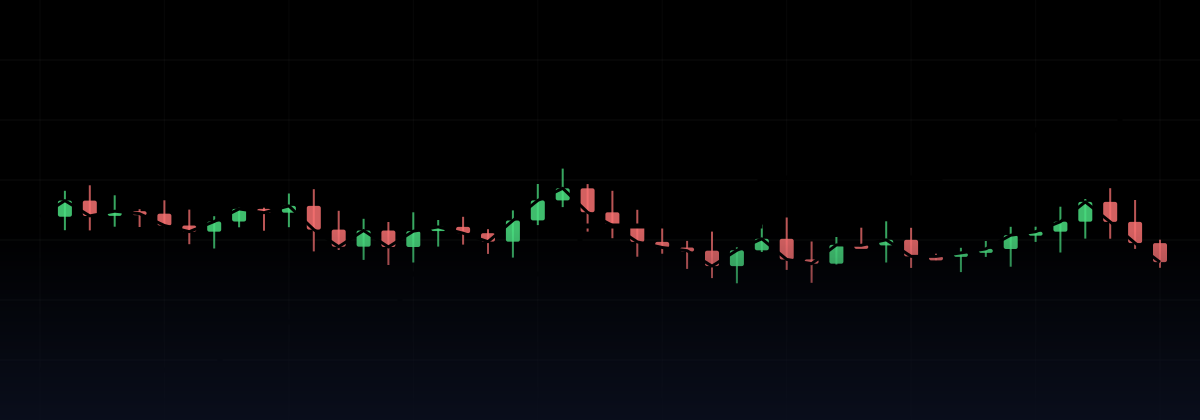
A currency quote such as EUR/USD 1.08452 / 1.08464 tells you how many US dollars one euro costs. The first number is the bid, the price you sell at; the second is the ask, the price you buy at. You always buy at the higher price and sell at the lower one, and the difference between them is the spread.
Key takeaways
- A quote shows the price of one unit of the first (base) currency in units of the second (quote) currency.
- Sell at the bid (left, lower), buy at the ask (right, higher).
- Dealers often talk only about the last few digits; the leading digits are the "big figure" or "handle".
- Mid price, the average of bid and ask, is what most news sites and converters show, and you cannot trade at it.
- Inverting a pair or calculating a cross rate correctly requires using the right side of each quote.
Anatomy of a two-way quote
Take this quote as it might appear on a trading platform:
EUR/USD 1.08452 / 1.08464
| Part | Value | Meaning |
|---|---|---|
| Base currency | EUR | The currency you are buying or selling one unit of |
| Quote currency | USD | The currency the price is expressed in |
| Bid | 1.08452 | The dealer buys 1 EUR from you for 1.08452 USD |
| Ask (offer) | 1.08464 | The dealer sells you 1 EUR for 1.08464 USD |
| Big figure (handle) | 1.08 | The leading digits that rarely change within a session |
| Pips | 45 / 46 | The digits traders usually focus on |
| Pipette | 2 / 4 | The final fractional digit |
| Spread | 1.2 pips | Ask minus bid |
| Mid | 1.08458 | The average of bid and ask |
The order of the currencies matters. EUR/USD and USD/EUR are the same market expressed upside down, and the market convention is EUR/USD. Why one currency comes first, and how that affects profit and loss, is explained in base currency and quote currency.
Which price is "mine"?
The quote is from the dealer's point of view. The dealer bids (is willing to buy) at the lower price and offers (is willing to sell) at the higher price. So for you:
- Click Buy (go long euros against dollars): you pay the ask, 1.08464.
- Click Sell (go short euros against dollars): you receive the bid, 1.08452.
A useful memory hook: the dealer never loses on the quote itself. Whichever button you press, you get the less favourable of the two prices. The gap is the spread, and it is a cost you pay on every round trip.
Reading quotes on a platform screen
Trading platforms lay quotes out in a few standard ways.
Market Watch list
MetaTrader's Market Watch shows Symbol, Bid, Ask, and optionally Spread, daily high and low, and time of last tick. A typical row:
GBPUSD 1.27408 1.27421 13
Here 13 is the spread in points, which on a five-digit broker means 1.3 pips.
One-click trading panel
Many platforms show two large buttons on the chart: a SELL button on the left with the bid, and a BUY button on the right with the ask. The large digits are the pips; the small superscript at the end is the pipette; the small leading digits are the big figure.
Depth of market
Some platforms show several bid and ask levels with the volume available at each, called depth of market or a Level 2 view. The top line is the best bid and best ask; deeper lines show where larger orders might fill. Availability and meaning depend on your broker's execution model; see Level 2 depth of market platforms for what the numbers do and do not tell you.
Quotes when the market is quiet or closed
Between Friday's close and Sunday evening's open, most platforms freeze on the last quote, and the spread shown may be unusually wide. Do not read that frozen price as tradable. When the market reopens, the first quotes can be some distance from Friday's close, a gap, and spreads are commonly wide for the first several minutes. The same thinning happens to a lesser degree on bank holidays in major centres. A quick check of the last-tick time in Market Watch tells you whether you are looking at a live market.
How dealers and analysts talk about quotes
Because the big figure changes slowly, people shorten quotes in conversation and commentary:
- "Cable is 40-42" means GBP/USD bid ends in 40 and ask ends in 42 (for example 1.2740 / 1.2742), with the big figure understood.
- "EUR/USD broke the figure" means it crossed a round number such as 1.0800 or 1.0900.
- "Dollar-yen is at 151 and a half" means about 151.50.
Common nicknames help you follow commentary: Cable (GBP/USD), Fiber (EUR/USD), Aussie (AUD/USD), Kiwi (NZD/USD), Loonie (USD/CAD), Swissie (USD/CHF). These are the main pairs listed in our guide to major currency pairs.
Decimal conventions
Most pairs are quoted to four decimal places plus a pipette (five digits), with the pip in the fourth decimal. Yen pairs are quoted to two decimals plus a pipette (three digits), with the pip in the second decimal. Some exotic pairs with large numbers, such as USD/ZAR or USD/MXN, still follow the four-decimal pip convention, while a few brokers quote certain exotics differently. When in doubt, check the symbol specification.
Worked examples: from quote to profit and loss
Example 1: a long trade
You buy 0.20 lots (20,000 EUR) of EUR/USD when the quote is 1.08452 / 1.08464. You pay the ask: 1.08464.
Later the quote is 1.08712 / 1.08724. To close a long, you sell at the bid: 1.08712.
- Price change: 1.08712 − 1.08464 = 0.00248, which is 24.8 pips.
- Profit: 20,000 × 0.00248 = $49.60.
Notice that the chart, which usually plots the bid, showed a move from 1.08452 to 1.08712, which is 26.0 pips. Your actual gain was 24.8 pips, because you entered at the ask. The 1.2 pip difference is the spread at entry.
Example 2: a short trade
You sell 0.50 lots (50,000 USD) of USD/JPY at 151.230 / 151.242. You receive the bid: 151.230.
Later the quote is 150.880 / 150.893. To close a short, you buy at the ask: 150.893.
- Price change: 151.230 − 150.893 = 0.337, which is 33.7 pips.
- Profit in yen: 50,000 × 0.337 = ¥16,850.
- In dollars at the closing rate: ¥16,850 ÷ 150.893 = about $111.67.
Short trades are explained further in long vs short positions.
Mid price: why the number on the news is not your price
Financial news, search engines and currency converters usually show the mid price, the average of bid and ask. It is a fair way to describe "the market" but it is not tradable. If a news site says EUR/USD is 1.0846 and your platform shows 1.08452 / 1.08464, there is no contradiction: 1.08458 is the mid.
The same applies outside trading. A travel money kiosk might show "We buy EUR 1.04, We sell EUR 1.13" against dollars while the mid is about 1.085. That wide gap is a much larger spread than any trading platform's, which is why tourist exchange rates feel expensive.
Inverting a quote and calculating cross rates
Sometimes you need a rate the platform does not show directly, or you want to sanity-check a cross pair. This is where reading bid and ask carefully really matters, because using the wrong side gives a rate that looks right but is not executable.
Inverting
To turn EUR/USD into USD/EUR, take reciprocals and swap sides:
- USD/EUR bid = 1 ÷ EUR/USD ask = 1 ÷ 1.08464 = 0.92196
- USD/EUR ask = 1 ÷ EUR/USD bid = 1 ÷ 1.08452 = 0.92207
Why swap? Selling dollars for euros (the USD/EUR bid) is the same transaction as buying euros with dollars, which happens at the EUR/USD ask.
Cross rate from two USD pairs
To build EUR/GBP from EUR/USD and GBP/USD, divide, choosing sides so the result is the price you could actually achieve:
| Input | Bid | Ask |
|---|---|---|
| EUR/USD | 1.08452 | 1.08464 |
| GBP/USD | 1.27408 | 1.27421 |
| EUR/GBP bid = EUR/USD bid ÷ GBP/USD ask | 1.08452 ÷ 1.27421 = 0.85113 | |
| EUR/GBP ask = EUR/USD ask ÷ GBP/USD bid | 1.08464 ÷ 1.27408 = 0.85131 |
The synthetic spread is 1.8 pips, wider than either input. In practice, brokers quote EUR/GBP directly from their liquidity sources, usually tighter than this synthetic version, but the method shows why crosses tend to have wider spreads than the USD pairs they are built from.
Executable vs indicative quotes
Not every price you see can be traded at:
- Executable quotes are live prices your broker will fill against, subject to its execution policy.
- Indicative quotes are for information: news sites, some free charting tools, bank websites, and platforms when the market is closed or illiquid.
- Stale quotes occur when a feed stops updating, for example at the weekend or during an outage. If the "last tick" time is old, do not assume the price is current.
Even an executable quote may fill at a different price when markets move fast. Depending on your account, you may get slippage (filled at the next available price) or a requote (asked to accept a new price). The two models are compared in requotes vs market execution. Pending orders such as limits and stops also trigger off specific sides of the quote, as described in forex order types explained.
Risk point: the price you see is not always the price you get. Quotes can move between your click and the fill, spreads widen around news and at rollover, and short positions close at the ask, which most charts do not display. With leverage, small differences become real money, and most retail forex and CFD accounts lose money. Check your fill prices against your plan after every trade.
Common quote-reading mistakes
- Assuming the chart price is the buy price. Charts usually plot the bid. Buy orders fill at the ask.
- Getting the direction backwards on USD/XXX pairs. If USD/JPY rises, the dollar strengthened and the yen weakened.
- Comparing a platform quote with a mid price on a website and concluding the broker is "off".
- Misreading the decimal place on yen pairs. A move from 151.230 to 151.330 is 10 pips, not 100.
- Using the same side for both legs when inverting or crossing rates, which understates the real cost.
- Ignoring the last-update time when the market is thin or closed.
Frequently asked questions
Is the bid price for buying or selling?
The bid is the price at which you can sell the base currency, because it is what the dealer bids to buy from you. The ask is where you can buy. On a quote like 1.08452 / 1.08464, selling gets you 1.08452 and buying costs 1.08464. The bid is always the lower of the two numbers.
Why is the ask always higher than the bid?
Because the dealer or market maker earns the difference for providing liquidity and taking on risk. If the ask were lower than the bid, anyone could buy and immediately sell for a profit. The spread between them is the cost of trading, and it varies with liquidity, volatility and the broker's pricing model.
What does the big figure mean in forex?
The big figure, also called the handle, is the leading part of a quote that changes slowly, such as 1.08 in 1.08452. Traders often omit it and only say the last digits, since everyone in the conversation knows it. When price crosses from 1.08 to 1.09, it is said to have moved through the figure.
Why does Google show a different exchange rate from my broker?
Search engines and news sites usually show a mid-market rate, the average of bid and ask, from a data source that may be slightly delayed. Your broker shows live executable bid and ask prices from its own feed. Small differences are normal. Neither number is wrong; they measure slightly different things at slightly different moments.
How do I read a USD/JPY quote?
USD/JPY 151.230 / 151.242 means one US dollar costs about 151.23 Japanese yen to sell and 151.24 to buy. The pip is the second decimal place and the third decimal is a pipette. A move from 151.230 to 151.330 is 10 pips. Profit and loss is calculated in yen first, then converted.
What is the spread shown in points on MetaTrader?
MetaTrader can display the spread in points, which on a five-digit broker are tenths of a pip. A spread of 13 points means 1.3 pips. On yen pairs quoted to three decimals, the same applies: 13 points is 1.3 pips. Divide the points figure by ten to convert to pips.
This article is general information, not personal financial advice. Figures such as spreads, fees, leverage and rules change; confirm them with the provider and check the provider is authorised for your country of residence.