Long vs Short Position in Forex: What Buying and Selling a Pair Really Means
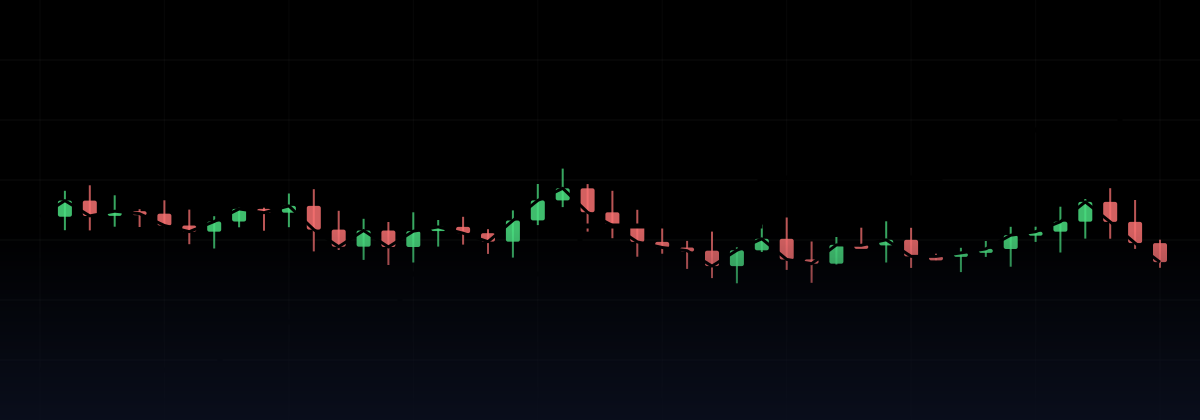
A long position in forex means you buy a currency pair, betting the base currency will rise against the quote currency. A short position means you sell the pair, betting the base currency will fall. Because every forex trade is an exchange of one currency for another, going short is just as simple as going long, and both carry the same leverage-driven risk.
Key takeaways
- Long = buy the pair = you profit if the first (base) currency strengthens against the second (quote) currency.
- Short = sell the pair = you profit if the base currency weakens. Every short on EUR/USD is effectively a long on the US dollar.
- Longs open at the ask and close at the bid; shorts open at the bid and close at the ask, so you always pay the spread.
- Overnight swap can be positive on one side and negative on the other, depending on the interest-rate gap between the two currencies.
- Losses on a short are not literally unlimited in practice, but a leveraged position can lose more than you expect very quickly in either direction.
- US retail accounts follow FIFO and cannot hold a long and short on the same pair at once; many offshore and UK/EU accounts can.
What "long" and "short" mean on a currency pair
Every currency pair is quoted as base/quote. In EUR/USD at 1.0850, the euro is the base and the US dollar is the quote: one euro costs 1.0850 dollars. If the base and quote currency idea is new to you, that single convention unlocks the rest of this page.
When you go long EUR/USD, you are buying euros and paying for them with dollars. You want the price to rise, because a higher number means each euro is worth more dollars. When you go short EUR/USD, you are selling euros and receiving dollars. You want the price to fall, because a lower number means you can buy those euros back more cheaply.
So in forex, there is no such thing as a pure "short" in the stock-market sense where you borrow shares you do not own. You are always long one currency and short the other at the same time. A short EUR/USD trade is, economically, a long US dollar trade against the euro. This is why traders often say "I'm long the dollar" when they are actually short EUR/USD, GBP/USD and AUD/USD together.
Worked examples: how long and short trades make or lose money
A long trade on EUR/USD
Suppose you buy 1 mini lot (10,000 units) of EUR/USD at an ask price of 1.0852. On EUR/USD, one pip is the fourth decimal place, and for a 10,000-unit position each pip is worth 1 US dollar (10,000 × 0.0001 = $1).
- Price rises and you close at a bid of 1.0902. That is 50 pips in your favour: 50 × $1 = $50 profit.
- Price falls and you close at a bid of 1.0812. That is 40 pips against you: 40 × $1 = $40 loss.
The money is made or lost on the difference between your entry and exit, multiplied by position size. Leverage does not change the pip value; it changes how little margin you put up to control the position, which is what makes the percentage swing on your account so large.
A short trade on GBP/USD
Now suppose you sell 1 mini lot of GBP/USD at a bid of 1.2700. The pip value is again $1 per pip for 10,000 units, because the quote currency is the dollar.
- Price falls and you buy back at an ask of 1.2640: 60 pips in your favour, $60 profit.
- Price rises and you buy back at an ask of 1.2735: 35 pips against you, $35 loss.
Mechanically, the broker credits you with dollars when you sell the pounds and debits dollars when you buy them back. You never need to own pounds beforehand. On the platform, a short is simply a "Sell" ticket; closing it is a "Buy" of the same size, which most platforms do for you when you click close.
Where the pip value is not in dollars
On a pair like USD/JPY the quote currency is the yen, so the pip value is fixed in yen, not dollars. A 10,000-unit position on USD/JPY is worth 100 yen per pip (10,000 × 0.01), which converts to roughly $0.65 to $0.70 per pip at typical recent rates. The direction logic is identical: long USD/JPY profits when the dollar rises against the yen, short profits when it falls. Our guide on pip value for USD/JPY walks through the conversion.
Long vs short side by side
| Feature | Long (buy) | Short (sell) |
|---|---|---|
| Your view | Base currency will rise vs quote | Base currency will fall vs quote |
| Entry price used | Ask (higher price) | Bid (lower price) |
| Exit price used | Bid | Ask |
| Stop loss placed | Below entry | Above entry |
| Take profit placed | Above entry | Below entry |
| Chart line that triggers your stop | Bid line | Ask line (often hidden on charts) |
| Swap direction | Usually positive if base rate > quote rate | Usually positive if quote rate > base rate |
| Margin required | Same as an equal-sized short | Same as an equal-sized long |
| Maximum theoretical loss | Price falling to zero (practically irrelevant) | No ceiling in theory; gap risk is the practical concern |
Bid, ask and the spread: why both directions start slightly negative
A quote always has two prices. The bid is the price at which you can sell; the ask is the price at which you can buy. The ask is higher, and the gap is the spread. A long trade buys at the ask and has to be closed by selling at the bid. A short trade sells at the bid and has to be closed by buying at the ask. Either way, the moment you open, you are down by the spread.
This has a practical consequence that confuses many beginners. Most charts on MetaTrader and similar platforms are drawn from the bid price. If you are short and your stop loss sits just above a recent high on the chart, the stop is triggered by the ask, which is higher than the bid line you are looking at. When spreads widen around news or at the daily rollover, a short can be stopped out even though the drawn candle never touched your level. That exact scenario is covered in why your stop loss got hit without price touching it. Turning on the ask line in your platform settings removes a lot of the mystery.
Swap: holding long and short positions overnight
If you hold a position past the broker's daily rollover (commonly 5pm New York time), you either pay or receive a financing adjustment called swap or rollover. In simple terms it reflects the interest-rate difference between the two currencies, minus a broker markup.
If the base currency has a higher interest rate than the quote currency, a long position tends to earn a small positive swap and a short tends to pay. Flip the rates and the swap flips too. Because brokers add their own markup, it is common to see both sides negative, or the positive side worth far less than the negative side costs. Rates change with central bank policy, so check the swap figures in your platform's contract specifications rather than relying on what was true last year. Wednesday usually charges three days of swap to cover the weekend, explained in our guide to forex swap.
For a short-term trader, swap is usually small relative to the spread. For someone holding positions for weeks, it can be the difference between a strategy that breaks even and one that bleeds.
Is shorting riskier than going long?
In shares, people warn that a short has unlimited loss because a price can rise forever but only fall to zero. In forex that framing is less useful. Currency pairs do not go to zero or to infinity in normal conditions, and the risk on either side comes from three things that apply equally to longs and shorts:
- Position size relative to your account. A 50-pip move on a standard lot (about $500 on EUR/USD) is trivial for a $100,000 account and catastrophic for a $1,000 one.
- Leverage. Leverage lets you open a position far larger than your deposit, so a modest move against you can wipe out the margin. See how forex leverage works for the arithmetic.
- Gaps and fast markets. Weekend gaps, surprise central bank decisions and illiquid moments can jump price past your stop. The 2015 Swiss franc event is the textbook example: when the Swiss National Bank removed its EUR/CHF floor, the pair dropped so fast that many long EUR/CHF positions were closed far beyond their stops.
Notice that example hurt long traders. Danger does not live on one side. The practical asymmetry is behavioural rather than mathematical: many beginners feel more comfortable buying, so they hold losing longs hoping for a rebound, and shy away from shorts even when their analysis points down.
Risk warning. Whether you go long or short, a leveraged forex or CFD position can lose money quickly, and most retail accounts at brokers that publish the figure lose money. In the UK, EU and Australia, retail leverage on major pairs is capped at 30:1 and negative balance protection means you cannot lose more than your account balance with a compliant entity. In the US, retail leverage is capped at 50:1 on majors and 20:1 on other pairs. Offshore entities may offer much higher leverage with weaker protections. Check which legal entity you are signing up with.
Holding a long and a short at the same time (hedging)
Some platforms let you open a buy and a sell on the same pair simultaneously. This is called hedging mode. The net exposure is zero, but you are paying two spreads and potentially two swaps, and the broker may still require some margin. Traders sometimes use this to "freeze" a losing trade, but it does not remove the loss; it just postpones the decision. Our article on hedging a losing forex trade explains why it is usually a more expensive version of closing.
The US rules are different
Retail forex accounts with US brokers that are CFTC-registered and NFA members must follow the NFA's FIFO rule (first in, first out) and cannot hold opposing positions in the same pair in the same account. If you are long 20,000 EUR/USD and place a sell order for 10,000, the platform closes half of your long rather than opening a new short. The details are in our explainer on the US no-hedging rule.
How to decide whether to go long or short
There is no rule that one direction is better. The decision should come from your trading plan, not from habit. A few frameworks traders commonly use:
- Trend. In an uptrend (higher highs and higher lows) the plan may favour longs; in a downtrend, shorts.
- Interest rates and macro. A central bank raising rates faster than its peer tends to support its currency over time, though markets often price this in early.
- Relative strength. If the dollar is weak across all pairs, shorting USD/JPY or going long EUR/USD express the same idea; pick the one with the cleaner chart and lower cost.
Whichever direction you choose, define the stop loss and position size before entry. A long and a short of equal size have equal pip value, so the same position-sizing maths applies in both directions.
Placing long and short orders on a platform
On MetaTrader 4 or 5, cTrader and most web platforms, you have two buttons: Buy (at the ask) and Sell (at the bid). A market order fills straight away. If you want to enter at a better or confirmed price instead, you use pending orders: buy limit and buy stop for longs, sell limit and sell stop for shorts. Our forex order types guide covers every option.
Checklist before clicking either button:
- Confirm the direction matches your analysis (it is surprisingly easy to click Sell on a long idea when tired).
- Set volume in lots, not in account currency, and double-check: 1.00 is a standard lot of 100,000 units.
- Attach a stop loss on the correct side: below entry for longs, above for shorts.
- Check the spread and the swap if you might hold overnight.
- Check the economic calendar for high-impact releases on either currency.
Frequently asked questions
Does going long in forex mean I own the currency?
With a retail broker you almost never take delivery. You hold a leveraged contract, either rolling spot forex or a CFD, whose value tracks the exchange rate. You gain or lose the price difference, and swap is applied if you hold overnight. Actually owning the currency would mean a currency exchange or bank transfer, which is a different product with no leverage.
Can I short a currency pair with a small account?
Yes. Shorting requires the same margin as an equal-sized long, and many brokers allow micro lots of 1,000 units, where a pip on EUR/USD is worth about 10 cents. Small size is sensible while learning. Check the minimum trade size in the broker's contract specifications, because it varies by account type and entity.
Why is my short trade showing a loss immediately after I open it?
Because you sold at the bid and the position is valued at the ask, which is what you would pay to close it. The gap is the spread. A short needs price to fall by at least the spread before it reaches breakeven, exactly as a long needs price to rise by the spread. Commission on raw-spread accounts adds to this starting cost.
Is it better to trade long or short in forex?
Neither direction is inherently better. Currencies move up and down against each other and every trade is long one currency and short another. What matters is whether your analysis, entry, stop placement and position size are sound. Swap costs can tilt the economics for longer holds, so check the swap rates for each side before holding positions for days.
What happens to a short position over the weekend?
It stays open and is exposed to any gap when the market reopens on Sunday evening. If news over the weekend moves the rate, your position is valued at the first available price, which may be beyond your stop. Swap for the weekend is typically charged on Wednesday night rather than Friday, so there is usually no extra Friday charge.
Can US traders go short on forex?
Yes. US retail traders can short currency pairs with CFTC-registered, NFA-member brokers. What they cannot do is hold a long and a short on the same pair in the same account, and they must close positions on a first-in, first-out basis. Retail leverage is capped at 50:1 on majors and 20:1 on other pairs.
This article is general information, not personal financial advice. Figures such as spreads, fees, leverage and rules change; confirm them with the provider and check the provider is authorised for your country of residence.