Forex Trading: How It Actually Works, What It Costs and Who Loses
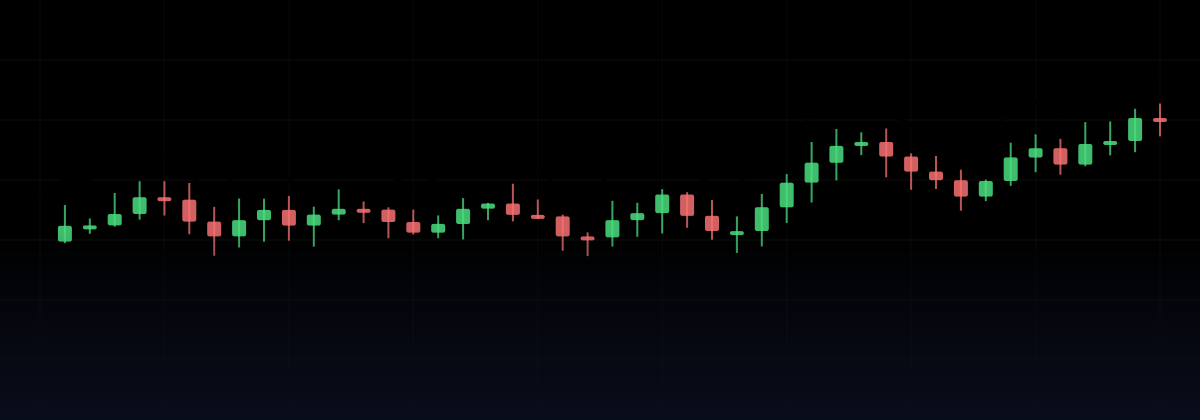
Forex trading is speculating on the exchange rate between two currencies, buying one and selling the other in a single transaction, usually through a broker using borrowed money (leverage). Retail traders almost never touch the physical currency; they hold a leveraged position whose profit or loss depends on how far the rate moves and how big the position is. It is legal in most countries when done through a properly regulated broker, but most retail accounts lose money, and leverage is the main reason.
Key takeaways
- Every forex trade is a pair: you are long one currency and short the other at the same time.
- Profit and loss are measured in pips, and the cash value of a pip depends on your position size in lots.
- Leverage lets a small deposit control a large position, which magnifies losses exactly as much as gains.
- Your real costs are the spread, any commission and overnight swap, and they compound with trade frequency.
- Rules differ sharply by country: the US caps leverage at 50:1 on majors, the UK, EU and Australia at 30:1, and India restricts residents to INR pairs on local exchanges.
- Regulator disclosures consistently show that a majority of retail CFD and margin-FX accounts lose money.
What forex trading actually is
The foreign exchange market is where currencies are swapped for one another. Banks, corporations, central banks, asset managers and hedge funds do this for real business reasons: paying for imports, repatriating profits, hedging a bond portfolio, managing reserves. Retail forex trading is a small slice of that activity in which individuals take a view on whether one currency will strengthen or weaken against another, without needing the currency itself.
The scale is enormous. The Bank for International Settlements' 2025 Triennial Survey put average daily turnover at roughly $9.6 trillion, up from about $7.5 trillion in 2022. The US dollar is on one side of close to nine in every ten trades. No retail trader moves that price; you are a price taker. If you want the structural picture of who sits where, our explainer on the foreign exchange market walks through the tiers from interbank dealers down to retail brokers.
In the UK, EU and Australia retail forex is usually offered as a CFD (contract for difference) or, in the UK, also as spread betting. In the US it is rolling spot forex through a registered dealer. The screen looks the same; the legal wrapper decides tax and protection.
How currency pairs and quotes work
A quote like EUR/USD 1.0850 means one euro costs 1.0850 US dollars. The first currency is the base, the second is the quote currency. Buying EUR/USD means you expect the euro to rise against the dollar; selling it means you expect it to fall. There is no separate "short selling" process as in shares, because selling the pair simply means being long dollars and short euros.
Brokers show two prices: the bid (what you can sell at) and the ask (what you can buy at). If EUR/USD is 1.08500 / 1.08508, the spread is 0.8 pips, and that gap is a cost you pay the moment you open.
Majors, minors and exotics
Pairs are usually grouped by liquidity:
- Majors include the US dollar paired with EUR, JPY, GBP, CHF, AUD, CAD or NZD. Tightest spreads, deepest liquidity.
- Minors (crosses) pair two major currencies without the dollar, such as EUR/GBP or GBP/JPY.
- Exotics pair a major with an emerging-market currency, such as USD/ZAR, USD/TRY or USD/MXN. Wider spreads, bigger swaps, sharper gaps.
Beginners tend to do better sticking to a handful of liquid majors, simply because costs are lower.
Pips, lots and what a move is worth
A pip is the standard unit of price movement. For most pairs it is the fourth decimal place (0.0001); for yen pairs it is the second (0.01). Brokers quoting five decimals show a fractional pip, or pipette, as the last digit.
Position size is measured in lots:
| Lot type | Units of base currency | Value of 1 pip on EUR/USD | P&L on a 50-pip move |
|---|---|---|---|
| Standard | 100,000 | $10.00 | $500 |
| Mini | 10,000 | $1.00 | $50 |
| Micro | 1,000 | $0.10 | $5 |
| Nano (where offered) | 100 | $0.01 | $0.50 |
The arithmetic for a pair quoted in dollars is simple: pip value = units × 0.0001. For pairs where the dollar is the base, such as USD/JPY, you convert. One standard lot of USD/JPY at 150.00 has a pip value of 100,000 × 0.01 ÷ 150 = about $6.67. If that feels fiddly, the pip calculator does it for any pair and account currency.
The key point: the same 50-pip move can be a rounding error or a disaster depending entirely on the lot size you chose. Position size, not the chart, is what decides how much you lose.
Leverage and margin, with real numbers
Leverage is the ratio between the position you control and the money the broker requires you to set aside as margin. It is not free money; it is a loan of exposure. The rules on how much leverage retail clients can use are set by regulators, not brokers' marketing teams.
Take one standard lot of EUR/USD at 1.0850. The notional value is $108,500.
- At 30:1 (the UK, EU and Australian retail cap on majors), required margin is $108,500 ÷ 30 = $3,616.67.
- At 50:1 (the US cap on majors), required margin is $2,170.
- At 500:1 (common at offshore entities), required margin is $217.
Now imagine an account with $2,500. At 50:1, that one lot uses most of the account as margin, and a 25-pip move against you costs $250, a full 10 percent of the balance. A move of around 30 pips is routine for EUR/USD within a single session. That is how accounts get wiped out quickly: not by one catastrophic event but by sizing that leaves no room for normal noise.
When equity falls far enough relative to used margin, the broker issues a margin call and then starts closing positions at the stop-out level. Read how forex leverage works before using any of it, because the high leverage advertised by offshore brokers is a risk feature, not a benefit.
The most important risk point: leverage magnifies losses exactly as much as gains. Regulated brokers in the UK, EU and Australia must publish the percentage of their retail CFD accounts that lose money, and those figures commonly sit somewhere between about 60 and 80 percent or higher. Only trade money you can afford to lose entirely, and check whether your broker's entity offers negative balance protection, which stops you owing more than your deposit.
What forex trading really costs
Retail forex is usually called "commission-free", but there is always a price. The main costs are:
Spread
The difference between bid and ask. On a standard-style account the broker builds its fee into a wider spread. On a raw or ECN-style account the spread is closer to the underlying market but you pay a separate commission per lot. Spreads vary by pair, time of day and volatility; they widen sharply around major data releases and at the daily rollover.
Commission
Charged per lot traded, usually quoted per side or round turn. A round-turn commission somewhere in the region of $6 to $7 per standard lot is common on raw-spread accounts at well-known brokers at the time of writing, but this varies and you should check the broker's current price list.
Swap (overnight financing)
If you hold a position past the broker's daily rollover, you are credited or debited based on the interest-rate difference between the two currencies plus the broker's mark-up. Most of the time retail traders pay swap on both sides once the mark-up is included. Positions held over Wednesday's rollover typically incur three days' swap to cover the weekend.
Worked cost example
Suppose you trade one standard lot of EUR/USD, ten times a week, on a raw account with a 0.2-pip average spread and $7 round-turn commission. Each trade costs 0.2 × $10 + $7 = $9. Over ten trades that is $90 a week, or roughly $4,500 over a 50-week year, before any swap. A strategy has to clear that hurdle just to break even. Frequency is the silent cost multiplier most new traders ignore.
Regulation and where you can legally trade
Forex is legal for individuals in most places, but who you can trade with, how much leverage you get and what protection you receive depend on where you live and on the specific legal entity of the broker you sign with. Many brands run several entities: one regulated in the UK or Australia and another offshore. Your protection follows the entity on your client agreement, not the logo on the website.
| Jurisdiction | Main regulator(s) | Retail leverage on majors | Notes |
|---|---|---|---|
| United States | CFTC, NFA | 50:1 (20:1 on others) | No retail CFDs; FIFO and no hedging in the same account; only CFTC-registered dealers |
| United Kingdom | FCA | 30:1 | Negative balance protection; client money segregation; spread betting available |
| European Union | National regulators under ESMA rules | 30:1 | Negative balance protection; standardised risk warnings |
| Australia | ASIC | 30:1 | Product intervention order since 2021 |
| India | RBI, SEBI | Exchange-set margins | Residents may trade only permitted INR pairs and cross-currency contracts on NSE, BSE or MSEI via SEBI-registered brokers |
US residents should read our page on whether forex trading is legal in the USA, which covers the NFA registration check and why offshore brokers that accept Americans are a red flag. Indian residents face a stricter regime: under FEMA, trading with offshore margin-FX or CFD brokers is not permitted, and the RBI publishes an Alert List of unauthorised platforms (OctaFX is one of the names on it). Our India legality guide explains what is allowed instead.
Common approaches and how they fail
There is no single way to trade forex. Broadly, traders fall into a few camps, and each has a characteristic way of going wrong.
- Scalping aims for a few pips per trade, many times a day. It fails mostly on costs: spread and commission eat a large share of each small target.
- Day trading holds positions for minutes to hours, closing before the rollover. It fails through overtrading and poor sizing after a loss.
- Swing trading holds for days to weeks, often using daily and four-hour charts. It fails when traders widen stops to avoid being wrong or ignore swap costs on longer holds.
- Fundamental or macro trading builds views on interest rates, inflation and growth. It fails when the view is right but the timing and position size are wrong.
Whatever the approach, results depend more on risk management than on entry signals. A common rule of thumb is to risk no more than 1 percent of the account on any single trade, which forces position size to adapt to the stop distance. If you have $5,000 and a 40-pip stop on EUR/USD, 1 percent risk is $50, so position size is $50 ÷ (40 × $0.10 per micro lot) = 12.5 micro lots, or 0.12 lots rounded down. Our strategy hub covers specific methods with their failure modes, and the position size calculator handles the maths.
Choosing a broker without falling for marketing
Broker selection matters more than most strategies. A sensible checklist:
- Confirm the regulator and licence number on the regulator's own public register, not on the broker's website.
- Check which entity you will be onboarded to from your country, and what that entity's protections are.
- Compare all-in cost: spread plus commission plus swap, on the pairs you will actually trade.
- Read withdrawal terms. Fees, minimums, processing times and any bonus-related restrictions on withdrawing.
- Test the platform on a demo account first. MetaTrader 4, MetaTrader 5, cTrader and TradingView-integrated platforms all behave a little differently.
- Be wary of bonuses tied to trading volume, "account managers" who call you, and anyone guaranteeing returns.
Our broker reviews are built from public registers and published fee schedules, so confirm the details yourself.
Realistic expectations for a first year
Forex is often sold as a path to quitting a job. A more honest picture: most people who try it lose money, many stop within months, and those who persist usually spend a long time on demo and small live accounts before they have a consistent process, let alone consistent profits.
A sensible first year looks something like this: learn the mechanics on a demo account, write a simple trading plan with rules for entry, exit and size, trade it on micro lots with a small amount of money you can genuinely lose, keep a journal of every trade, and review it weekly. Judge yourself on whether you followed your rules, not on profit, because over a few dozen trades the results are mostly noise.
Frequently asked questions
Is forex trading profitable?
It can be for a minority, but most retail traders lose money. Regulated brokers in the UK, EU and Australia publish the share of retail CFD accounts that lose, and it is usually a clear majority. Profitability depends on cost control, position sizing and a tested process, not on finding a special indicator. Treat any promise of steady income as a warning sign.
How much money do I need to start forex trading?
Many brokers accept small deposits, and micro or nano lots mean you can technically trade with very little. The practical question is whether your account can survive normal losing streaks while risking around 1 percent per trade. With very small balances, even the smallest lot size may represent too much risk, so a demo account is often the better starting point.
Is forex trading legal?
In most countries, yes, through a broker authorised by the local regulator. The US requires CFTC-registered dealers and NFA membership and bans retail CFDs. India allows residents to trade only permitted INR currency pairs on recognised exchanges through SEBI-registered brokers. Several countries publish alert lists of unauthorised platforms, which are worth checking before you deposit.
What is the best time to trade forex?
Liquidity and movement are usually highest when major sessions overlap, especially when London and New York are both open. Spreads tend to be tightest then for majors like EUR/USD and GBP/USD. Quieter periods, such as late in the New York afternoon, often bring wider spreads and less movement. The right time also depends on the pairs you trade.
Can I lose more than I deposit?
It depends on the broker entity. Retail clients of brokers regulated in the UK, EU and Australia have negative balance protection, so losses are limited to the account balance. Elsewhere, and in some professional account categories, a fast gap could leave you owing money. Check the client agreement before depositing.
Is forex trading the same as gambling?
Mechanically, short-term speculation without an edge behaves a lot like gambling, because costs work against you and outcomes are random over small samples. The difference lies in whether you have a tested process with positive expectancy and strict risk control. Without those, the comparison is fair, and most retail results reflect that.
This article is general information, not personal financial advice. Figures such as spreads, fees, leverage and rules change; confirm them with the provider and check the provider is authorised for your country of residence.