CFD Trader Guide: How to Compare CFD Brokers in the UK and Australia
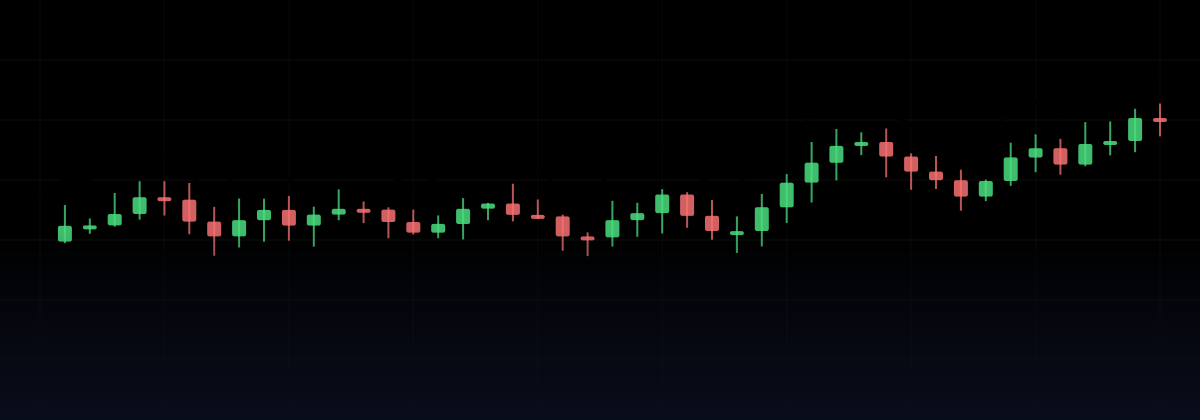
A CFD trader speculates on price changes in forex, indices, commodities and shares through contracts for difference, which pay the difference between opening and closing price without you owning the asset. In the UK and Australia, retail CFD trading is legal and tightly regulated by the FCA and ASIC, with leverage caps, margin close-out rules and negative balance protection. Choosing a broker comes down to the regulated entity you sign with, total trading cost (spread, commission and overnight funding) and how the platform fits the way you trade.
Key takeaways
- UK and Australian retail CFD leverage is capped at 30:1 on major forex pairs, falling to 2:1 on crypto in Australia; the UK bans crypto derivatives for retail entirely.
- Both regimes require margin close-out at 50 percent of required margin and negative balance protection for retail clients.
- Overnight funding is often the biggest cost for anyone holding index or share CFDs for weeks.
- UK traders can choose between CFDs and spread betting, which are taxed very differently.
- FSCS compensation may apply if a UK-regulated firm fails; Australia has no equivalent general scheme for CFD clients.
- Brokers must publish the share of retail accounts that lose money, and it is usually a large majority.
What a CFD trader actually holds
A contract for difference is an agreement between you and the broker. If you buy (go long) a CFD on the FTSE 100 at 8,000 and close it at 8,050, the broker pays you the 50-point difference multiplied by your stake. If it closes at 7,950, you pay the broker. You never own the shares in the index or the barrel of oil; you own a contract whose value tracks them.
That structure has three consequences that every CFD trader should understand. First, you trade on margin, so your exposure is much larger than your deposit. Second, the broker is your counterparty, which means its financial strength and regulatory status matter. Third, holding a leveraged position overnight costs money, because the broker is effectively lending you the full exposure.
Forex CFDs work the same way as other CFDs but are quoted in pips and lots. If you are new to that side, our guide to forex trading covers the pair mechanics before you get into broker choice.
The UK and Australian rulebooks compared
Since 2018 in Europe and the UK, and since March 2021 in Australia, retail CFD trading has run under product intervention rules that look very similar. The leverage caps by asset class:
| Underlying | UK (FCA) retail cap | Australia (ASIC) retail cap | Margin on £/$10,000 exposure |
|---|---|---|---|
| Major forex pairs | 30:1 | 30:1 | 333 |
| Minor forex pairs, gold, major indices | 20:1 | 20:1 | 500 |
| Other commodities, minor indices | 10:1 | 10:1 | 1,000 |
| Individual shares and other assets | 5:1 | 5:1 | 2,000 |
| Cryptocurrencies | Not available to retail | 2:1 | 5,000 (AU only) |
Both regimes also require:
- Margin close-out at 50 percent: when your equity falls to half the margin required for open positions, the broker must start closing them.
- Negative balance protection: retail clients cannot lose more than the funds in their CFD account.
- No inducements such as deposit bonuses for retail clients in the UK, with similar restrictions in Australia.
- Standardised risk warnings showing the percentage of the provider's retail accounts that lose money.
Australia layers on design and distribution obligations, which require brokers to define a target market for their CFD products and to screen clients against it. In practice, Australian applicants often face an appropriateness questionnaire that can refuse or restrict accounts.
Professional client status
Brokers in both countries can reclassify experienced traders as professional (UK) or wholesale (Australia) clients, unlocking higher leverage. The trade-off is that you lose retail protections, which may include negative balance protection and access to the Financial Ombudsman Service in the UK. The UK criteria involve meeting two of three tests: significant trading frequency over the previous year, a sizeable financial instrument portfolio, and relevant professional experience. Higher leverage is not an upgrade if it removes the floor under your losses. Our explainer on negative balance protection covers why that floor matters in gap events.
Total cost: spread, commission and overnight funding
Comparing CFD brokers on headline spread alone is the most common mistake new CFD traders make. There are three cost layers, and which matters most depends on how long you hold.
Spread and commission
Forex and index CFDs are usually priced through the spread. Share CFDs are more often priced at the underlying market spread plus a commission based on a percentage of trade value with a minimum per trade. Raw-spread forex accounts charge a commission per lot instead of widening the spread. Our page on raw spread accounts shows when that structure is cheaper.
Overnight funding
For index, commodity cash and share CFDs, brokers typically charge (or credit) a daily financing amount based on a benchmark interest rate, such as SONIA in the UK or the RBA cash rate in Australia, plus or minus a mark-up that is often a few percent a year. Forex CFDs use swap points based on the interest differential plus a broker mark-up.
A worked example with illustrative numbers: you hold a long index CFD with £10,000 exposure for 30 days. If the benchmark rate is 4.5 percent and the broker's mark-up is 2.5 percent, the annual funding rate is 7 percent. Daily cost is £10,000 × 0.07 ÷ 365 = £1.92, so 30 days costs about £57.53. If the index rises 1 percent in that month, your gross £100 gain shrinks to roughly £42 after funding, before spread. Hold for six months on a flat market and funding alone costs around £345. This is why CFDs suit short to medium holding periods and why long-term investors usually buy the actual asset instead.
A cost comparison checklist
| Cost item | Where to find it | Why it matters |
|---|---|---|
| Typical and minimum spread on your instruments | Broker's product or market information pages | Minimum spreads are marketing; typical spreads at your trading hours are what you pay |
| Commission per lot or per share trade | Account type comparison page | Decides whether raw or standard pricing is cheaper for your size |
| Overnight funding mark-up | Funding or financing policy | Dominant cost for multi-week holds |
| Currency conversion fee | Fees page or terms | Applies when trading instruments priced in another currency |
| Inactivity and withdrawal fees | Fees page | Small but annoying on dormant accounts |
| Guaranteed stop premium | Order type documentation | Useful for gap risk; costs extra if triggered |
CFDs or spread betting (UK only)
UK residents have a choice most traders elsewhere do not: spread betting. Economically, a spread bet and a CFD behave almost identically. You stake an amount per point rather than buying a number of contracts, but the leverage caps and protections are the same.
The difference is tax. Under current UK rules, spread betting profits are generally free of Capital Gains Tax and stamp duty for individuals who are not trading as a business, while CFD gains are subject to Capital Gains Tax. The flip side is that spread betting losses cannot be offset against other gains, while CFD losses can. A trader who expects to lose in a given year, or who has other gains to offset, may find CFDs more useful. Tax treatment depends on individual circumstances and can change; our page on spread betting tax in the UK covers the detail, and a tax adviser should confirm your position.
Australia has no spread betting product. CFD gains there may be treated as assessable income or as capital gains depending on whether the ATO considers you to be carrying on a trading business. Our page on forex trading tax in Australia explains the distinction.
How to compare CFD brokers properly
Once you strip out marketing, most reputable CFD brokers in the UK and Australia offer similar leverage and protections because the rules force them to. The real differences are in product range, pricing model, platform and the entity structure.
1. Confirm the entity
Many brands operate an FCA entity, an ASIC entity and one or more offshore entities. If you live in the UK but your account is opened with the brand's Seychelles or Vanuatu arm, the FCA rules above do not protect you. Look for the firm reference number on the FCA register or the AFSL number on ASIC's professional register, and check that the name on your client agreement matches. Our guide on how to check if a broker is regulated walks through both registers.
2. Match the product range to what you trade
Some brokers focus on forex and a few indices; others list thousands of share CFDs across global exchanges. If you mostly trade EUR/USD and gold, a huge share list adds nothing. If you trade US earnings season, check share CFD coverage, extended-hours pricing and corporate action handling.
3. Check the platform fit
MetaTrader 4 and 5 dominate forex-focused brokers. Larger multi-asset brokers tend to have their own platforms. cTrader and TradingView integration are increasingly common. If you rely on automated strategies, confirm the broker supports your platform on the specific regulated entity you are joining, because platform availability sometimes differs by entity.
4. Read the order execution policy
Check how the broker handles slippage, whether it offers guaranteed stops, how it prices during market closures and gaps, and its policy on weekend gaps in indices.
Where common names sit
Firms such as IG, CMC Markets, Pepperstone and IC Markets are frequently compared by UK and Australian CFD traders, but they differ in emphasis: some are broad multi-asset providers with proprietary platforms, others are forex-first with MetaTrader and cTrader. Our IG vs CMC Markets comparison looks at two of the larger multi-asset providers side by side using their published terms. Always confirm current pricing on each firm's own website.
Risk warning that actually matters: every UK and Australian CFD provider must show what proportion of its retail accounts lose money, and the figures are typically well over half. Leverage caps reduce how fast you can lose but do not change the odds. Before trading, work out what a normal day's range on your instrument would cost at your intended size, and make sure that number is a small fraction of your account.
Sizing a CFD position: a worked example
Suppose you are an Australian CFD trader with A$8,000 who wants to buy the ASX 200 index CFD, risking no more than 1 percent (A$80) per trade. Your analysis puts the stop 40 points below entry. Position size is A$80 ÷ 40 points = A$2 per point. If the index is at 8,000, your exposure is A$16,000, and at the 20:1 cap for major indices your margin requirement is A$800. The account can absorb the margin, the stop costs A$80 plus spread, and a 100-point adverse gap through your stop would cost A$200, which is uncomfortable but survivable.
Now compare a trader who instead sizes by margin, putting A$4,000 of margin to work at 20:1 for A$80,000 of exposure, or A$10 per point. The same 40-point stop costs A$400, and a 100-point gap costs A$1,000, an eighth of the account in one trade. Sizing from the stop, not the available margin, is the habit that keeps CFD traders in the game.
Who CFD trading suits, and who it does not
CFDs are a reasonable tool for active traders who want short-term exposure across many markets, the ability to go short easily and the convenience of one margin account. They are poorly suited to long-term investing, because overnight funding compounds against you, and to anyone without a defined risk process. If you want to hold shares for years, buying them through a share-dealing account or ISA (UK) is usually cheaper and avoids counterparty risk.
Frequently asked questions
Is CFD trading legal in the UK and Australia?
Yes. In the UK, CFD providers must be authorised by the FCA, and in Australia they must hold an Australian Financial Services Licence from ASIC. Both regulators apply leverage limits, margin close-out and negative balance protection for retail clients. The UK bans the sale of crypto CFDs to retail clients, while Australia allows them at a maximum of 2:1.
Can a CFD trader lose more than their deposit?
Retail clients of FCA and ASIC regulated providers have negative balance protection, so losses are limited to the money in the CFD account. Clients who opt up to professional or wholesale status may lose that protection, and clients onboarded to an offshore entity of the same brand may not have it at all. Check your client agreement.
What is the difference between a CFD and spread betting?
Both are leveraged derivatives with nearly identical economics. A spread bet is sized in money per point; a CFD is sized in contracts. In the UK, spread betting profits are generally exempt from Capital Gains Tax, whereas CFD profits are taxable but losses can be offset against gains. Spread betting is only available in the UK and Ireland.
Why do CFD brokers charge overnight fees?
Because a leveraged position is effectively financed by the broker. For long positions you usually pay a benchmark interest rate plus a mark-up; for shorts you may receive the benchmark minus a mark-up, which is often negative overall. These charges are small daily but significant over weeks or months, which makes CFDs costly for long-term holds.
Is my money protected if a CFD broker goes bust?
FCA-regulated firms must segregate retail client money, and the Financial Services Compensation Scheme may cover eligible claims up to its limit if a firm fails. ASIC also requires client money to be held in trust accounts, but Australia has no general compensation scheme for CFD clients. Protection always depends on the specific entity you contracted with.
Do I need professional status to trade CFDs seriously?
No. Retail status provides meaningful protection and the leverage caps are ample for sensible position sizing. Professional status suits a small group of experienced traders who meet the qualifying criteria and accept losing protections such as negative balance protection. Higher leverage mostly increases how quickly mistakes become expensive.
This article is general information, not personal financial advice. Figures such as spreads, fees, leverage and rules change; confirm them with the provider and check the provider is authorised for your country of residence.