Psychological Round Numbers in Forex: How to Trade 00 and 50 Levels
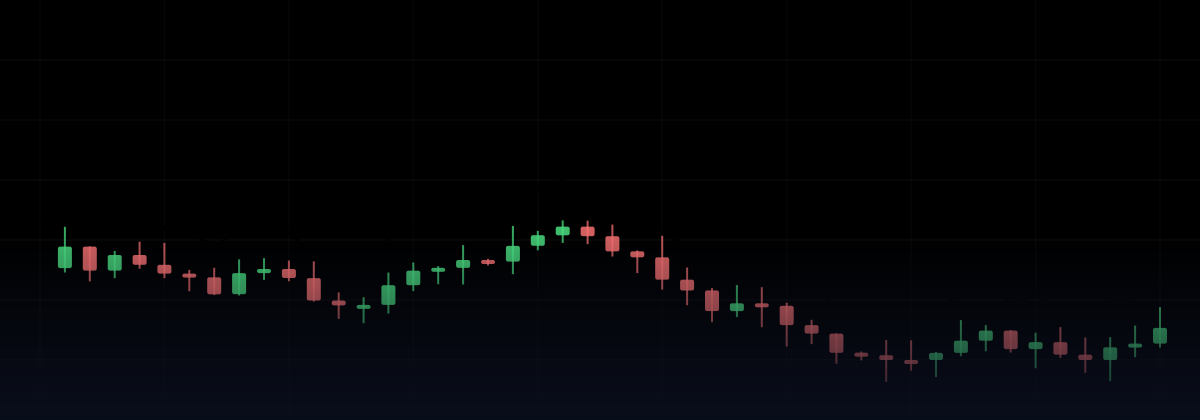
Psychological round numbers are prices ending in 00 (and to a lesser degree 50), such as 1.1000 on EUR/USD or 150.00 on USD/JPY, where buy and sell orders tend to cluster because people, options desks and algorithms all anchor to tidy figures. They often slow price down, trigger brief reactions or attract stop runs, but they are zones of interest, not guaranteed turning points. Used well, they tell you where not to place your stop and where to expect a fight, rather than where to blindly buy or sell.
Key takeaways
- Round numbers come in tiers: "big figures" (1.1000), half figures (1.1050), and major handles (1.0000, 1.2000, 150.00), each attracting progressively more attention.
- Orders cluster at round numbers: take-profits, limit entries, option strikes and, just beyond them, stop-losses. That clustering is what creates reactions and stop hunts.
- Price frequently overshoots a round number by 10 to 30 pips on majors before reversing, so placing a stop exactly at or a few pips beyond 00 is a common mistake.
- Round numbers work best as one piece of confluence alongside prior swing highs and lows, trend direction and session timing.
- No level guarantees a reaction; size every trade so that a clean break through the level costs you a planned, small loss.
What counts as a psychological round number
In a four-decimal pair like EUR/USD or GBP/USD, a price ending in 00 in the third and fourth decimal places is called a "big figure": 1.0800, 1.0900, 1.1000. Traders often drop the leading digits and say "the figure" or "08 big figure". Prices ending in 50 (1.0850) are half figures. Above those sit the major handles where the first decimal changes, such as 1.1000 or 1.2000 on EUR/USD, and parity (1.0000), which drew enormous attention when EUR/USD traded around it in 2022.
In two-decimal yen pairs the same logic applies one step to the left. USD/JPY at 150.00 is a big round number, 150.50 is a half level, and 145.00 or 160.00 carry extra weight because they are multiples of five or ten. Gold (XAU/USD) tends to react around $50 and $100 increments such as 2,000 or 2,350, though the exact behaviour depends on how far price is travelling each day.
If you are still getting used to how prices are quoted, the guide to what a pip is explains why the "00" sits in the fourth decimal on most pairs and the second on yen pairs.
The hierarchy of round levels
| Level type | EUR/USD example | USD/JPY example | Typical significance |
|---|---|---|---|
| Quarter level (25/75) | 1.0825, 1.0875 | 149.25, 149.75 | Minor; mostly intraday noise, used by short-term scalpers |
| Half figure (50) | 1.0850 | 149.50 | Moderate; common take-profit and limit order area |
| Big figure (00) | 1.0800, 1.0900 | 149.00, 150.00 | Strong; heavy order clustering, frequent pauses |
| Major handle | 1.1000, 1.2000 | 150.00, 160.00 | Very strong; media attention, option strikes, policy commentary |
| Historic or policy level | 1.0000 (parity) | Levels linked to past intervention | Exceptional; can dominate a pair for weeks |
Why round numbers attract orders
There is nothing magic about 1.1000. The behaviour comes from how people and institutions set orders, and there are four overlapping reasons.
1. Human anchoring
Ask a hundred traders where they would take profit on a long from 1.0862 and many will say "1.0900" rather than "1.0897". Corporate treasurers hedging currency exposure set target rates at round numbers too. That creates a visible pocket of resting sell orders just under the figure.
2. Option strikes
FX options are commonly struck at round and half-round prices. Large expiries near the current price can encourage spot to gravitate towards or pin close to a strike into the expiry cut, which is why market commentary often mentions "big expiries at 1.0900". The effect is real but inconsistent, so treat it as context rather than a signal.
3. Stop-loss clustering
Because many traders buy just above a round number, they place stops just below it. That makes the zone 5 to 25 pips beyond the figure a magnet for liquidity. Larger players needing to fill size can use those stops as counterparties, which is the mechanism behind many "stop hunts". The page on the liquidity sweep strategy goes deeper into how traders try to exploit that.
4. Algorithms and headlines
Execution algorithms and news headlines both reference round numbers ("dollar breaks 150 yen"). A break of a widely watched figure can attract momentum buying or selling from systems that key off those levels, while failures to break can trigger quick reversals.
How price typically behaves at a 00 level
Watching enough charts, you will see three recurring behaviours. None is reliable on its own, but recognising them helps you avoid being on the wrong side of the obvious crowd.
- The front-run. Price stalls 5 to 15 pips before the figure because limit sellers placed orders early to make sure they get filled. On EUR/USD rallying towards 1.1000, the high might print at 1.0988 and turn.
- The overshoot and reject. Price trades through the figure, hits a cluster of buy stops from short sellers, then snaps back. The high might print at 1.1018 before a close back below 1.1000. This is the classic fakeout, covered in detail in the guide to false breakout trading.
- The clean break and retest. Price closes decisively above the figure on a meaningful timeframe, returns later to test it from above, and holds. Old resistance turns into support.
Which of these you get depends heavily on context: the strength of the trend, what time of day it is, and whether there is news due. A grinding trend during the London session is far more likely to break a figure than a quiet Asian-session drift into the same level.
Three ways to trade round numbers
Approach 1: Fade the first touch in a range
When the market is ranging and a round number lines up with a prior swing high or low, some traders sell the first test from below or buy the first test from above. The edge, if any, comes from the order clustering already described. The stop goes beyond the likely overshoot zone, not right at the figure.
Example: EUR/USD has been capped near 1.0900 twice this week. Price rallies again to 1.0895 during a quiet session. A trader sells at 1.0893 with a stop at 1.0928 (35 pips) and a target at 1.0835, near the range midpoint, for 58 pips. Risk to reward is roughly 1:1.65. If a strong US data surprise is due in the next hour, this setup becomes much riskier and many traders would simply stand aside.
Approach 2: Trade the failed break
Instead of anticipating the reaction, wait for the overshoot and the return. On a 15-minute or 1-hour chart, price pushes through 1.1000 to 1.1016, then closes back below 1.1000. The entry is a sell after the close back inside, with the stop above the spike high plus a buffer. This tends to have a lower win frequency than people expect, because sometimes the "failed" break is simply a pause before a second push, but it gives you a defined invalidation point.
Approach 3: Break and retest with the trend
In a clear uptrend, a decisive close above a big figure followed by a pullback that holds the figure can offer a trend-continuation entry. The round number provides a logical place to look for buyers; your stop sits below the retest low. This approach suits traders who already use a breakout and retest strategy.
| Approach | Market condition | Entry trigger | Stop logic | Main failure mode |
|---|---|---|---|---|
| Fade first touch | Range, no major news | Limit just before the figure | Beyond typical overshoot (20 to 35 pips on majors) | Trend breaks through, stop hit cleanly |
| Failed break | Range or exhausted trend | Candle close back inside after overshoot | Above or below spike extreme plus buffer | Second push breaks out for real |
| Break and retest | Established trend | Hold of the figure on pullback | Beyond retest swing | Retest fails, price falls back into old range |
Where to put your stop around a round number
This is the single most practical use of round numbers, and it matters even if you never trade the levels themselves. If you are long EUR/USD and your logical stop is "just below 1.0800", putting it at 1.0795 places you in exactly the place where everyone else's stop sits. That pocket is where price is most likely to probe.
A more defensible approach is to either place the stop far enough beyond the figure to survive the typical overshoot, or, if that makes the stop too wide, reduce position size or skip the trade. An ATR-based stop helps here: if the 1-hour ATR on EUR/USD is around 12 pips, a stop 1.5 to 2 ATR beyond the figure gives the trade room without being arbitrary.
Worked position sizing example
You have a $5,000 account and risk 1% per trade, so $50. You plan a long on EUR/USD at 1.0815 after a retest of 1.0800 holds. Rather than a stop at 1.0795 (20 pips), you choose 1.0778, which is 22 pips beyond the figure and below the retest low, a 37-pip stop.
- Pip value needed = $50 / 37 pips = $1.35 per pip.
- On EUR/USD, one standard lot (100,000 units) is worth $10 per pip, so a mini lot (0.10) is $1 per pip.
- Position size = $1.35 / $10 = 0.135 lots, rounded down to 0.13 lots.
- Loss if stopped: 37 pips x $1.30 = $48.10, inside your $50 budget.
The wider stop meant a smaller position, but the trade now has a realistic chance of surviving a routine sweep. The position size calculator runs the same arithmetic for any pair and account currency.
Round numbers as take-profit levels
The same logic in reverse helps with exits. If you are long from 1.0835 and the next big figure is 1.0900, a take-profit at 1.0900 sits behind thousands of other sell orders. Price might stall at 1.0893 and never fill you. Many traders therefore place targets 5 to 10 pips in front of the figure on majors, accepting a slightly smaller win in exchange for a higher chance of being filled.
An alternative is to take partial profits just before the figure and leave a remainder running with a trailing stop in case the level breaks cleanly. This avoids the regret of exiting right before a large breakout without betting the whole position on it.
Combining round numbers with other analysis
A round number in empty space means far less than one that coincides with other evidence. The levels that tend to produce the clearest reactions are those where several reasons overlap:
- A prior daily or weekly swing high or low sits within 10 to 15 pips of the figure.
- The level matches a broken support or resistance zone that has already been retested once.
- A daily pivot point or a 61.8% Fibonacci retracement lands nearby.
- The approach to the level comes during a session with enough liquidity to produce a real reaction, typically London or the London-New York overlap.
- No major scheduled release is due that could blow through the level regardless of where orders are resting.
This stacking of evidence is what traders call confluence, and the framework is laid out in the guide to confluence in forex trading.
Common mistakes with 00 levels
- Treating every figure as equal. On a fast-moving day EUR/USD may cross three big figures. Most of them will not produce tradable reactions. Focus on the ones with confluence.
- Stops exactly at the figure plus 3 to 5 pips. That is the most crowded spot on the chart.
- Ignoring the spread. During rollover and thin Asian hours, spreads widen. A sell limit at 1.0897 may be filled on the bid while your stop is triggered on the ask.
- Fading strong trends at major handles. When a central bank shift is driving a currency, round numbers often fall one after another. Fading each one is an expensive way to discover the trend.
- Using levels from the wrong pair format. On gold, a "00" in the cents (2,345.00) is meaningless next to a $50 or $100 handle.
Frequently asked questions
Do round numbers really work in forex?
They work in the sense that orders genuinely cluster there, so price often pauses, reacts or sweeps beyond them. They do not work in the sense of being reliable turning points. Many big figures are crossed with no reaction at all, especially during trending news-driven moves. Treat them as areas of likely activity that need confirmation from structure, timing and trend.
What is the difference between a big figure and a half figure?
A big figure is a price ending in 00 in the pip decimal, such as 1.2700 on GBP/USD or 155.00 on USD/JPY. A half figure ends in 50, such as 1.2750 or 155.50. Big figures typically attract more orders and media attention, while half figures act as secondary levels that matter more on intraday charts.
How far beyond a round number should I place my stop?
There is no fixed rule, but on liquid majors many traders allow at least 15 to 30 pips beyond the figure, or use 1.5 to 2 times the ATR of their trading timeframe. If that distance makes the stop too large for your risk budget, reduce the position size or skip the trade rather than tightening the stop into the crowded zone.
Are round numbers more important on higher timeframes?
Major handles like 1.1000 or 150.00 matter on daily and weekly charts because they draw attention from corporates, funds and media. Quarter and half levels mainly matter intraday. A round number that also lines up with a weekly swing point carries more weight than one that only appears on a 5-minute chart.
Do round numbers work on gold and indices too?
Yes, with the scale adjusted. Gold tends to react near $10, $50 and $100 increments depending on volatility, and stock indices react near round thousands and hundreds. The underlying mechanism, clustered orders and anchoring, is the same, but you need to match the size of the level to the instrument's typical daily range.
Should beginners trade round number levels?
Beginners can use round numbers safely in a passive way: avoiding stops right next to them and setting targets slightly in front of them. Actively fading or breaking them requires experience reading context. Practise on a demo account and journal results first, keeping risk per trade small, because a level that looks obvious often fails in the way that costs the most.
This article is general information, not personal financial advice. Figures such as spreads, fees, leverage and rules change; confirm them with the provider and check the provider is authorised for your country of residence.